Digit v5's Safety Claim Rests on an NVIDIA-Certified Chip
Agility Robotics calls Digit v5 'cooperatively safe.' That claim rests on an NVIDIA IGX Thor chip with a SIL 3-certified functional-safety island.
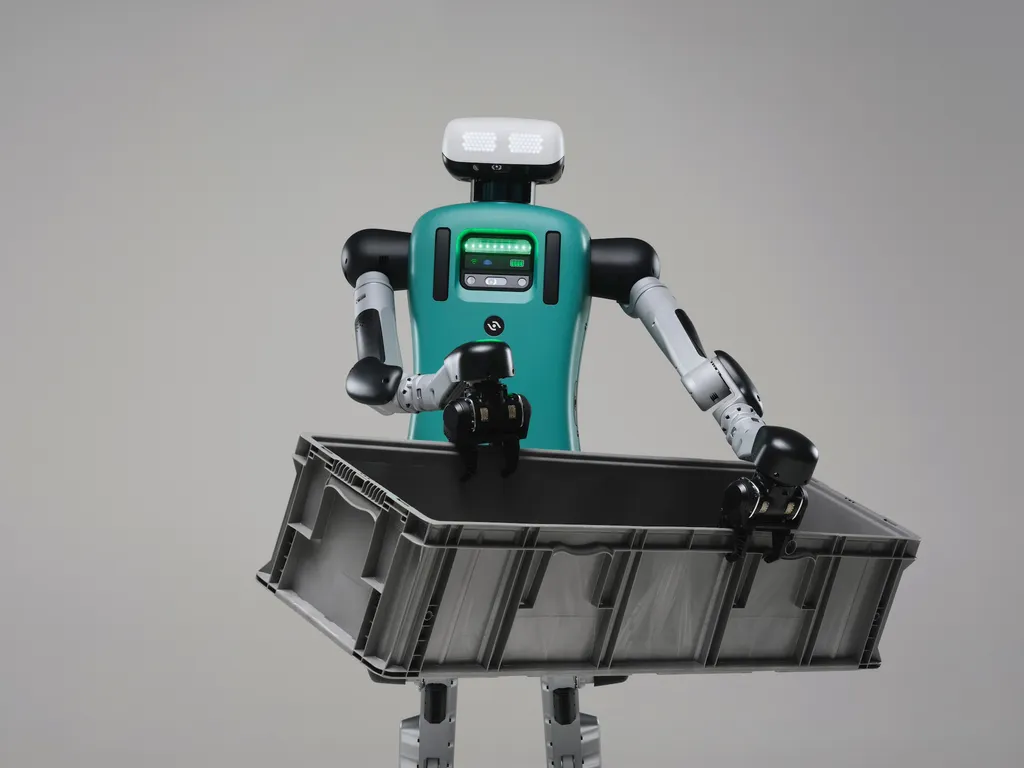
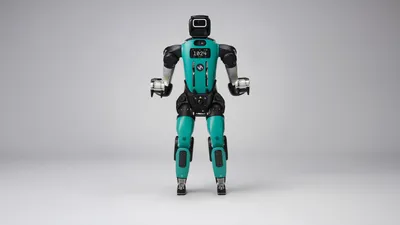
Agility Robotics calls Digit v5 “the world’s first AI-enabled cooperatively safe humanoid robot.” Behind that marketing line sits a specific, checkable piece of hardware: an NVIDIA IGX Thor compute module containing a Functional Safety Island certified to IEC 61508 SIL 3, a physically isolated block of silicon — its own power, clocks and I/O — dedicated to safety logic like human-detection interlocks. NVIDIA’s own newsroom names Agility as the first company confirmed to be building that hardware into a commercial safety system, ahead of Digit v5’s planned early shipments to customers in December 2026.
That distinction matters more than it might sound. Every humanoid maker markets some version of “safe to work near people.” Most of that is a design philosophy and a set of software claims. What NVIDIA and Agility are describing is different in kind: safety-critical code running on a chip region that a third-party certification body has already evaluated against an established industrial standard, isolated from the general AI compute that handles perception, planning and everything else. That’s the kind of claim a plant safety engineer can actually audit, rather than take on faith.
What a Functional Safety Island is, in plain terms
NVIDIA unveiled Halos for Robotics at Automate 2026 in Chicago on June 22-23, describing it as the industry’s first full-stack functional-safety system for physical AI — spanning simulation, software and hardware layers. The hardware layer centers on the IGX Thor industrial compute module. Inside it sits the Functional Safety Island: a separate region of the chip with its own power delivery, its own clock domains and its own input/output paths, walled off from the module’s main AI-processing silicon.
The point of that isolation is straightforward. If a safety function — say, “stop moving if a person’s hand enters this zone” — shares silicon, clocking and power with the same processor running a robot’s general perception and motion-planning stack, a fault or overload in that general compute can theoretically compromise the safety function too. Putting safety logic on its own physically separate island removes that shared-fault pathway, and NVIDIA says that island is certified to IEC 61508 SIL 3 — Safety Integrity Level 3, one of four tiers in a standard family that industrial-safety engineers already use to specify how reliably a system must detect and respond to a dangerous fault. SIL 3 is a meaningful bar: it sits toward the higher end of the scale used for systems whose failure could cause serious injury. IEC 61508 is a general electrical/electronic functional-safety standard rather than a robot-specific one like the 2025 revision of ISO 10218 or ISO 13849, and none of the sources reviewed for this story spell out a direct crosswalk between IEC 61508 SIL levels and ISO 10218/13849 performance levels — so that mapping isn’t asserted here. What is verifiable is that Agility is running Digit’s human-detection function on hardware carrying an independent, named certification, rather than resting the “no fencing needed” pitch on software claims alone.
Where Digit v5 fits
Digit v5 is the next hardware generation of Agility’s bipedal warehouse and logistics humanoid, built by the Corvallis, Oregon company that spun out of Oregon State University in 2015. Early customer units are due in December 2026. Agility’s own materials target “more than 20 hours of work per day” for the machine — a figure independently reported in Forbes’ August 10 feature and in Interesting Engineering’s coverage, not just repeated from a single press release. The company also says Digit v5 uses proprietary cycloidal actuators in its hips and knees and an ISO-standard tool flange meant to let operators, and eventually the robot itself, swap end-effectors for different tasks.
On the commercial side, Agility reports more than $300 million in multi-year contracted Digit v5 orders to date, with a pipeline it describes as more than 30 customers. Forbes and other secondary reporting say that total includes a single three-year contract for roughly 1,000 units under Agility’s Robots-as-a-Service model, with the customer undisclosed — worth flagging plainly, since a thousand-unit order concentrated in one anonymous account behaves very differently for revenue planning than 30 diversified customers each buying smaller volumes. Agility itself frames the $300 million as milestone-gated bookings rather than recognized revenue, which is the more conservative and more accurate way to read it. This order activity sits alongside, but is separate from, Agility’s SPAC merger to go public at a $2.5 billion valuation, announced in June and still working through the closing process as of this writing.
What to watch
Two things separate this from the standard humanoid-hype cycle. First, the safety mechanism is now attached to a named, independently certified component rather than a slogan — that’s a real technical claim a buyer’s safety engineer can go verify against NVIDIA’s own IEC 61508 SIL 3 documentation. Second, the timeline is close: December 2026 is four months out, which means the “no fencing needed” pitch will be tested against real plant floors within a couple of quarters, not years.
Sources
- Agility Robotics to go public through merger with Churchill Capital Corp XI — Agility Robotics, Jun 24, 2026
- NVIDIA Announces Halos for Robotics, the Industry's First Full-Stack Safety System for Physical AI — NVIDIA Newsroom, Jun 23, 2026
- Inside NVIDIA Halos for Robotics: A Full-Stack Functional Safety System for Physical AI — NVIDIA Developer Blog, Jun 23, 2026
- Digit V5: First Humanoid Robot Out Of The Cage? — Forbes, Aug 10, 2026
- Digit V5 humanoid robot aims 20-hour shifts in real-world factories — Interesting Engineering, Aug 11, 2026
Frequently asked questions
What does 'cooperatively safe' actually mean for Digit v5? +
It's Agility Robotics' own term for a robot designed to work alongside people in the same physical space without safety fencing. Agility defines it as 'the ability for robots to safely work alongside people in dynamic environments' and calls it the unlock needed for humanoids to scale in real facilities. It is a company claim about the robot's overall design goal, not an independently issued certification in its own right.
What is a Functional Safety Island, and why does it matter? +
It's a physically isolated region of NVIDIA's IGX Thor compute module — with its own power, clocks and I/O, separate from the main AI processing — that is certified to IEC 61508 SIL 3, an internationally recognized functional-safety standard. Running safety-critical logic like human-detection interlocks on hardware that is independently certified and isolated from general compute is a materially different, more verifiable claim than a company simply asserting its software is safe.
How is Agility Robotics connected to NVIDIA's Halos for Robotics? +
NVIDIA's own newsroom coverage names Agility as the first company confirmed to be integrating Halos-for-Robotics elements into its safety system, using the IGX Thor module for Digit's human-detection function. Trade press covering the partnership corroborates this, though the NVIDIA release is the primary source.
When does Digit v5 actually ship, and how much has Agility sold? +
Agility says early units go to customers in December 2026. The company reports more than $300 million in multi-year contracted Digit v5 orders to date and a pipeline of over 30 customers — figures Agility itself frames as milestone-gated bookings, not recognized revenue, and which include at least one undisclosed customer's roughly 1,000-unit, three-year Robots-as-a-Service contract per secondary reporting.
More news