Boston Dynamics Opens Atlas Training Center at Hyundai Metaplant
Boston Dynamics says its Atlas training center at Hyundai's Georgia Metaplant is running, with 25,000 units planned for Hyundai and Kia plants.
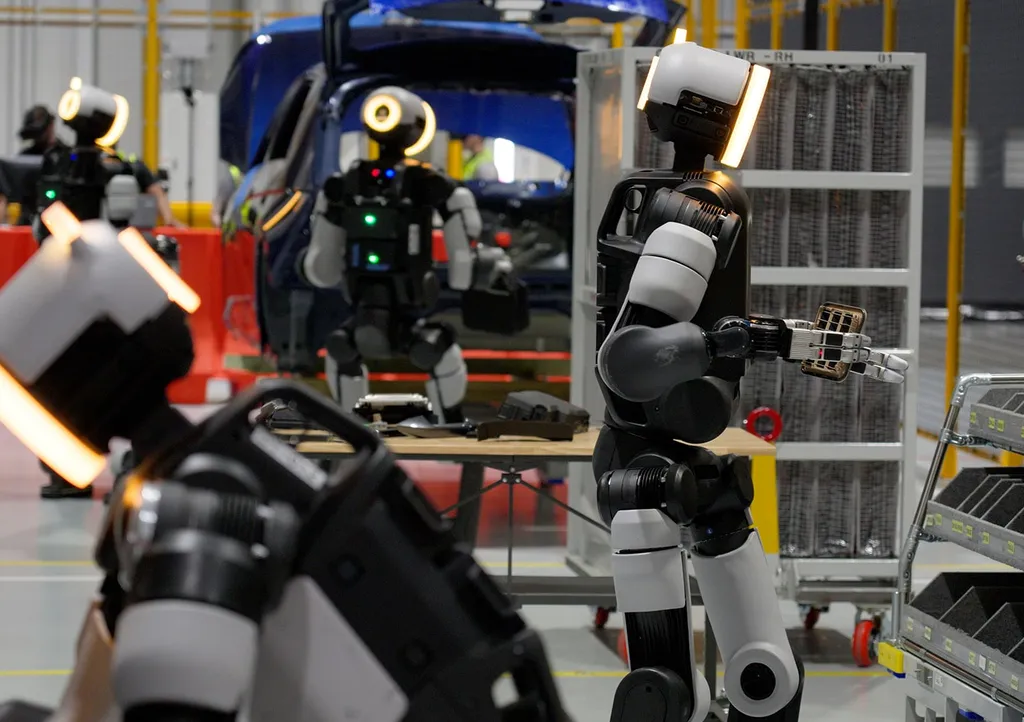
Boston Dynamics said on September 21 that the first phase of its Robotics Metaplant Application Center (RMAC) is now operational inside Hyundai Motor Group Metaplant America (HMGMA) outside Savannah, Georgia, and that Atlas humanoid robots are already in training there. The release also carries a set of Group-level plans: 25,000 Atlas units at Hyundai Motor and Kia plants over the next few years, a new US factory able to build 30,000 robots a year, a facility roughly ten times larger next year, and a first look at Atlas work outside automotive in 2027. All figures are company statements and none has been independently verified.
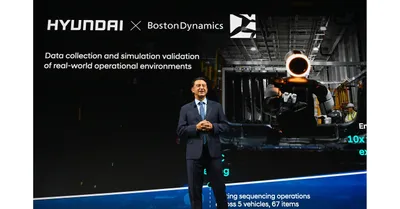
This desk covered the Hyundai investor-day disclosures on August 30, which came from the parent company. This is the first time Boston Dynamics has put its own framing on the same site, and the two accounts do not line up on every point.
What Boston Dynamics says RMAC is
The release calls RMAC “a testbed and training center for integrating Atlas robots directly into Hyundai Motor Group’s automobile manufacturing operations.” The robots are being trained in real-world environments, and the one task the release names is preparing the logistics and sequencing of automotive parts before placing them in the correct order for assembly. By 2030, it says, applications will extend to component assembly. Over time, Atlas is to take on tasks involving repetitive motions and strenuous work such as lifting heavy loads.
Zack Jackowski, Boston Dynamics’ Chief Product & Technology Officer, said: “Together with Hyundai Motor Group, we are pioneering physical AI at enterprise scale.” He added that the company has “established a clear strategy to optimize our supply chain, production, testing, and deployment capabilities for Atlas.”
The release ties the opening to Boston Dynamics’ unveiling of Atlas during the Hyundai Motor Group media day at CES 2026. It gives no headcount, no number of robots currently in training, and no performance data.
Where the two accounts differ
Three points are worth setting side by side. We do not decide which version is correct; the sources simply differ.
Timing of the expansion. Our August 30 story, based on Hyundai’s investor-day statements as reported by Manufacturing Dive, said RMAC would expand more than tenfold by the end of 2026. Boston Dynamics’ release says that next year operations will move into a new HMGMA building that expands RMAC to approximately ten times its current size. The multiple matches; the date does not. The release does not address the difference.
“Orders” versus “units planned.” The August story described 25,000 units of guaranteed customer orders for a new US robot manufacturing facility. Boston Dynamics’ wording is different: the Group “plans to quickly expand the deployment of Atlas robots across its global network, beginning with 25,000 units at Hyundai Motor and Kia’s global plants over the next few years.” That describes internal deployment at the Group’s own factories, not customer orders, and it carries no delivery date. Separately, the release says the Group “will establish a new production facility in the U.S. capable of producing 30,000 robots annually,” with no start year given.
The opening date. The earlier story reported RMAC opening in June 2026. This release presents September 21 as the launch announcement and says the first phase is “now operational.” It does not say when operations began.
What is new: the 2027 cross-sector plan
The most forward-looking passage concerns data. The new building will support Atlas’ continued preparation for automotive deployments, but Boston Dynamics also plans to begin exploring use cases in other industry sectors next year. It says it is in discussions with several existing Spot and Stretch customers in manufacturing, aerospace, semiconductors, logistics, food and beverage, and life sciences “to scale data collection and other tasks to continue Atlas’ training process in 2027.”
Read plainly, this is a data strategy: Spot and Stretch already sit in customer sites, and those relationships are the route to more real-world data for Atlas. The release names no customer, no site and no commitment; it says only that discussions are under way.
What Jackowski told The Robot Report
In an interview with The Robot Report, Jackowski described RMAC as “a permanent facility” for data collection and application testing, coordinated with the auto plant, and called it a “Robot Behavior Factory.” He said earlier Hyundai trials were “time-boxed deployments,” small-scale and hands-on. The outlet reports Atlas is learning from teleoperation, reinforcement learning in simulation and Universal Manipulation Interface (UMI) devices. Jackowski said car parts demand dexterous, often two-handed handling because many have cosmetic or fragile surfaces, are large or awkwardly weighted, and must be pulled from complex packaging and inserted into dense cubbies.
His most concrete claim: “the design assumptions we made for the production version of Atlas have been very close to right on,” while the bigger lessons concern applications, such as how fixtures and packaging might be modified for humanoids. That is a company assessment; no test data was published. The Robot Report also reports that Boston Dynamics has moved some staff from Waltham, Massachusetts to Savannah and that SoftBank’s acquisition of Hyundai’s Robotics and AI Institute has no effect on Atlas, per Jackowski.
A caveat in the company’s own boilerplate
The “About Boston Dynamics” section describes Spot as a quadruped that conducts industrial inspections and Stretch as a box-moving robot for logistics and retail customers. It describes Atlas as “our electric humanoid platform currently in development.” That matters when weighing a plan for 25,000 units: the product being scaled is, by the company’s own description, still in development. The release gives no Atlas specifications, price or safety certification status, and this desk has not added any.
What is still unanswered
The release leaves several basics open: delivery timing for the 25,000 units, the number of robots now in training, and when the US factory will start. Until Boston Dynamics or Hyundai supplies them, treat the scale figures as intentions.
Sources
- Boston Dynamics Opens Robotics Metaplant Application Center to Train Humanoid Robots for Manufacturing Tasks — Boston Dynamics, Sep 21, 2026
- Boston Dynamics opens Metaplant Application Center to train Atlas humanoid robots — The Robot Report, Sep 21, 2026
- Boston Dynamics opens Atlas training hub at Hyundai plant — Automotive World, Sep 22, 2026
- Boston Dynamics Opens Robotics Metaplant Application Center to Train Humanoid Robots for Manufacturing Tasks — RoboticsTomorrow, Sep 21, 2026
Frequently asked questions
What is the Robotics Metaplant Application Center? +
Boston Dynamics describes RMAC as a testbed and training center for integrating Atlas humanoid robots into Hyundai Motor Group's automobile manufacturing operations. It sits at Hyundai Motor Group Metaplant America outside Savannah, Georgia, and its first phase is now operational.
What is Atlas being trained to do? +
Per Boston Dynamics, the robots are being trained in real-world environments on tasks such as preparing the logistics and sequencing of automotive parts before placing them in the correct order for assembly. By 2030, applications are to extend to component assembly, and over time to repetitive and strenuous work such as lifting heavy loads.
How many Atlas robots does Hyundai Motor Group plan to deploy? +
The release says the Group plans to begin with 25,000 units at Hyundai Motor and Kia's global plants over the next few years, and to establish a new US production facility capable of producing 30,000 robots annually. These are company plans, not independently verified figures, and the release gives no delivery schedule for the 25,000 units.
Is Atlas a commercial product yet? +
Not by Boston Dynamics' own description. The boilerplate in the September 21 release calls Atlas its electric humanoid platform currently in development, in contrast to Spot and Stretch, which it describes as existing products.
More news