FANUC's AI Welding Agent Reads a Drawing, Then Welds
FANUC says its Google-built AI Welding Agent turns a drawing photographed by a CRX pendant into weld parameters and a robot program, shipping by December.
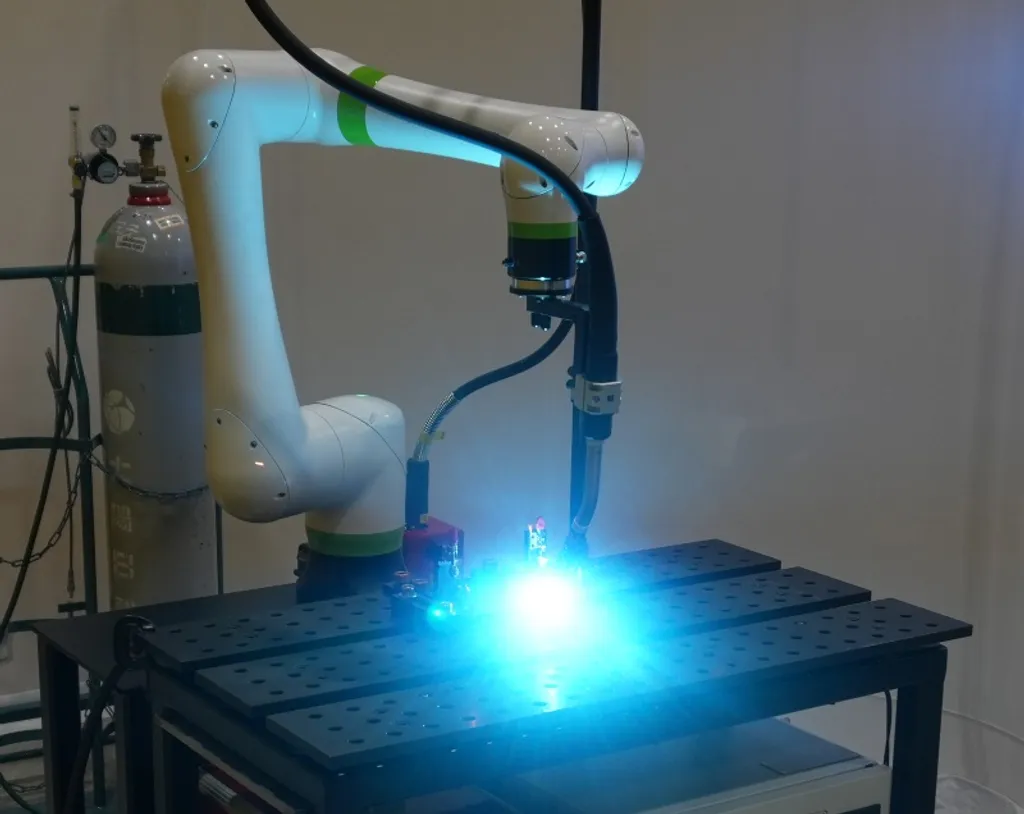
FANUC says its new AI Welding Agent, built with Google on Gemini Enterprise, can read an engineering drawing captured by the built-in camera of a CRX tablet teach pendant and then generate both the welding parameters and the robot motion program for arc welding. The company announced it on September 11, 2026, scheduled a public demonstration at the International Welding Show at Tokyo Big Sight beginning September 16, and says shipments start by the end of December. What it can actually weld is still FANUC’s claim: no price, accuracy figure, named CRX models or customers were disclosed.
What FANUC says the agent does
Per the release, the agent “reads an engineering drawing for an arc-welding part, understands the materials and a final shape of the part,” and automatically produces two outputs: welding parameters such as current and voltage, and a robot motion program. FANUC markets the result as “zero-setup, zero-teaching.” An operator can run the generated output as-is or fine-tune it first, which keeps a human check between the drawing and the arc.
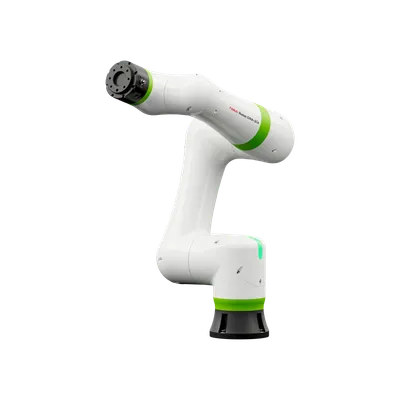
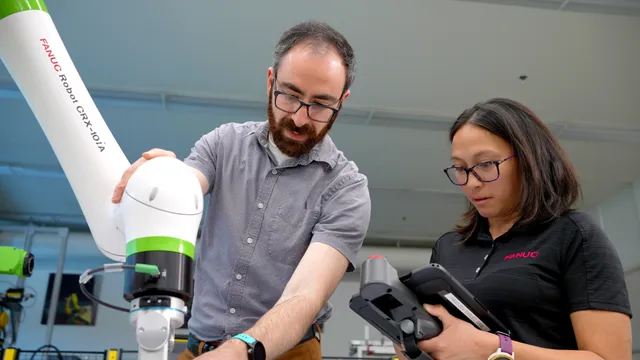
The capture step is deliberately low-tech. The drawing is photographed with the camera already built into the CRX tablet teach pendant, and FANUC states that no additional cameras or dedicated devices are needed at the production site. FANUC’s release photos show a CRX cell with a tablet pendant holding a paper drawing on a stand beside the robot. FANUC also says the agent is independent of any specific welding power source and can be used with any power supply connected to a FANUC robot.
FANUC frames the problem as labor: a global shortage of skilled welders who can both optimize parameters and teach robot motions lengthens lead times in automotive, construction and shipbuilding work. The agent, it says, is meant to supplement skilled welding professionals.
The change is who does the programming
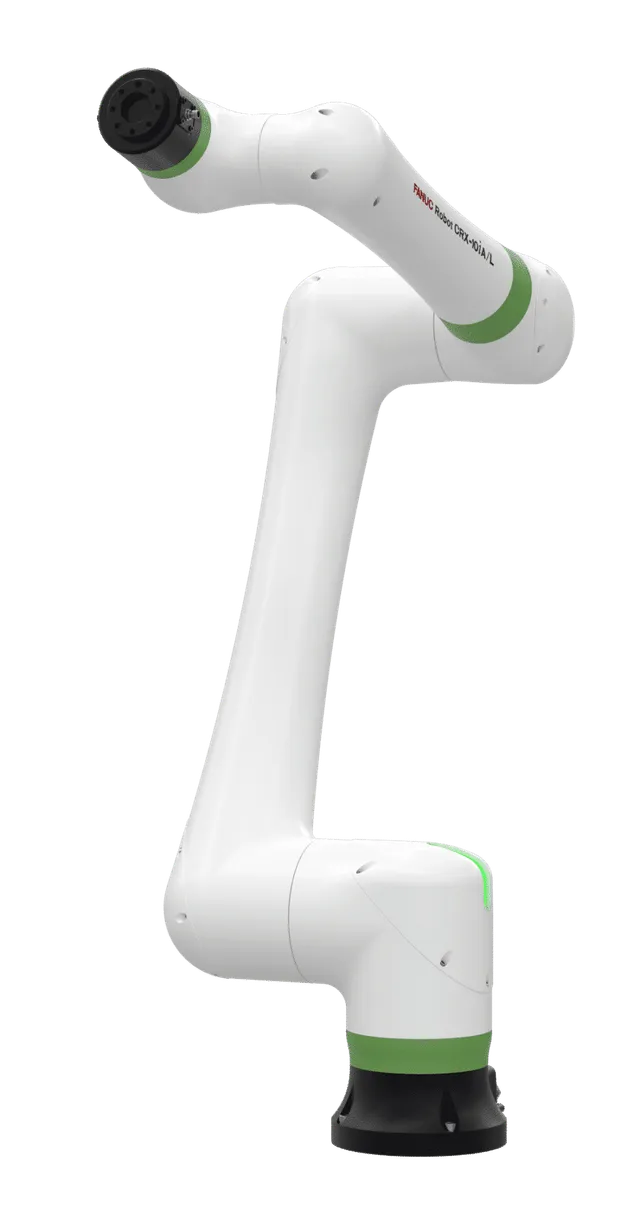
Today the two jobs FANUC lists, choosing weld parameters and teaching the path, sit with a welder, a technician or an integrator. Industrial Robotics Hub’s database lists teach-pendant, lead-through and graphical programming for the CRX-10iA and CRX-10iA/L, so hand-guiding a CRX along a path is already an established route. The other cobot-welding route in this desk’s coverage is a fixed arm-plus-power-source pairing: Tate’s 58 Hirebotics cobot welders use a Universal Robots arm, a Miller MIG power source and hand-guided teaching. Our welding robots guide covers the wider options.
FANUC’s proposal is different in kind: the input becomes the drawing rather than a taught point, and parameter choice moves from the welder’s head to software. If it works on real, imperfect parts, the bottleneck shifts from programming time to drawing quality and part presentation. The release does not test that “if.”
The packaging is the second story
FANUC says customers using CRX robots and the agent “do not necessarily need to establish separate enterprise agreements with Google Cloud,” and that the service can be subscribed to “through existing FANUC contractual arrangements.” For a plant buyer that matters: a cloud AI service on an existing FANUC purchasing relationship is easier to approve than one needing a new vendor, security review and contract.
FANUC says drawings and production data are protected by Gemini Enterprise security measures and are not used for training other users’ AI models. Drawings carry proprietary geometry, so that promise is worth having in writing, and the release does not say whether the agent works without a cloud connection.
Where this sits in FANUC’s Google push
The agent extends a collaboration FANUC outlined on May 13, 2026, when it demonstrated a Gemini Enterprise agent taking natural-language instructions and operating collaborative and non-collaborative FANUC robots as one cell. That release also said FANUC had shipped more than 1,000 robots for “Physical AI related applications” since iREX, and that all its robots, including CRX, would be supported on the Flowstate platform from Google’s Intrinsic. The 1,000-robot figure covers Physical AI generally, not welding. FANUC’s September 3 IMTS preview also referenced Google Cloud AI partnerships. Nikkei Asia, whose article is paywalled and was read only as a teaser, independently reports that the system reads blueprints directly, removing manual welding-robot programming, with deliveries starting in December.
What the release does not say
For an integrator, the omissions are the useful part:
- Price, subscription terms or fees.
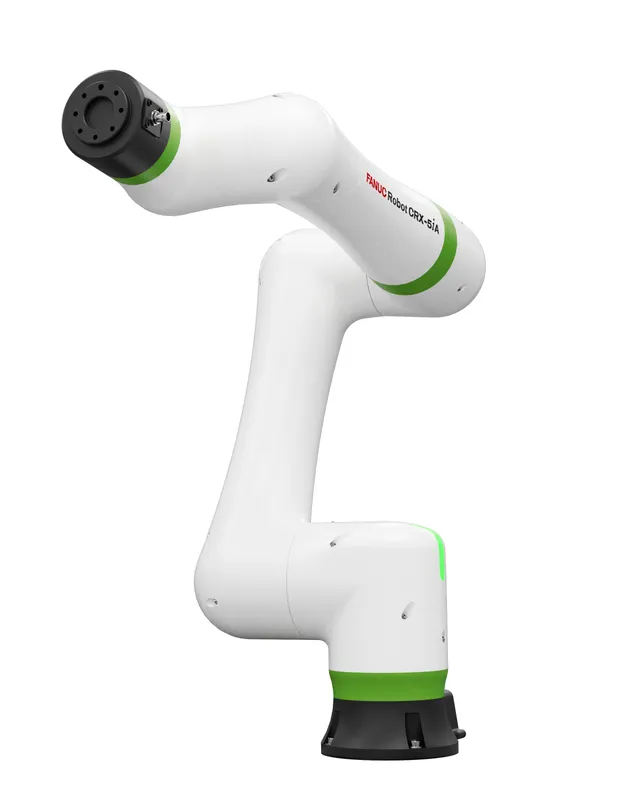
- Which CRX models are supported. The release says “FANUC CRX robots” only. For scale, this desk’s database lists the CRX-10iA at 10 kg payload and 1,249 mm reach, the CRX-10iA/L at 1,418 mm reach and the CRX-5iA at 5 kg and 994 mm; these are family figures, not a support list.
- Welding processes (MIG, TIG or other), materials and thicknesses.
- Multi-pass welds or heavy-fabrication capability.
- Any accuracy or first-pass success rate.
- Customer deployments.
- A retrofit path for CRX units already installed.
- Whether it runs without cloud connectivity.
Outside commentary, from a party with a stake
Mac-Tech, a metal-fabrication equipment dealer, published a September 17 piece arguing the announcement should not delay a justified purchase of a heavier robotic welding cell. Its author, Mac-Tech’s president, promotes the AGT BLOK cell it recommends, so this is dealer opinion, not independent testing. Its points still help a buyer: it calls “zero-setup, zero-teaching” an announced capability rather than a demonstrated result, notes that software cannot add reach, access or heavy-part rotation, and urges written compatibility terms and validation on representative parts.
Sources
- FANUC Accelerates Physical AI in Arc Welding with the New 'AI Welding Agent' — FANUC CORPORATION, Sep 11, 2026
- Japan's Fanuc, Google team up on AI-automated welding robots — Nikkei Asia, Sep 11, 2026
- FANUC Accelerates the Physical AI Through Collaboration with Google - AI Agent Powered by Google Operates Robots — FANUC CORPORATION, May 13, 2026
- Should FANUC's AI Welding Agent Delay Robotic Welding Capacity? — Mac-Tech (dealer commentary), Sep 17, 2026
Robots mentioned
Tap a card to open the full spec sheet.
Frequently asked questions
What does FANUC's AI Welding Agent actually do? +
Per FANUC's September 11, 2026 release, it reads an engineering drawing of an arc-welding part, works out the materials and the final shape of the part, and automatically generates two things: welding parameters such as current and voltage, and a robot motion program. FANUC markets this as 'zero-setup, zero-teaching.' Operators can run the generated parameters and motions as-is or fine-tune them before welding. These are FANUC's claims; no independent test results have been published.
When can customers get it? +
FANUC says shipments are scheduled to start by the end of 2026 (the release says end of December 2026). A public demonstration was scheduled to begin September 16, 2026 at the International Welding Show at Tokyo Big Sight. Nikkei Asia's report of the announcement also gives December for the start of deliveries.
Which CRX models, welding processes and materials does it support? +
FANUC's release does not say. It refers to 'FANUC CRX robots' without naming models, and it does not list welding processes, materials, thicknesses, multi-pass capability or an accuracy figure. It does say the agent works with any welding power supply connected to a FANUC robot. Industrial Robotics Hub therefore does not claim that any specific CRX model supports it.
Do customers need their own Google Cloud contract? +
According to FANUC, not necessarily. The release says CRX customers using the agent do not necessarily need separate enterprise agreements with Google Cloud and can subscribe through existing FANUC contractual arrangements. FANUC also states that drawings and production data are protected by Gemini Enterprise security measures and are not used to train other users' AI models. Price and subscription terms were not disclosed.
More news