How Much Does an Industrial Robot Cost? We Checked 176
Of 176 industrial robots in our database, 173 publish no price at all. Only Universal Robots ballparks a figure, and only on 3 of its 9 arms.
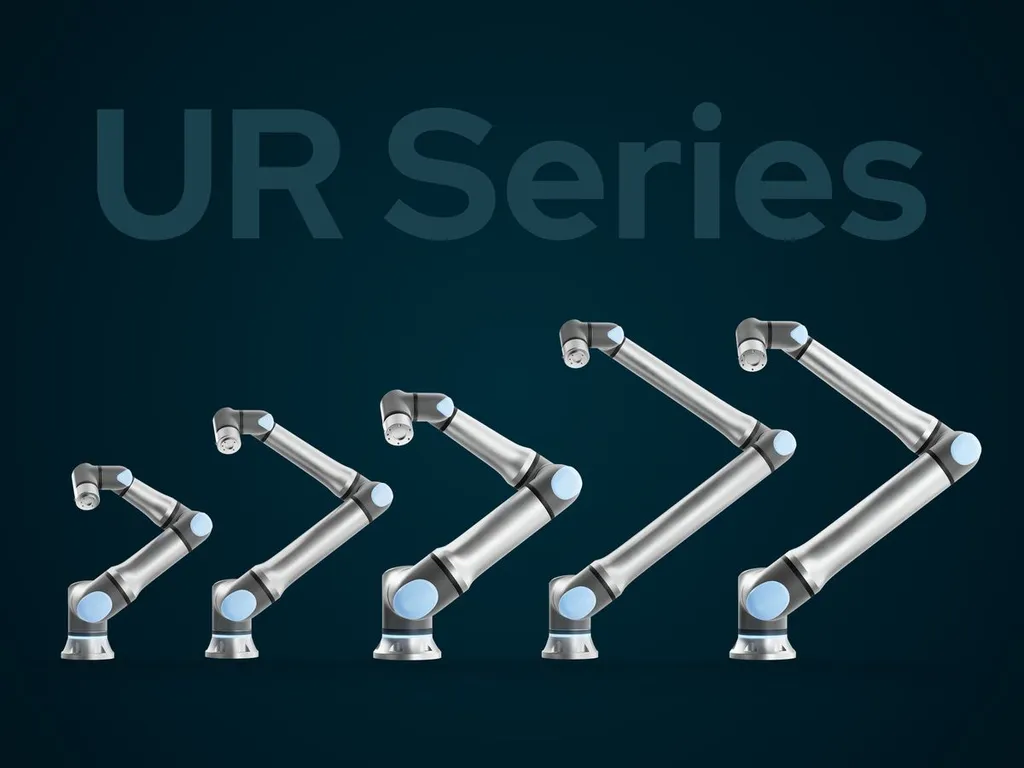
The honest answer to “how much does an industrial robot cost” is that the industry mostly will not tell you. Of 176 industrial robots across 12 brands in our database, 173 carry no price at all. The only 3 figures come from Universal Robots - arm-only estimates of roughly $25,000 for the UR3e, $35,000 for the Universal Robots UR5e, and $45,000 for the UR10e. Those numbers balloon once installed: a typical integration runs four to six times the cost of the arm, which puts a $35,000 cobot at $140,000 to $210,000 in a real production cell. The arm price is a floor, not a budget.
How many industrial robots publish a price?
Three out of 176. That is 1.7%. The other 173 - 98.3% of the database - carry either a “price on application” note or no price information at all. Of the 173 with nothing, 99 say exactly “price on application”; 74 carry no price note at all.
Universal Robots is the lone exception across all 12 brands. And even there, it only ballparks 3 of its 9 robots in our database - the three e-Series cobots people actually ask about most often. The remaining 6 UR arms are as opaque as everything from ABB or KUKA.
Here is the full breakdown by brand:
| Brand | Robots in our database | With a price figure |
|---|---|---|
| ABB | 24 | 0 |
| Yaskawa | 21 | 0 |
| KUKA | 19 | 0 |
| FANUC | 17 | 0 |
| Epson | 16 | 0 |
| Kawasaki | 15 | 0 |
| Doosan | 12 | 0 |
| Omron | 12 | 0 |
| Mitsubishi | 11 | 0 |
| Staubli | 11 | 0 |
| Techman | 9 | 0 |
| Universal Robots | 9 | 3 |
| Total | 176 | 3 |
Source: Industrial Robotics Hub database, 176 robots, June 2026.
Eleven of 12 brands. Zero figures published. ABB alone has 24 robots in our database - a full lineup spanning from 3 kg SCARA arms to 800 kg heavy articulated arms - and not a single price. Buyers comparing across that range are working entirely from spec sheets and integrator quotes.
Why is everything “price on application”?
Three reasons that are at least coherent, even if they are annoying.
Customization range is enormous. The label “industrial robot” covers a 3 kg desktop cobot and an 800 kg automotive arm. The collaborative robots in our database start at 3 kg payload and top out at 50 kg. The articulated arms run from 3 kg to over 800 kg. A manufacturer quoting a single number for that range would be misleading at both ends.
Integration variability is even larger than the arm itself. End-of-arm tooling, safety fencing or sensors, programming, controller setup, and site-specific modifications all vary wildly by application. A robot arm doing simple pick-and-place in a clean factory is a different project from the same arm doing welding in an automotive cell. The integrator’s scope changes the cost more than the arm model does.
Volume and regional pricing. A tier-1 automotive OEM buying 200 arms gets a different number than a job shop buying one. Publishing a list price would either expose the OEM discount or make the job-shop figure look uncompetitive. Manufacturers prefer the grey zone.
None of this makes the buyer’s job easier. It means you cannot do preliminary ROI math without a quote in hand, and getting a quote usually requires committing sales time on both sides before you have confirmed the application is viable.
What does a robot actually cost once it is installed?
The arm price - when you can even find one - covers a fraction of the installed system cost. Engineering.com’s rule of thumb puts it plainly: integration, including safety, tooling, and programming, costs about four to six times the cost of the robot.
Standard Bots frames the range this way: an arm typically runs $50,000 to $200,000; a full integrated system is $150,000 to $500,000; and integration alone can double your robot costs.
The only 3 arms in our database with any published figure at all are Universal Robots cobots. They are at the cheaper end of the arm-cost range, which makes the multiplier hurt more in percentage terms.
Apply the 4-to-6x multiplier to these arm estimates and the installed cost becomes: UR3e at $100,000 to $150,000; UR5e at $140,000 to $210,000; UR10e at $180,000 to $270,000. Those are rough figures for a configured cell - your integrator quote may land higher or lower - but they are a useful sanity check before you start the procurement conversation.
The cobots are the cheapest arms in the database. The 74 articulated arms with no price published at all tend to sit at higher base costs. If you are seeing arm-only quotes above $100,000 for a heavy industrial arm, the 4-to-6x rule can push your total system budget well past $400,000 to $600,000.
How do you budget without a published price?
Since 98.3% of the market will not hand you a number, you have to build your own model.
Start with application class, not brand. Payload and reach requirements narrow the field faster than brand preference. A 5 kg pick-and-place on a 600 mm reach is a cobot problem; a 150 kg palletizing task is not. Get the application class right, and you have already cut the viable list from 176 to maybe 15.
Engage an integrator before you engage a manufacturer. Integrators have seen actual project costs across many applications. A manufacturer’s sales team will quote the arm; an integrator will tell you what the cell actually runs. Get integrator input before you have settled on a specific arm - they can save you from spec’ing a robot that technically works but adds $80,000 in tooling complexity.
Treat any published arm number as roughly 15 to 25% of total installed cost. The 4-to-6x engineering.com rule implies the arm is 17% to 25% of the system. That ratio is a rough guide, not a contract - simple cells run leaner, complex cells run heavier - but it keeps the first-pass budget honest.
Never use the arm price as the project cost. The UR5e’s $35,000 arm estimate is a real number in that it reflects what you might pay for the arm alone. It has nothing to do with what the production cell costs. Every buyer who treats the arm price as the project budget has a surprise waiting at final invoice.
The pricing opacity in this industry is a structural feature, not a bug. Manufacturers have no incentive to publish numbers that expose their discount tiers or let competitors undercut them. For buyers, that means the spec sheet gets you to the right shortlist, and then the integrator quote is where the actual buying decision happens.
Data from our analysis of 176 robots across 12 brands in the Industrial Robotics Hub database. Price figures reflect manufacturer-published data and IRH typical-configured estimates as of June 2026.
Compare these robots