Robot Payload Gap: Only 6 Arms Lift 35-50 kg
Of 263 robots in our database, only 6 lift 35 to 50 kg. 81% cap under 35 kg, then the market hits a cliff. Here is the gap and how to spec around it.
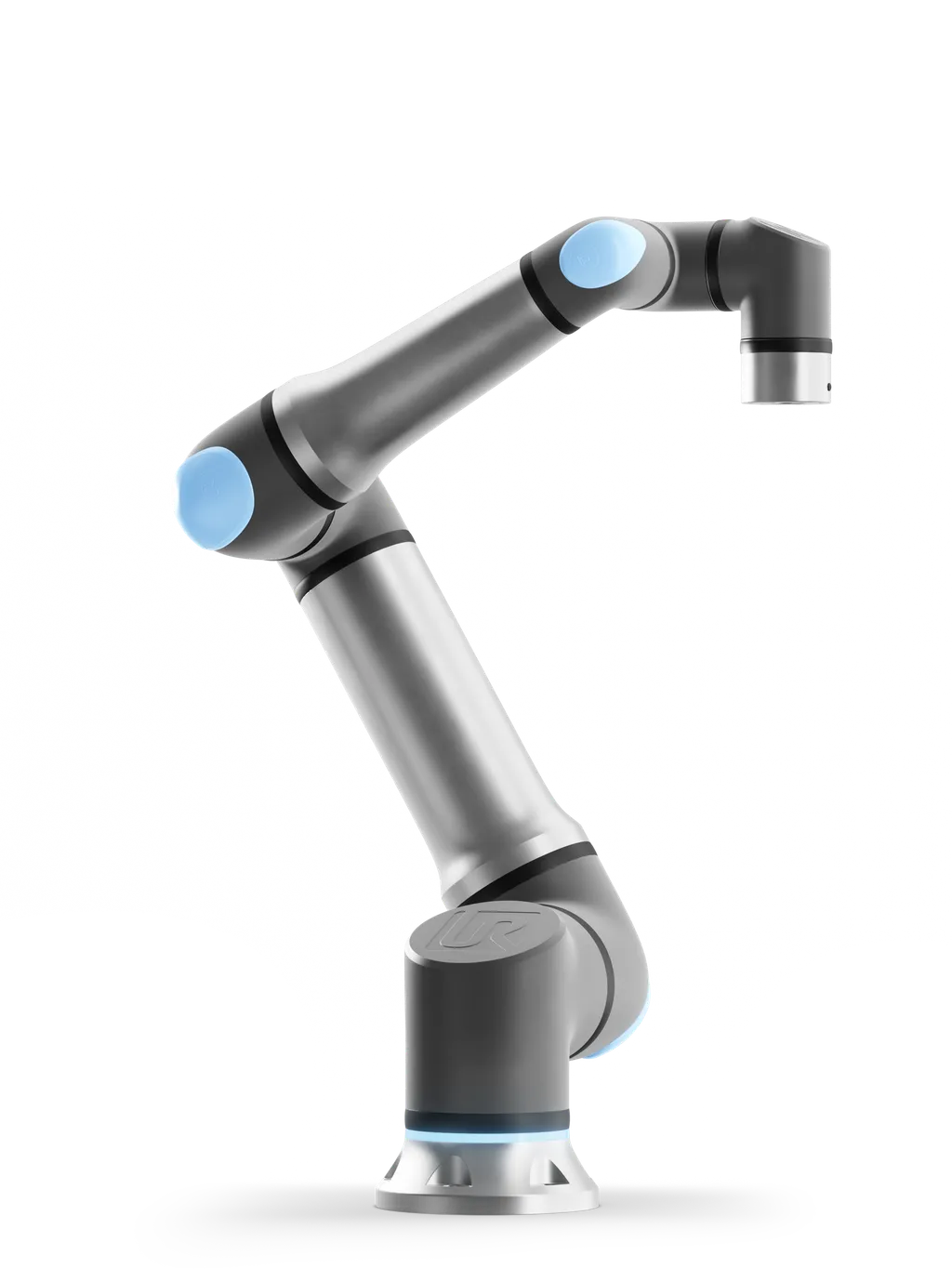
Of 263 robots in the Industrial Robotics Hub database that publish a payload figure, only 6 sit between 35 and 50 kg. That is 2.3% of the database. If your part weighs 40 kg, your menu is 6 robots, not 60. Below 35 kg, there are 212 options. Above 50 kg, there are 38 more. Right in the middle — where the cobot ceiling meets the heavy-arm floor — the market falls off a cliff.
This is not a niche edge case. A 40 kg part is a mid-size automotive component, a heavy casting, a filled container, or a press blank. It is a real load class. And the robot market has almost nothing for it.
Where does the robot market go thin on payload?
The distribution across our full 263-robot dataset shows two dense clusters separated by an empty trough.
The peak is the 5-10 kg band at 72 robots (27.4% of the database). This is where collaborative arms and compact articulated arms compete the hardest: tabletop assembly, machine tending at human-scale loads, electronics handling. It is dense because a lot of work happens there and vendors know it.
The bands above 10 kg taper gradually — 58 robots at 10-20 kg, 40 at 20-35 kg — then drop vertically to 6 robots at 35-50 kg. After that cliff, the market recovers slowly upward: 14 robots at 50-100 kg, 11 at 100-200 kg, and then the heavy-arm tier with single-digit counts per band. The 35-50 kg band renders as a sliver in the chart above. That sliver IS the story.
Which robots actually cover 35 to 50 kg?
Six robots. Here they are in full.
| Robot | Payload | Type |
|---|---|---|
| Universal Robots UR30 | 35 kg | Cobot |
| AUBO iS35 | 35 kg | Cobot |
| Rokae xMate CR35 | 35 kg | Cobot |
| Siasun SR25A-35 | 35 kg | Articulated |
| Staubli TX2-160 | 40 kg | Articulated |
| Rokae xMate CR45 | 45 kg | Cobot |
Source: our analysis of 263 robots in the Industrial Robotics Hub database.
Four of the six are cobots, and all four are recent — the cobot ceiling is rising. A year ago this table would have been shorter. The UR30 was introduced specifically to push the collaborative arm ceiling from 30 kg toward 35 kg, and Rokae has followed with two entries in the same band. The trend is documented in cobot adoption data for 2026: as manufacturers move cobots into heavier processes, vendors are engineering the ceiling upward.
Only two of the six are traditional articulated arms: the Siasun SR25A-35 (35 kg) and the Staubli TX2-160 (40 kg). The rest of the traditional articulated market skips this band entirely and resumes at 50 kg+. The FANUC CR-35iB — the heaviest cobot in the database at 50 kg — sits in the 50-100 kg band, not the gap. It is technically just outside the cliff, on the recovery side.
One flag on every robot in this table: rated payload is the number on the spec sheet. It is measured at a specific reach, usually closer to the base, under controlled conditions. A 35 kg cobot reaching out at full extension may deliver 20-25 kg effective payload depending on the arm geometry. Before committing to any robot in this list for a 33-38 kg real-world part, get the payload-vs-reach curve from the manufacturer and run the numbers at your actual working radius.
Why is there a gap between cobots and heavy arms?
The short version: two different industries converging from opposite directions, neither of which had 35-45 kg as a natural home.
Cobots were designed around human-scale work: the ISO/TS 15066 contact-force limits define safe operating envelopes for collaborative operation, and most of those processes — assembly, machine tending, quality inspection — involve parts under 20 kg. The historic cobot ceiling was 10-15 kg for most of the last decade. 30-35 kg cobots are new, and the engineering tradeoffs are real: a heavier cobot needs a heavier arm structure, which means more inertia in a safety-stop event. Certifying a 35 kg cobot to collaborative safety standards is more complex than certifying a 10 kg one. Vendors pushing into this band are doing something genuinely difficult.
On the other side, traditional articulated arms have long been optimized for 50 kg and up. The floor of the heavy-arm market — 50-100 kg payload — is where automotive body-in-white, foundry, and press-tending applications live. Below 50 kg, the economics of a fenced cell get harder to justify: if you are paying for the cage, the interlock, the safety PLC, and the integration hours, you want to be moving serious mass. Light articulated arms (the 5-20 kg tier) compete with cobots on price. Mid-weight articulated arms (35-50 kg) had almost no natural home in the product line.
The result is a structural gap: cobots were slow to climb above 30 kg, heavy arms had little reason to go below 50 kg, and the 35-50 kg band sat mostly unserved for years. The US robotics installations rebound of 2025 — up roughly 11% to around 38,000 units — has not yet filled this gap. The IFR’s top robotics trends for 2026 highlight expanding cobot payloads, which supports the read that the four cobots in our gap-band table are leading an industry shift rather than filling a mature market.
For a fuller view of how brands structure their payload ladders — and which brands have nothing above 35 kg — see our analysis of which brands cover which payloads.
What should you do if your part weighs 40 kg?
Accept that your shortlist is short. Six robots, two of which are traditional articulated arms, two more of which sit at 35 kg with payload-at-reach caveats that may rule them out at your working radius. In practice, the qualified candidates for a 38-42 kg real-world part at a reasonable working radius may be two or three robots, not six.
Run the payload-at-reach check first. For every cobot in this table, request the payload-vs-reach curve, not just the rated figure. A 35 kg cobot reaching 900 mm from the base in a typical machine-tending posture may be operating at the edge of its torque limits. If your gripper adds 5 kg on top of the part, you may already be outside rated spec.
Consider the 50 kg+ tier deliberately. The FANUC CR-35iB at 50 kg — the heaviest cobot in the database — is one tier up from the gap. If a 50 kg collaborative arm is operationally acceptable and your safety assessment supports it, moving to the 50-100 kg band adds 14 robots to your shortlist immediately. The Staubli TX2-160 at 40 kg (an articulated arm in the gap band) is the only non-cobot directly in the band with published specs in our data; it is worth including in any 40 kg RFQ alongside the 50 kg alternatives.
Do not assume the gap will close quickly. The four cobots currently in the 35-50 kg band are all recent introductions, but the structural reasons for this gap — collaborative safety certification complexity at higher payloads, and the economics of the fenced-arm market at 50 kg+ — do not disappear. New 35-45 kg arms will appear, but they will appear slowly, not in the volume of the 5-10 kg band.
The practical spec decision for a 40 kg part is this: decide whether collaborative operation is a hard requirement or a preference. If it is a hard requirement, the UR30 and the Rokae CR45 are currently the strongest options in the gap band, with the CR-35iB close by at 50 kg. If collaborative operation is a preference but not a requirement, a caged articulated arm at 50-80 kg gives you 14 more candidates, better payload-at-reach curves, and lower integration risk — at the cost of your safety-zone real estate. In a market this thin, that tradeoff is worth pricing out early, not deciding after you have already committed to a cobot.
The data is what it is. Eighty-one percent of the robot market lifts under 35 kg. Two percent of the market is in the band between 35 and 50 kg. The next time someone hands you a 40 kg part and asks you to spec a robot for it, hand them this table and tell them to start the RFQ process early, because the fallback options are thin.
Compare these robots