Dobot Robots Buyer Guide: CE+UL Certified CR Series, 2-20 kg
Dobot's CR series carries both CE and UL certification -- the combined mark that lets it ship into European and North American markets without regulatory friction. That is rarer than it sounds among Chinese cobots.
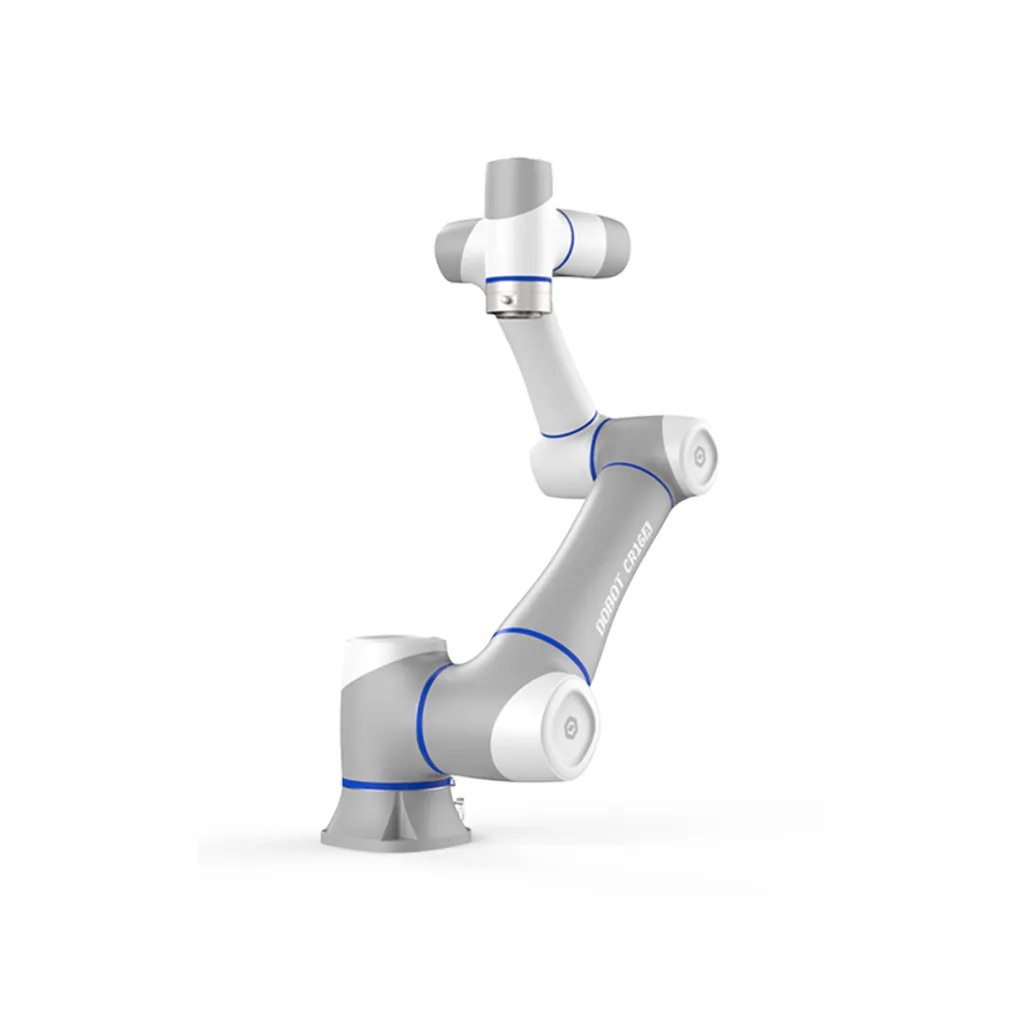
UL certification on a Chinese cobot matters. CE gets you into Europe; UL gets you into North American manufacturing sites where the insurance underwriter has opinions about what runs on the floor. Dobot’s CR series carries both, plus ISO 13849-1 PLd Cat.3. That combination removes the regulatory objection that blocks several competitor brands from certain Western factory floors.
Dobot was founded in 2015 in Shenzhen. The company targets collaborative automation with two distinct product families: the CR series (professional industrial cobots) and the Nova series (desktop/light-duty). Nine robots in the Industrial Robotics Hub database, covering 2-20 kg payload.
What does Dobot actually make?
CR series — the industrial cobot line, eight models from CR3A to CR20A. The A suffix indicates the collaborative (force-limited) variant. Safety-rated for people-in-workspace operation.
Nova series — two compact desktop arms (Nova 2 and Nova 5) aimed at education, R&D, and light-duty laboratory automation. Much lighter construction; not rated for heavy industrial duty cycles.
| Model | Payload (kg) | Reach (mm) | Repeatability (mm) | Certifications |
|---|---|---|---|---|
| CR3A | 3 | 620 | ±0.02 | CE, UL, ISO 13849-1 PLd |
| CR5A | 5 | 800 | ±0.03 | CE, UL, ISO 13849-1 PLd |
| CR7A | 7 | 900 | ±0.03 | CE, UL, ISO 13849-1 PLd |
| CR10A | 10 | 1,000 | ±0.05 | CE, UL, ISO 13849-1 PLd |
| CR12A | 12 | 1,200 | ±0.05 | CE, UL, ISO 13849-1 PLd |
| CR16A | 16 | 1,300 | ±0.05 | CE, UL, ISO 13849-1 PLd |
| CR20A | 20 | 1,700 | ±0.05 | CE, UL, ISO 13849-1 PLd |
| Nova 2 | 2 | 625 | ±0.03 | CE |
| Nova 5 | 5 | 850 | ±0.05 | CE |
Source: IRH database, Dobot product pages.
Browse the full Dobot lineup at /brands/dobot/.
What are Dobot’s hardware strengths?
CE and UL certification, not just CE. This is the lead differentiator versus most Chinese cobots. UL 1740 (Robots and Robotic Equipment) is the North American mark that plant safety managers, insurance underwriters, and AHJs (Authorities Having Jurisdiction) recognize. Several Chinese cobot manufacturers have CE but not UL, which creates friction when deploying in Canadian or US facilities governed by NFPA 79 or insurance-required UL listing. Dobot removed that friction for the CR series.
Full ISO 13849-1 PLd Cat.3. The CR series safety system is independently assessed to Performance Level d, Category 3 — the level that allows collaborative operation without a fixed guard when the risk assessment supports it. That is the same certification level as UR’s e-Series and FANUC’s CR series. It is not universal among Chinese competitors.
Fieldbus coverage. PROFINET, EtherNet/IP, Modbus TCP, and Modbus RTU are all supported in the CR series. The coverage matches JAKA and exceeds Han’s Robot on EtherNet/IP.
Desktop to industrial range. The Nova series and CR series together cover 2-20 kg from a single vendor. For organizations that deploy desktop automation in R&D or quality labs and industrial cobots on the floor, a single-brand relationship simplifies training and spares.
CR12A. The 12 kg / 1,200 mm / ±0.05 mm model sits in the high-demand range for machine tending on mid-size CNC equipment. The combination of UL certification and a 12 kg rated payload at 1,200 mm reach is a practical specification for a large share of machine tending RFQs.
What are the honest gaps?
Service network in North America. UL certification opens the door; service infrastructure is a separate question. Dobot’s North American presence is through distributors. The coverage and spare-parts inventory depth varies by region. A UL-certified arm that takes 4-6 weeks to get a replacement wrist module is still a risk for high-uptime production.
IP54 across the whole line. Neither the CR series nor the Nova series reaches IP67. IP54 (splash-resistant) is adequate for standard factory environments but excludes direct washdown applications. The CR12A in a food-safe cell requires an enclosure — factor that into the cell cost.
US Section 301 tariff (25%). Dobot’s UL certification does not exempt it from the Section 301 tariff on Chinese-origin goods. The landed cost in the US is approximately 25% above list price before integration.
Ecosystem. Dobot provides an open API and SDK, but the certified peripheral ecosystem (grippers, vision systems, force-torque sensors with pre-validated drivers) is smaller than UR+. Integration projects in North America and Europe typically require custom driver development for peripheral devices that UR or FANUC would integrate in a day.
Nova series duty cycle. The Nova arms are desktop instruments, not production robots. Buyers looking for a low-cost cobot for light production duties should use the CR3A or CR5A; the Nova is an educational and lab tool.
Who should buy Dobot?
Good fit: North American manufacturers who need a cobot with both CE and UL certification, who are deploying in a standard (non-washdown) factory environment at 3-20 kg payload, and who have in-house engineering or a distributor with CR series experience. The CR series is also a good fit for companies with European and North American sites that want a single cobot platform with regulatory coverage on both continents.
Poor fit: Washdown applications (IP54 is the ceiling). High-uptime lines where parts-response time is critical and the local distributor has thin inventory. US buyers who have not adjusted their cost comparison for the 25% tariff. Applications needing the UR+ ecosystem breadth for fast third-party peripheral integration.
How does Dobot’s CR series compare to Universal Robots in the 5-20 kg range?
The direct comparison is between Dobot CR5A/CR10A/CR20A and UR5e/UR10e/UR20. In specifications: Dobot CR5A (5 kg / 800 mm / ±0.03 mm) vs UR5e (5 kg / 850 mm / ±0.03 mm). The specs are essentially identical. The UR5e wins on ecosystem — UR+ has 1,000+ certified integrations; the CR5A requires custom driver work for most peripheral devices. Dobot’s advantages are a lower list price (in the EU, before tariff) and UL certification on the same arm that UR also carries.
For the CR20A vs UR20 comparison: Dobot CR20A (20 kg / 1,700 mm / ±0.05 mm) vs UR20 (20 kg / 1,750 mm / ±0.05 mm). Essentially the same specification. The UR20 has a deeper software and peripheral ecosystem and a more established Western service network. The CR20A, in markets without the Section 301 tariff and with a qualified Dobot distributor, can be a competitive option for a buyer who does not need the UR+ ecosystem and has in-house integration capability.
What does the Nova series actually fit?
The Nova 2 and Nova 5 are frequently misread as production robots because they carry CE certification and look similar to the CR series. They are not production cobots. Desktop arm construction means they are not rated for the duty cycles, vibration loads, or thermal environments of a factory floor. They belong in:
- University and vocational training labs teaching robot programming fundamentals
- R&D test cells for fixture and process feasibility checks
- Benchtop quality inspection with light grippers and vision cameras
For any production duty above light-bench throughput, specify the CR series. A Nova 5 deployed on a production line will underperform and shorten its service life.
Dobot’s dual CE+UL certification is the single most pragmatic differentiator among Chinese cobots for the North American market. It does not solve the service-network question, and it does not eliminate the tariff, but it removes a compliance objection that stops several competitors at the factory gate.
Back to the hub: Chinese Industrial Robots in 2026 — A Western Buyer’s Reality Check. Full Dobot lineup: /brands/dobot/.