Chinese Industrial Robots in 2026: A Western Buyer's Reality Check
Chinese cobots now match Western repeatability specs on paper. The real gaps are service networks, parts lead times, and software ecosystems -- not the hardware.
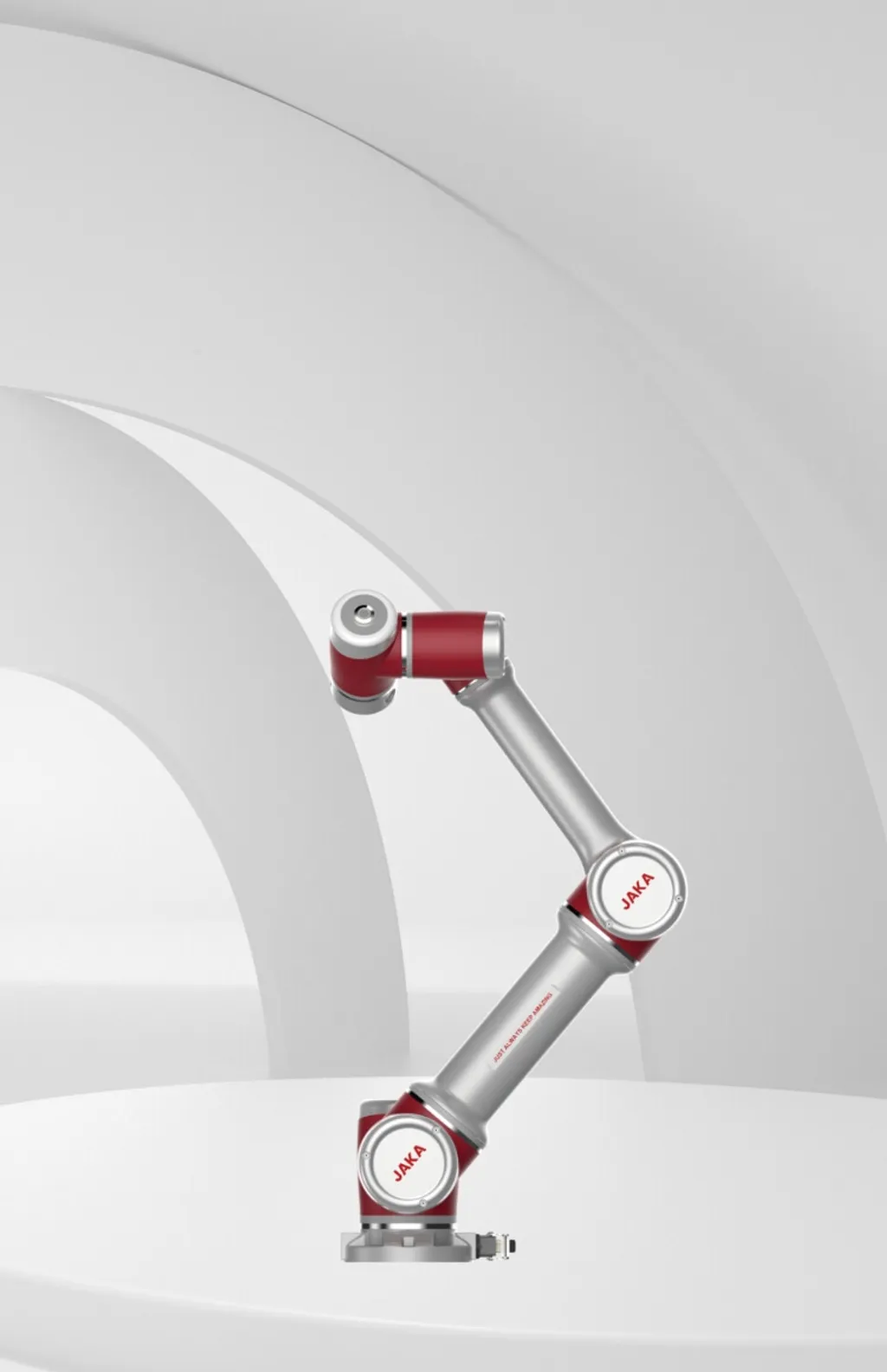
The repeatability numbers are real. A JAKA Zu 12 posts ±0.03 mm. A Universal Robots UR10e posts ±0.03 mm. On paper, those arms are equal. Off paper, you have a 25% US Section 301 tariff, a 4-to-6 week wait for a replacement joint module if something breaks in Toledo, and a software ecosystem that counts its integrations in the dozens rather than the thousands.
That is the Chinese robot story in 2026: hardware parity that is genuinely impressive, surrounded by infrastructure gaps that are genuinely consequential. Western buyers evaluating these brands deserve a straight count of both.
What the IRH database shows
Our analysis covers 67 Chinese-brand robots in the Industrial Robotics Hub database across six brands — JAKA (12 robots), AUBO (11), Han’s Robot (8), Dobot (9), ROKAE (14), and Estun (13). Every robot in the dataset is from a brand that is actively selling into Western markets or has stated intent to do so. The category breakdown: 62 collaborative arms and 13 industrial articulated arms (Estun and ROKAE both run industrial product lines alongside their cobots).
| Brand | HQ | Robots in DB | Payload range | Robot types | Western service presence |
|---|---|---|---|---|---|
| JAKA | Shanghai, China | 12 | 1-30 kg | Cobot only | Distributors in EU/North America; no owned service centers |
| AUBO | Beijing, China | 11 | 3-35 kg | Cobot only | EU distributors; AUBO iS line IP67-rated (washdown) |
| Han’s Robot | Shenzhen, China | 8 | 3-15 kg | Cobot only | Limited; primarily direct sales via partner network |
| Dobot | Shenzhen, China | 9 | 2-20 kg | Cobot only | EU presence; CE and UL certified across CR series |
| ROKAE | Beijing, China | 14 | 3-45 kg | Cobot + industrial arm | Early-stage Western distribution; strongest in Asia |
| Estun | Nanjing, China | 13 | 4-700 kg | Industrial arm + SCARA | Listed on Shanghai Stock Exchange; expanding EU presence |
Browse all brands at /brands/.
Where the hardware really stands
On the specs that matter most to a cell designer — payload, reach, repeatability, protection rating — Chinese cobots are competitive with the Western field in the 3-35 kg range. The JAKA Zu series spans 3-30 kg with repeatability between ±0.02 and ±0.05 mm depending on model. AUBO’s iS series reaches 35 kg at ±0.10 mm (the heavy end trades repeatability for payload, same as every other brand). ROKAE’s xMate CR45 hits 45 kg — heavier than anything Universal Robots makes.
Estun is the outlier: a full industrial-arm builder with a 700 kg palletizer in the catalog. That is a different market than cobots, and it competes with FANUC and KUKA’s heavy palletizer lines on cycle time and throughput, not compliance and force limiting.
Fieldbus support is adequate but not uniform. JAKA, AUBO, and Dobot all support PROFINET and EtherNet/IP alongside Modbus TCP. Han’s Robot leads on EtherCAT alongside PROFINET. ROKAE and Estun’s fieldbus documentation in the Western-facing specs is thinner — integrators consistently report that commissioning PROFINET on some Chinese arms takes 1-3 additional days compared to ABB or KUKA, where the PLC integration is a solved problem with tested function blocks. That is an estimate based on integrator feedback, not a controlled benchmark.
The gaps that actually cost money
Service network depth. When an ABB IRB 1600 goes down on a production line, there is a regional service center inside most countries where the robot was sold. For most Chinese brands in 2026, Western service is delivered through distributor networks with first-response times that vary widely by region. “4-6 weeks for a replacement joint module” is a figure that appears repeatedly in industry discussion of smaller Chinese cobot brands outside China — it is a rough estimate, not a guaranteed SLA. For a spare motor on a KUKA KR 6, same-day or next-day regional delivery is common in Germany or the US Midwest.
The consequence is not a deal-breaker for every buyer — if you have in-house electrical engineering and a reasonable spare-parts buffer, a longer logistics tail is manageable. If you are running a high-uptime line where 10 hours of downtime costs $50,000 in lost production, the service gap changes the risk calculus entirely.
Parts logistics. Section 301 tariffs (25% on Chinese-origin industrial goods entering the US) apply to most Chinese robot hardware. A $50,000 list-price arm enters the US at an effective landed cost closer to $62,500 before integration. That erodes the price advantage that Chinese brands relied on through 2023-2024. The EU does not currently impose equivalent tariffs, which makes European buyers a more straightforward case for Chinese cobots.
Software ecosystem depth. Universal Robots’ UR+ marketplace lists over 1,000 certified integrations — grippers, vision systems, safety scanners, conveyors, all tested with the UR controller. AUBO has an open SDK and a growing but far smaller ecosystem. JAKA’s app-based programming is genuinely simple for new deployments; the ecosystem for certified peripheral integrations is a fraction of UR+‘s depth. This matters most for buyers who want a plug-and-tested workflow rather than a custom integration project.
Simulation and offline programming. RoboDK, Roboguide (FANUC), and RobotStudio (ABB) have mature Western integrator communities. Most Chinese brands support some offline programming capability, but the depth of verified post-processors and pre-built simulation environments for Chinese arms in Western integration shops is thinner. AUBO and JAKA both provide offline tools; check with your integrator that they have run the specific arm in their simulation environment before committing.
Who these brands are for
Chinese cobots in 2026 are a rational choice for buyers who are willing to accept a longer parts-logistics tail in exchange for competitive hardware at a lower base price (in markets without Section 301 tariffs), or for buyers deploying in applications that tolerate some downtime. They are a harder case for high-uptime production lines in the US that are sensitive to tariff-adjusted landed cost.
The honest framing: evaluate the total cost of ownership, not the arm price. A Chinese cobot that saves $15,000 on the arm but costs three days of integration time on fieldbus setup and requires a spare-parts buffer worth $8,000 of held inventory may not be cheaper than a UR that commissions in a day and pulls parts next-day.
Brand-by-brand guides
Each of the six brands covered here has a dedicated buyer guide with hardware specs, ecosystem notes, and honest gap analysis:
- JAKA Robots Buyer Guide — the Zu and Pro series, phone-based programming, 30 kg ceiling
- AUBO Robots Buyer Guide — the iS series IP67 advantage, 35 kg heavy cobot
- Han’s Robot Buyer Guide — Elfin series EtherCAT lead, cleanroom focus
- Dobot Robots Buyer Guide — CR series CE+UL certs, Nova desktop line
- ROKAE Robots Buyer Guide — xMate series, 45 kg ceiling, industrial arm crossover
- Estun Robots Buyer Guide — ER series, 700 kg palletizer, full industrial range
The hardware story is genuinely competitive. The infrastructure story is still catching up. Know which one is the binding constraint for your application, and the decision gets a lot clearer.
Robot specs sourced from the Industrial Robotics Hub database of 67 Chinese-brand robots. Service-network observations reflect Q2 2026 integrator feedback and are approximate. Section 301 tariff rate (25%) is current as of June 2026; consult your customs broker for landed-cost calculations.