70% of Cobots Now Go to Non-Auto Factories. Here's What Changed.
Cobots were built for automotive. In 2026, 70% of orders go to food, electronics, pharma, and logistics. Our 108-cobot database shows exactly which specs drive the shift.
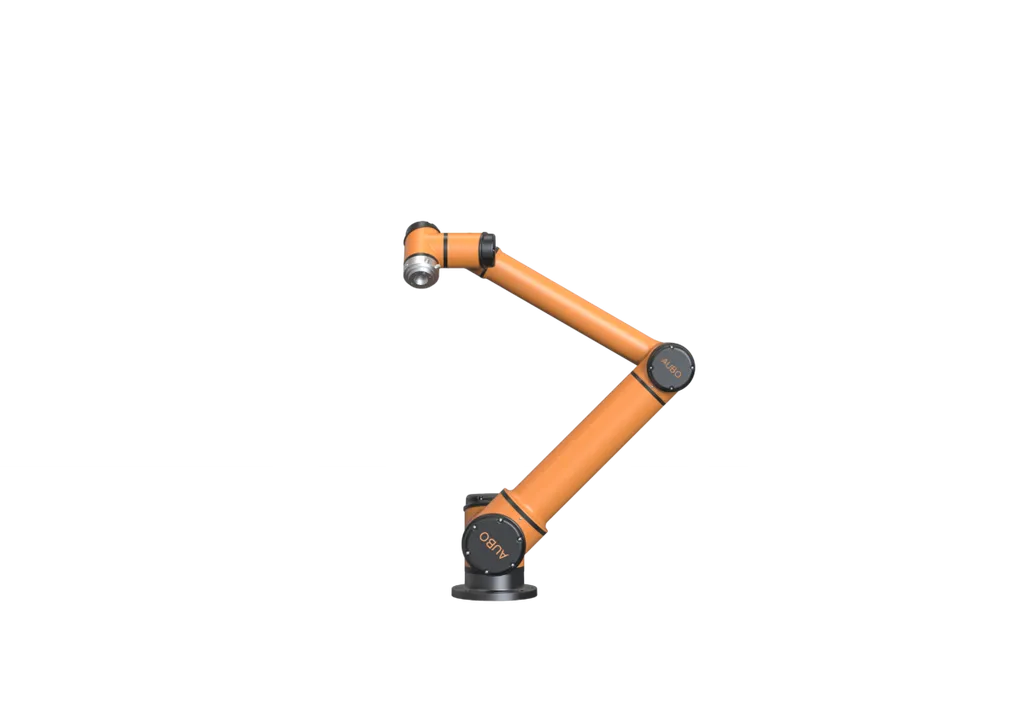
70%. That is the non-automotive share of collaborative robot orders in 2026. Cobots were invented for car doors and instrument panels. Now the majority buyer is a food line, an electronics cell, or a pharma blister pack station. The global cobot market sits at roughly $2.28 billion and is growing at ~20% CAGR through 2031, with 80,000 units projected to ship in 2026 — about 14% of all industrial robot installations. The product has changed. The buyer base changed faster.
Why did cobots start in automotive?
Automotive was the only sector willing to pay the early-2010s price for collaborative safety and flexible programming. Car plants ran high-mix production — 50 variants off one line — inside cells too crowded for a fenced articulated arm. A collaborative arm that could work next to an operator without a cage, and be retaught in hours instead of weeks, solved a real problem that only existed at scale in automotive.
The value proposition was: no cage, fast changeover, tolerant of human-in-the-loop. Nobody else was buying robots in 2012. A 5-person electronics shop could not afford the integration or justify the volume.
Two things changed that equation over the following decade: integration costs dropped and the minimum viable volume dropped with them. By 2026, a sub-10 kg cobot with a tablet interface and a pre-built gripper kit can be up in a day. That changes who the buyer is.
What is driving non-automotive adoption in 2026?
Three forces converged.
Labor shortage in non-automotive manufacturing. Food packaging, electronics assembly, and pharma dispensing all run on repetitive, low-variation tasks that the labor market stopped reliably staffing around 2021-2022. A cobot on a blister pack station does not call in sick, does not have a learning curve, and does not rotate every 90 minutes to avoid repetitive strain. The ROI case writes itself when the alternative is an unfilled shift.
Price dropped while capability rose. Sub-10 kg cobots that cost $60,000-$80,000 in 2014 are in the $25,000-$45,000 range now, and they arrive with built-in force limiting, vision-kit compatibility, and plug-and-play gripper ecosystems. See our integration cost breakdown — even at the 4-6x integration multiplier, a light-arm cell is now accessible to mid-market non-automotive buyers.
The IP67 and compliance gap closed. This was the real blocker for food and pharma. A cobot that cannot survive a caustic washdown is useless in a food plant. A robot without CE traceability or FDA-compatible documentation does not get past procurement. That gap closed. IP67 cobots now exist in quantity. Our IP-ratings analysis found 52 of 242 robots in our database are IP67 or above. AUBO’s entire iS series — six models from 3 kg to 35 kg — is IP67 rated. The washdown excuse is gone.
What does our database show about cobot applications?
The full cobot category in our database has 108 cobots across 11+ brands. The industry tag data is instructive with one important caveat: tags are multi-label, so one cobot can carry several. A cobot designed for automotive assembly also often works in electronics — the OEM lists both. This is spec-design data, not purchase-order data.
That said, the distribution reflects where OEMs expect their products to land:
- Automotive: 90 tags (nearly every cobot is spec’d as automotive-capable)
- Electronics: 78 tags
- Food and beverage: 38 tags
- Logistics: 27 tags
- General manufacturing: 25 tags
- Metal and pharmaceutical: ~20 tags each
Automotive’s 90 does not mean 90 cobots are being bought by car plants. It means 90 cobots are designed to automotive standards — which is the baseline for the product. The 70% non-automotive order share in 2026 is from purchase data, not our tag data. The inversion is real: the product is built to automotive spec but is being deployed everywhere else.
The payload split matters more for the non-auto wave:
| Payload tier | Cobots in DB | Share | Typical non-auto use case |
|---|---|---|---|
| Sub-5 kg | 28 | 26% | PCB handling, lab automation, light pick-and-place |
| 5-10 kg | 36 | 33% | Food portioning, electronics assembly, pharma blister |
| 10-20 kg | 33 | 31% | Machine tending, welding assist, heavier pick-and-place |
| 20 kg+ | 11 | 10% | Palletizing sub-cells, heavy assembly, automotive |
Source: our analysis of 108 cobots in the Industrial Robotics Hub database. Sub-10 kg cobots (59%) match the payload needs of most food, electronics, and pharma non-automotive cells.
59% of cobots in our database are sub-10 kg. That is the tier where food portioning, blister pack handling, PCB population, and lab automation live. Only 11 cobots (10%) break 20 kg — those are the heavy-duty tier that still skews automotive or palletizing.
Which cobot specs matter most outside automotive?
Payload and reach first. Sub-10 kg cobots cover the majority of non-auto tasks; the 10-20 kg tier covers machine tending and heavier assembly. The 20 kg+ tier is rarely needed for food or pharma.
After payload: IP rating. This is non-negotiable in food and pharma. Our IP-ratings analysis shows that 23% of cobots in our database are IP67 or above — better than the fleet average, worse than delta robots. The AUBO iS series is the clearest example of food/pharma spec alignment: all six models (iS10 at 10 kg, iS20 at 20 kg, through the iS35 at 35 kg) carry IP67. Washdown-capable, sealed joints, compatible with wet-area cleaning regimens.
After IP: ISO/TS 15066 risk assessment still applies regardless of sector. Non-automotive buyers sometimes assume “cobot” means “no safety review required.” It does not. The safety assessment is what removes the guarding requirement, not the cobot label alone. Budget for it.
Reach matters in confined packaging lines. A 600 mm reach cobot that fits inside a packaging machine frame is a different procurement than an 850 mm arm on a free-standing cell. Measure the cell before speccing the arm.
| Metric | 2026 figure | Source |
|---|---|---|
| Non-automotive share of cobot orders | 70% | Robotomated |
| Global cobot units shipped (projected) | 80,000 | Robotomated |
| Cobot share of all industrial robot installs | ~14% | Robotomated |
| Global cobot market size | ~$2.28 billion | Market.us |
| CAGR 2026-2031 | ~20% | Market.us |
Source: third-party market data (verified links in text). Industrial Robotics Hub does not independently verify market projections — treat as directional.
What this means if you are a non-automotive buyer
If your last cobot evaluation was pre-2022, the product has caught up to your requirements. The IP67 gap is closed. CE documentation is standard. FDA-compatible materials exist. The integration stack is simpler than it was.
The practical reframe: start with the payload-reach-IP matrix, not the brand name. Determine your payload (most food and pharma tasks land sub-10 kg), your reach requirement (cell geometry first), and your IP requirement (IP67 for wet areas, IP65 for splash, IP54 for dry food dust). Then filter the cobot category from there. For specific applications, the pick and place application page and the assembly application page each list the full subset from our database with relevant specs. Most buyers who start with brand end up over-specced or under-specced on one of these three dimensions.
Integration is simpler for sub-10 kg cobots — lower mass means lighter tooling, less torque on the mounting surface, shorter commissioning time. Our integration cost breakdown documents the 4-6x multiplier; the absolute number is lower when the arm costs less and the tooling is lighter.
The 70% non-automotive share is a market signal, not a product recommendation. What it tells you is that the rest of non-automotive manufacturing is already moving. The question for food, pharma, and electronics buyers is not whether cobots work in your application — the IP67 cobots in production at food lines confirm that — it is whether your integration team has current knowledge of the product. A cobot from 2018 is a different machine than a 2024-spec iS10 or UR10e. If your evaluation is that old, run a new one.
Compare these robots