Humanoid Robots Hit Factories in 2026: 16,000 Units, Narrow Tasks
Tesla Optimus, Figure 02, and Apollo are on real factory floors in 2026. 16,000 humanoid units globally. Here is what they are actually doing - and what they are not.
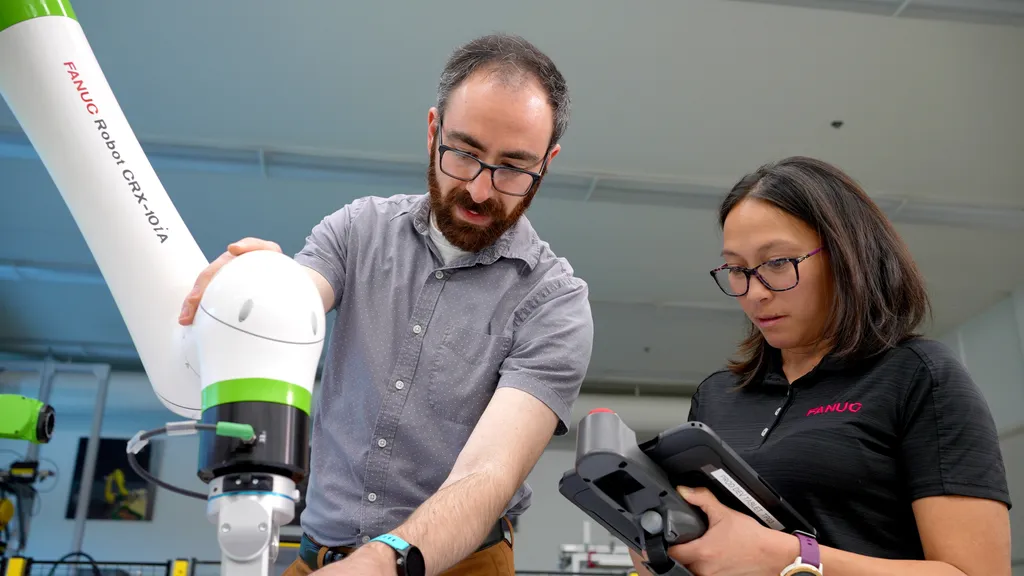
16,000. That is the number of humanoid robots installed globally in 2025, according to Counterpoint Research via rivcut.com. A FANUC articulated arm has been installed a million-plus times. The IFR’s 2024 World Robotics report puts the conventional industrial robot installed base at 4.28 million units. That context does not make the humanoid wave unimportant — it makes it correctly sized. This is a technology in its first production year, not a mature market. The press releases should be read accordingly.
What happened to humanoid robots in 2026?
Three programs crossed from extended prototype testing to limited production in Q2 2026: Tesla Optimus Gen 2, Figure 02, and Apptronik Apollo.
The most concrete public data point belongs to Figure 02 at BMW’s Spartanburg plant: 90,000+ sheet metal parts loaded across 1,250 operational hours. That number comes direct from the program’s reporting, which also covers the Tesla Gigafactory deployment and Apptronik Apollo’s fulfillment-center work. The Counterpoint Research projection: cumulative installs exceed 100,000 by 2027.
That is the official narrative. Here is the floor engineer read.
1,250 operational hours at BMW is a milestone worth acknowledging. It is also roughly 6 weeks of runtime at industrial throughput — or 7.5 months if the unit ran 5 hours per day. A conventional articulated arm in a structured cell clocks 8,000 hours per year at 85-95% uptime. Figure 02 completed, in its headline deployment, what a conventional arm does in its first month after commissioning. That is not a dismissal. It is the correct benchmark for anyone trying to size the actual gap between the two technologies right now.
What are humanoid robots actually doing on the floor?
Not high-speed repeatable pick-and-place. Conventional robots cleared that a decade ago and do it at one-tenth the price per cycle. What the 2026 deployments are actually running, based on reported programs and publicly disclosed task categories:
- Body shop panel handling — moving sheet metal blanks from rack to press, which is exactly what Figure 02 was doing at BMW
- Material transport in structured environments — point A to point B in a known layout, low variability
- Basic sub-step assembly — reduced-variability operations where the task sequence is fixed even if the workspace is not
- Ergonomic-risk assembly — overhead work, under-vehicle access, confined-space operations where a fenced arm cannot follow the part and a human operator racks up musculoskeletal damage after six months
- Material kitting and logistics — picking from a varied buffer and staging for downstream assembly
- EV battery module assembly — a repeat-but-flexible task that sits at the edge of what structured automation handles cleanly
- Quality inspection assistance — camera-plus-mobility tasks that benefit from the human form factor in existing workspaces
They are doing what any sensible engineer would start with: the tasks that are easy enough to be reliable, in environments that are controlled enough to be safe, with throughput expectations low enough that the current reliability numbers are not a production-line catastrophe. That is not a criticism. That is the correct product introduction strategy.
How do they compare to conventional industrial robots?
The honest comparison requires holding two things at once: these are genuinely different machines, and the current gap is wider than the press coverage implies.
| Metric | Humanoid robot (2026) | Conventional articulated arm |
|---|---|---|
| Global installed base | ~16,000 (2025) | 4.28 million (IFR 2024) |
| Typical payload | 10-20 kg | 3-1700 kg (varies by model) |
| Repeatability | Not published | 0.01-0.27 mm (our analysis) |
| Best task fit | Unstructured, ergonomic-risk | Repeatable, structured |
| Uptime data | Not public | 85-95% in structured cells |
| Reference deployment | Figure 02 @ BMW: 1,250 hrs | Typical: 8,000 hrs/year |
Comparison based on publicly available data and our analysis of 264 industrial robots in the IRH database. Humanoid data from manufacturer press releases — independent uptime and repeatability figures are not yet public.
The payload gap is real and fundamental. The FANUC M-2000iA/1700L carries 1,700 kg at 3,734 mm reach — a machine you can see in our payload-vs-reach analysis. A humanoid robot carries perhaps 20 kg with both hands. These are not competing products. They are different machines solving different problems.
The repeatability gap is more significant than it looks. Our repeatability analysis covers 167 robots with published figures: SCARA robots median 0.01 mm, articulated arms 0.03 mm median, cobots 0.05 mm. Humanoid robots publish no repeatability specification at all. That is not a minor omission. No published spec means no basis for the engineer to spec the system, audit the cell, or hold the vendor accountable. Until those numbers are public, the only meaningful repeatability comparison is “unknown” vs “0.01-0.27 mm depending on payload,” and unknown loses every time precision matters.
The uptime data is the same story. No independent figures. Press releases confirm deployments exist; they do not confirm what percentage of shifts the unit was running vs. being serviced, retrained, or standing by.
When does a humanoid robot actually make sense?
Not when your task is repeatable and structured. If you have a defined pick-and-place operation in a clean environment with fixed part geometry, buy a conventional articulated arm. Look at the heavy articulated arms in our database — they are cheaper per cycle, more reliable, and the integration path is mature. If you need human-adjacent flexibility at reasonable cost, the cobot category exists precisely for that tradeoff.
The humanoid case starts making sense under three conditions, and all three have to be true simultaneously.
First: the task is ergonomically dangerous for a human operator. Overhead assembly, confined-space access, awkward postures that generate injury claims after a year. This is where the human form factor is actually an advantage — the robot follows the same geometry as the human it is replacing, in a space that was designed for human access.
Second: the task is too unstructured or variable for a conventional robot cell. If the part location changes daily, the workpiece geometry varies, or the task sequence shifts with model mix, the programming and tooling cost for a conventional arm spirals. That is where the flexibility argument has real weight.
Third: you can accept current reliability and throughput. This is the one most buyers will fail. If a conventional arm going down for 4 hours shuts your line, a humanoid robot is not your answer in 2026. If the station has enough slack and human oversight to absorb an unplanned stop, you have room to run a learning platform.
The price premium exists and is real. You are paying for flexibility you may not use. If all three conditions above are true, the flexibility has value. If only one or two are true, you are spending a premium for a machine that is not meaningfully better than a cobot for your specific task — and the cobot ships with a published repeatability spec.
What Marcus is watching for
I will not dismiss the 100,000-unit projection. Counterpoint Research has been tracking this market longer than the press releases have. But I will not plan a capital spend around it either.
What would change my read: published repeatability specifications from at least two vendors, independent from their marketing materials. Publicly reported uptime data from a deployment that has run more than 3,000 hours — call it a single calendar year at moderate throughput. Total-cost-of-ownership figures from a real customer, not a vendor press release. And maintenance contract terms. The terms on a maintenance contract tell you what the vendor actually believes about reliability, in the way their press release will not.
Figure 02 running 90,000 parts in 1,250 hours at BMW is a genuine result. It is also a carefully chosen milestone, reported by the vendor, for a program where BMW has obvious incentive to be an enthusiastic design partner. I am waiting for the deployment that was not designed to succeed — the messy factory, the inconsistent supply chain, the production manager who is not invested in making the pilot look good. That deployment will tell me more about where the technology actually sits than the current press release cycle.
I will believe the 100,000-unit projection when I see the maintenance contract terms.