Robot IP Ratings: The Wrist Beats the Arm 61% of the Time
Of 95 robots publishing both an arm and a wrist IP rating, 58 (61%) protect the wrist better than the arm body. Only one robot inverts the pattern.
Fifty-eight out of 95. That is how many robots in our database, among those that publish an IP rating for both the arm body and the wrist, protect the wrist better than the arm. Only one robot does the opposite. If you have ever assumed the IP rating printed on a spec sheet describes the whole machine, this data says otherwise: on most robots that bother to break it out, the toughest sealing lives at the tool point, not the base.
How many robots publish both an arm and a wrist IP rating?
Not many, and that gap matters before you get to the interesting part. Of the 273 robots in our database, 256 (93.8%) publish an arm IP rating. Only 95 of those 273 (34.8%) publish a separate wrist or tool-flange rating on top of it. The other two-thirds either leave the wrist undocumented or, more likely, never had it tested and printed as a distinct number. This is the same disclosure problem we have seen with price, speed, and power draw in this database: manufacturers publish the headline spec and leave the second-order number for the datasheet’s fine print, if it appears at all.
That 34.8% is worth sitting with. A buyer speccing a dispensing or spray-coating cell reads “IP54” on the product page and assumes that number covers the whole arm, tool included. Two-thirds of the time, there simply is no separate wrist number to check against. The buyer is left guessing whether the part of the robot doing the wet work was rated for it at all.
Is the wrist usually better protected than the arm?
Among the 95 robots that publish both numbers, yes, decisively. The breakdown:
| Comparison | Robots (n) | Share |
|---|---|---|
| Wrist rated higher than arm | 58 | 61.1% |
| Wrist rated equal to arm | 36 | 37.9% |
| Wrist rated lower than arm | 1 | 1.1% |
Source: our analysis of the 95 robots in the Industrial Robotics Hub database that publish both ipRatingArm and ipRatingWrist.
The gap size (how many IP steps separate wrist from arm) spreads out like this:
Gap 0 (equal protection) is the single largest bucket at 36 robots, but it is still a minority. Add up every robot where the wrist is rated higher (gap 1, 2, 3, or 7) and you get 58 robots, well over half the sample. Manufacturers that bother to spec the wrist separately are, more often than not, building it to survive worse conditions than the arm.
The pattern is not evenly distributed by brand, either. ABB’s split is 7 higher and 2 equal out of 9 robots publishing both numbers, zero lower. Kawasaki’s entire both-published lineup, all 9 robots, rates the wrist higher than the arm with no exceptions. Yaskawa splits closer to the middle: 9 higher and 12 equal of 21, still zero lower. FANUC runs the other way. Its dominant pattern is building arm and wrist to the same rating, 13 of 16, rather than concentrating protection at the tool. Four robot brands, four different design philosophies for the same tradeoff.
Which robots have the biggest arm-to-wrist protection gap?
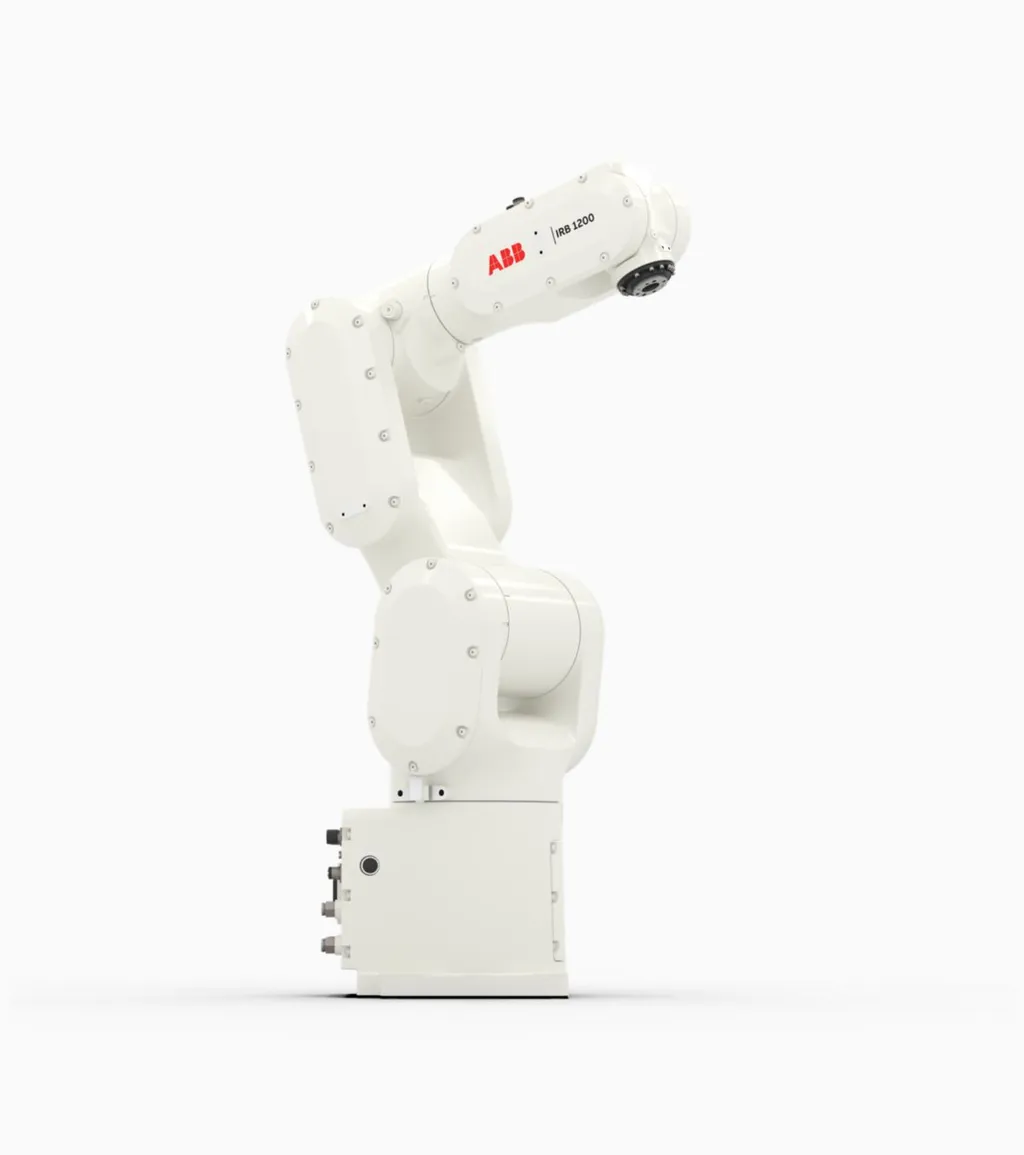
Six robots carry a seven-step gap, the largest in the dataset: an arm rated IP40 (dust-protected only, no water protection at all) paired with a wrist rated IP67 (fully submersible). All six are compact articulated arms from ABB and Mitsubishi.
| Brand | Model | Arm IP | Wrist IP | Gap |
|---|---|---|---|---|
| ABB | IRB 1200-7/0.7 | IP40 | IP67 | 7 |
| ABB | IRB 1300-11/0.9 | IP40 | IP67 | 7 |
| Mitsubishi | MELFA RV-13FR | IP40 | IP67 | 7 |
| Mitsubishi | MELFA RV-20FR | IP40 | IP67 | 7 |
| Mitsubishi | MELFA RV-4FR | IP40 | IP67 | 7 |
| Mitsubishi | MELFA RV-7FRL | IP40 | IP67 | 7 |
Source: our analysis of the Industrial Robotics Hub database, sorted by arm-to-wrist IP gap.
These are compact assembly and precision arms, the kind of machine you find doing dispensing, adhesive application, or light cleaning work at the tool point while the arm body sits in a normal, dry factory bay outside the spray zone. The engineering logic tracks: seal the whole arm to IP67 and you pay for corrosion-resistant motor housings and connectors at every joint, a cost with no return if the fluid never reaches the elbow. Seal the wrist to IP67 and dust-protect the rest, and you have paid only for the protection the job actually needs. It is the same “spec for the actual environment, not the worst case” logic that governs the arm-vs-application decision on the articulated robot type page: these six machines apply it within a single robot, not just across a product line.
Is there a robot where the arm is protected better than the wrist?
One. Out of every robot in the database that publishes both numbers, exactly one runs the pattern backward: the FANUC M-3iA/6S, a delta robot with an arm rated IP69K (the top tier, steam-cleanable at high pressure and temperature) and a wrist rated only IP65 (dust-tight, water jets, but not steam or high-pressure washdown). FANUC’s own M-3 series product page confirms the IP69K arm rating.
The reason is architectural, not a manufacturing inconsistency. A delta robot like the M-3iA hangs its arm structure in open air above the work cell, directly in the wash zone of a food-picking or packaging line, by design. There is no fence or enclosure keeping the linkage dry, because the whole point of a delta robot is high-speed, exposed, hygienic pick-and-place. FANUC built the M-3iA’s arm to survive that reality at the top spec. An articulated arm, by contrast, is usually fenced and positioned so only the tool point reaches into wet or particulate work, which is exactly the pattern the six IP40-to-IP67 robots above follow. Flip the exposure and you flip the protection priority: the M-3iA’s wrist still needs to survive splashes and cleaning, just not the full steam-jet cycle its own arm body sits directly in.
Worth noting as an open question, not a claim about the wider market: zero robots in our 273-robot database publish an IP69K wrist rating, even though two robots (the M-3iA and the ABB IRB 360 FlexPicker, covered in our companion piece on IP67+ washdown prevalence) publish an IP69K arm rating. The top ingress-protection tier exists at the arm level in this dataset but has never yet been documented at the wrist or tool-flange level. That may reflect a real design gap, or it may just mean nobody has filled in that field yet. Either way, a buyer who needs steam-cleanable protection specifically at the tool point should ask the manufacturer directly rather than assume the arm’s headline rating extends to the flange.
What does this mean for a washdown or wet-process buyer?
Ask for both numbers, not one. The IP rating you see on a spec sheet or product page is, more often than not, the arm rating. If your application does its wet, dirty, or particulate-heavy work at the tool (dispensing, spraying, wet assembly, inline cleaning), the arm rating tells you almost nothing about whether the part of the robot actually touching the mess will survive it.
This dataset gives you a reasonable default assumption when the wrist number is missing: manufacturers that do publish both numbers protect the wrist better than the arm 61.1% of the time and equally 37.9% of the time, a combined 99% where the wrist is never worse. But “usually fine” is not a spec, and the one exception (a delta robot, where the exposure logic inverts entirely) shows why you cannot extrapolate blindly from robot type or brand reputation. If your process runs a caustic wash cycle across the whole cell rather than a targeted spray at the tool, as we covered in our companion piece on IP67+ washdown prevalence by type, the arm rating becomes the binding constraint again and this wrist-vs-arm gap stops mattering. Know which exposure pattern your line actually has before you decide which number to interrogate. For the two-digit IP scheme itself, Wikipedia’s IP Code reference is the clearest explanation of what each digit certifies and what separates IP67 from IP69K.
Compare these robots