Robot Fieldbus Support: PROFINET Wins, EtherCAT Splits
Of 219 robots that publish fieldbus data, just 54% support PROFINET, EtherNet/IP, and EtherCAT together. Some skip real fieldbus support entirely.
Just over half. That’s the number that matters if you’re specing a robot against an existing PLC network. Of the 219 robots in our database that publish a fieldbus spec, only 118 (53.9%) support all three major industrial protocols at once: PROFINET, EtherNet/IP, and EtherCAT together. Call it the trifecta. If your shortlist robot doesn’t have it, you’re either narrowing your protocol requirement or budgeting for a gateway.
This is the fieldbus story nobody prints on a spec sheet in plain language: which robots actually speak your plant’s network, and which ones look compatible on paper but quietly rely on a single legacy protocol or none at all.
How many robots even publish fieldbus support?
Of the 265 robots in our analysis of the Industrial Robotics Hub database, 219 (82.6%) publish a connectivity.fieldbus field. The other 46 (17.4%) don’t disclose it, and the gap isn’t evenly spread. Four brands account for most of the silence: Estun (1 of 13 models), Rokae (2 of 14), Siasun (0 of 11), and Inovance (0 of 9). That’s not a claim that those robots lack fieldbus support in the real world. It’s a documentation gap in the data those brands publish, and it’s worth flagging to a sales engineer directly rather than assuming the worst from a missing field.
Which protocol is closest to universal?
Among the 219 robots that publish fieldbus data, PROFINET is the closest thing to a universal standard.
Source: our analysis of 219 robots publishing connectivity.fieldbus in the Industrial Robotics Hub database. Percentages of 219, not 265.
PROFINET is on 199 of 219 robots (90.9%). EtherNet/IP follows close behind at 189 (86.3%). If your plant has standardized on either one, robot compatibility is close to a solved problem. EtherCAT is the real differentiator at 58.0% (127 robots), which we’ll get to below. Everything past that drops off fast: Modbus TCP at 38.8%, DeviceNet at 9.1%, and CC-Link IE at 4.6%, all 10 of which are Mitsubishi robots (CC-Link is a Mitsubishi Electric-originated open standard, so that concentration tracks). The 5 robots on generic Ethernet with no real fieldbus layer are all Omron AMRs. That’s not a gap either, it’s architecture: mobile robots run WiFi fleet networking for navigation and dispatch, not a hardwired fieldbus for I/O.
What’s “the trifecta” and who doesn’t have it?
Most robots that publish fieldbus data carry more than one protocol. The distribution:
| Protocol count | Robots | Share of 219 |
|---|---|---|
| 1 protocol | 6 | 2.7% |
| 2 protocols | 22 | 10.0% |
| 3 protocols | 132 | 60.3% |
| 4 protocols | 58 | 26.5% |
| 5 protocols | 1 | 0.5% |
The 60.3% sitting at exactly 3 protocols looks reassuring until you check which three. Of the 219 robots, 118 (53.9%) carry the trifecta: PROFINET, EtherNet/IP, and EtherCAT together. That’s the baseline a lot of integrators assume is standard. It isn’t. It’s just over half.
Thirty-four of those 118 stack a fourth or even fifth protocol on top of the trifecta. Six Doosan cobots (a0509, a0509s, a0912, a0912s, e0509, h2017) add Modbus TCP as a fourth line: ["EtherNet/IP","PROFINET","Modbus TCP","EtherCAT"]. That’s the safest kind of robot to buy against an unknown future network, since it’s covered on all three majors plus a legacy fallback.
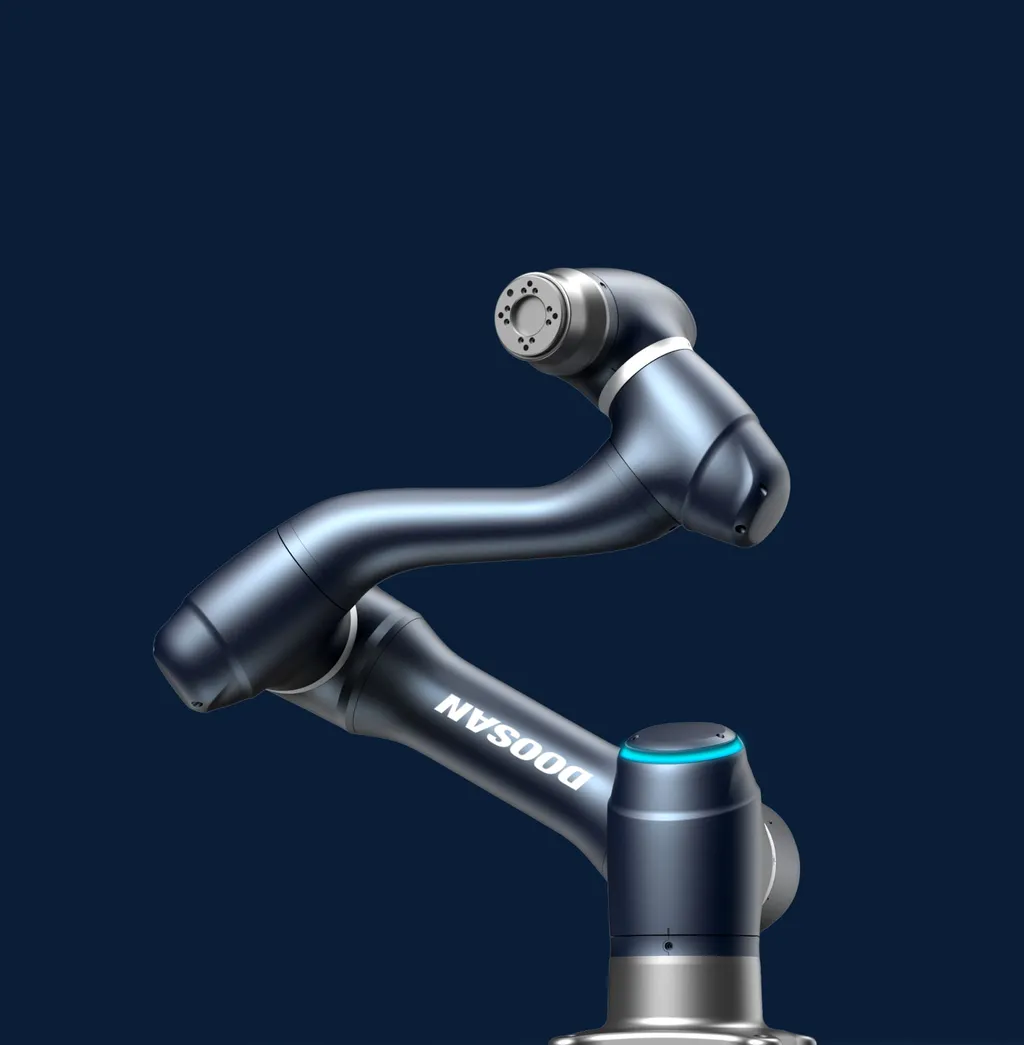
The Doosan A0509 is one of those six, and it’s worth using as the reference point for what “fully covered” actually looks like on a spec sheet.
The single most protocol-flexible robot in the database is the JAKA MiniCobo, with 5 distinct protocols: Modbus TCP, Modbus RTU, TCP/IP, PROFINET, and EtherNet/IP. But look closely and it does not include EtherCAT. That makes it broad, not complete. If your line runs EtherCAT for coordinated motion timing, the MiniCobo’s protocol count doesn’t help you.
Does EtherCAT adoption split by robot type?
Yes, and this is the clearest structural pattern in the data. PROFINET and EtherNet/IP are near-universal across every robot type, both clearing 68% even at their lowest point. EtherCAT is not:
Source: our analysis of the Industrial Robotics Hub database, EtherCAT adoption among robots publishing connectivity.fieldbus, by type. Small-sample types (n under 10) noted.
Welding hits 100% (n=4, small sample, treat it as directional). Palletizer sits at 75.0% (n=8) and articulated at 70.1% (54 of 77), with SCARA close behind at 69.2% (18 of 26). Cobots drop to 46.7% (43 of 92), less than half, and delta arms sit at 40.0% (n=5). AMRs are at 0% by architecture, not by gap, same reasoning as the generic-Ethernet Omron units above.
The pattern here is plausible, not proven by this dataset alone: EtherCAT is a deterministic, high-speed real-time bus, and that kind of timing precision matters more for multi-axis coordinated motion on a heavier articulated arm than for a cobot’s lower-speed, force-limited collaborative motion profile. If your cell needs EtherCAT for that reason, your shortlist just shrank from “most robots” to well under half of the cobot category, and it skews toward articulated and SCARA classes instead.
What if your shortlist robot only speaks Modbus?
Fifteen robots in the database skip all three majors entirely and rely only on Modbus, generic TCP/IP, or plain Ethernet. That group is concentrated in two places: budget cobots and mobile platforms.
All 9 JAKA Pro/Zu series cobots (pro5, pro12, pro16, zu3, zu5, zu7, zu12, zu18) run on Modbus TCP, Modbus RTU, and TCP/IP only, no PROFINET, no EtherNet/IP, no EtherCAT. Two Dobot cobots (nova2, nova5) are on Modbus TCP and RTU only. And five Omron AMRs (hd-1500, ld-90, ld-250, md-650, md-900) round out the list, mostly on plain Ethernet, with the ld-250 the outlier at EtherNet/IP-only.
None of that makes these bad robots. They’re lower-cost entry cobots and mobile platforms where the vendor didn’t build in fieldbus-grade PLC integration because most buyers in that price tier don’t need it. But if you already run a PROFINET or EtherCAT line and you’re eyeing one of these to fill a gap, that mismatch is a protocol gateway, and a protocol gateway is one more line item on the integration invoice, the same invoice-under-the-invoice problem we’ve written about before.
Check the fieldbus line before you check the payload line
Payload and reach get checked first because they’re the numbers on the box. Fieldbus support gets checked last, if it gets checked at all, and it’s the spec most likely to turn a clean install into an integration change order.
If your plant runs PROFINET, you’re fine almost everywhere: 90.9% of documented robots speak it. If you’re standardized on EtherCAT for deterministic motion, your real shortlist is 58.0% of the market, and it skews toward articulated and SCARA classes rather than cobots. And if the robot you’re pricing is a budget Chinese cobot or an AMR, pull up its connectivity.fieldbus line before you finalize the quote. It might be Modbus-only, and that’s not a deal-breaker, it’s a line item you need to know about before the integrator does the discovering for you.
Compare these robots