Buying a Used Industrial Robot: The Neutral Checklist Dealers Won't Lead With
A used arm can cost a third of new, or it can cost more than new once you count remastering and a mismatched controller. Here is the neutral, no-dealer-bias checklist: operating hours, arm-to-controller serial pairing, dead mastering batteries, and reducer backlash, with the numbers that separate a bargain from a trap.
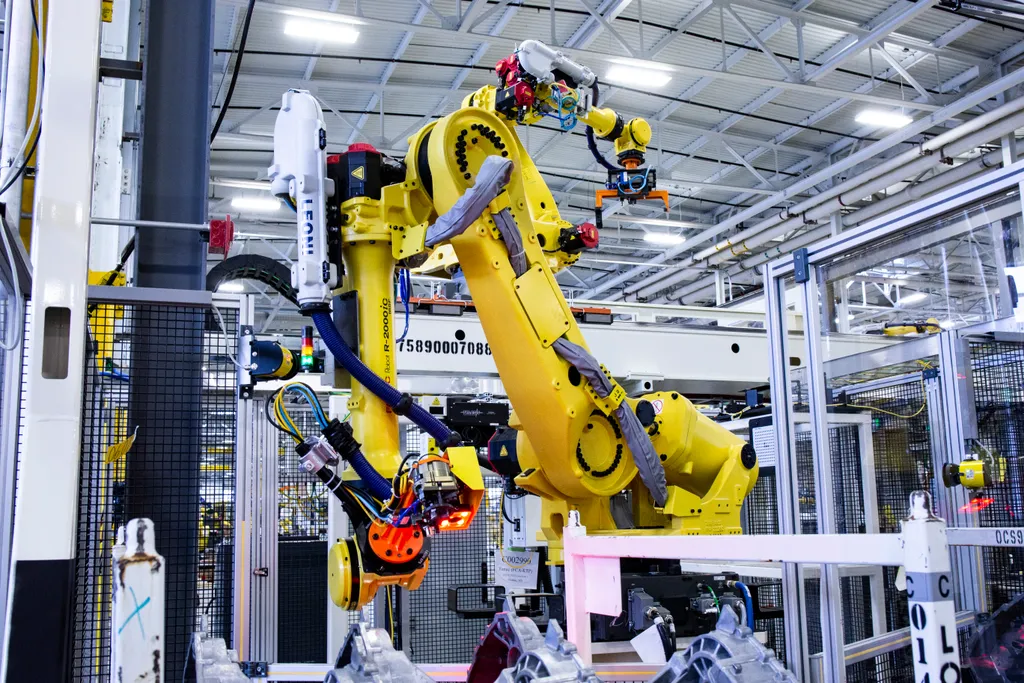
A used industrial robot can be one of the best-value purchases in your plant, or a slow-motion mistake that costs more than a new arm once the invoices land. The difference is almost never the price on the listing. It is four things the seller has no incentive to lead with: how many hours the arm actually moved, whether the arm and controller are the matched pair they left the factory as, whether the mastering batteries are still alive, and how much play has worn into the reducers. Get those four right and a used FANUC, ABB, KUKA, or Yaskawa at a third of new price is a genuine bargain. Get them wrong and you have bought a calibration project.
This is the neutral version of the checklist. Dealers publish buying guides too, but they are selling the robot on the next line, so the parts that could kill a sale tend to get soft-pedaled. IRH does not sell robots. Here is what actually matters, with the numbers.
Operating hours: the meter lies more often than it tells the truth
The rule of thumb integrators use is that under 30,000 operating hours counts as low usage on an arm designed for a 15 to 20 year mechanical life. That is a fine starting filter. The problem is what the counter is actually counting.
On many older FANUC controllers, and this is documented on the manufacturer forums, the hour meter logs how long the controller was powered on, not how long the servos were in motion. A robot that ran a single eight-hour shift but sat energized around the clock will show roughly three times the hours it ever moved. The number looks alarming and the robot may be barely used, or the number looks fine and the robot ran three shifts hard. Either way, the meter on its own is not evidence.
So treat hours as a question, not an answer. Ask for the maintenance logs, the greasing and battery-change records, and the application it ran. A palletizer that lifted boxes at a steady rhythm ages very differently from a spot-welding arm that slammed through hard accel and decel cycles all day. The Robot-Forum used-robot thread makes the same point that experienced buyers make: the duty cycle and the wear evidence matter more than the headline hour count.
The arm-to-controller serial pairing trap
This is the single most expensive mistake on the list, and it hides in plain sight. An industrial arm and its controller are calibrated together at the factory. The mastering offsets, the servo tuning, and often the model and axis configuration live in the controller, matched to that specific arm.
Buy an arm and a controller that did not ship together, either because a dealer parted out two robots or because a “controller included” listing quietly swapped units, and you have not bought a working robot. You have bought a remastering and recalibration job, and depending on the brand an OEM software relicense on top. On a low-cost older arm, that combined bill can exceed what the robot is worth. AMD Machines makes the same warning in its new-versus-refurbished breakdown: the value of a refurbished robot depends heavily on it being a complete, matched, properly restored system rather than a bag of compatible parts.
The check is simple and non-negotiable. Confirm the arm serial and the controller serial were shipped together as one unit. Get it in writing. If the seller cannot confirm it, price a full remastering and calibration into your offer, or walk.
Mastering batteries and lost position data
Industrial arms know where each joint is through absolute encoders. Those encoders keep their count using backup batteries when the robot is powered off. Let the batteries die while the robot is unpowered, in storage or in transit, and the position memory is wiped.
The lifespans are shorter than most buyers expect. Encoder backup batteries typically last 1 to 2 years, and controller CPU batteries 3 to 5 years, per the Industrial Monitor Direct guide to restarting a long-stored FANUC. A robot that has been sitting on a dealer’s floor for two years is a prime candidate for dead encoder batteries. When they go, a FANUC throws an SRVO-037 or SRVO-038 servo alarm, and the robot will not run a program until it is remastered.
Remastering is not necessarily a disaster. As the Amtek remastering procedure notes, if no motor or mechanical joint was disturbed, the factory master counts can sometimes be recovered through the MASTER/CAL menu without special hardware. But if the arm was disassembled for shipping, or a motor was swapped, every axis has to be retaught to a known reference, which is skilled labor and downtime. Before you buy, ask the last two questions that matter: are the batteries current, and does the robot currently power up without a mastering alarm. A robot that boots clean and holds position has kept its data. One that greets you with a servo alarm is telling you what work is ahead.
Mechanical wear: rock every axis before you pay
Encoders and controllers can be fixed with data. Worn gearboxes cannot. The reducers, usually strain-wave or cycloidal units, are the most expensive mechanical part of the arm, and backlash from wear degrades path accuracy in ways that no amount of remastering will correct.
The field test is manual and takes minutes. With the servos engaged, try to rock each joint by hand. Any perceptible play means backlash in that axis reducer, and reducer replacement runs into the low thousands of dollars per axis in parts and labor. Multiply that across a six-axis arm and a “cheap” robot stops being cheap. Listen for grinding on a slow jog, check for oil weeping at the joint seals, and inspect the cable dress for cracked insulation, all of which the used-robot community flags as tells of a hard life.
Brand friction is real: FANUC, ABB, KUKA, and Yaskawa are not equal here
The remastering and spares story differs by brand, and it should shape which used robot you chase. FANUC’s install base is enormous, so parts, documentation, and forum knowledge for a workhorse like the R-2000iC are everywhere, which lowers the risk on an older unit. ABB’s IRB heavy line, KUKA’s KR series, and Yaskawa’s Motoman arms each have their own mastering routines, battery layouts, and controller generations, and an integrator fluent in one is not automatically fluent in another.
The practical rule: buy a used robot in a brand your team, or a nearby service partner, already supports. A 20 percent cheaper arm in an unfamiliar ecosystem can cost the saving back on the first callout. And confirm the specific controller generation is still supported, because an obsolete controller with no spare boards is a dead end regardless of how good the arm is.
The numbers, on one screen
| Check | The good sign | The trap | What the fix costs |
|---|---|---|---|
| Operating hours | Under ~30,000 h, with maintenance logs | Meter counts controller-on time, not motion, so it can overstate 3x | Nothing, but verify with backlash test |
| Arm + controller pairing | Same-shipment serials, in writing | Mismatched arm and controller | Full remaster + calibration + possible relicense, can exceed robot value |
| Mastering batteries | Boots with no servo alarm | Dead encoder battery, SRVO-037/038 | Recoverable if untouched, else reteach every axis |
| Reducer backlash | No play when rocking each joint | Perceptible play, grinding, oil weeping | Low thousands per axis to replace a reducer |
| Brand + controller support | In-house or local service, current controller gen | Unfamiliar ecosystem, obsolete controller | Higher callout cost, or no spares at all |
Do the honest math before you compare against new
A used arm is only a bargain against its true landed cost, not its listing price. Add remastering and calibration if the pairing or batteries are in doubt, add any reducer that fails the rock test, add shipping and rigging for a heavy arm, and add the integration and safety work that a new robot would need anyway. Then compare.
For that last part, the used decision plugs straight into the same framework as a new one. Run the all-in figure through our ROI and payback calculator, and read the full cost picture in what an industrial robot really costs and the true cost of an industrial robot, where the arm itself is only a quarter to a half of the project. A used robot lowers the hardware line. It does not touch integration, safety, or tooling. Buy the robot for the right reasons, price the four checks above into the offer, and a second-hand arm can be the smartest line in your automation budget.
Frequently asked questions
How many operating hours is too many on a used industrial robot? +
Below 30,000 hours is generally considered low usage for an industrial arm rated for a 15 to 20 year mechanical life. But the hour figure alone is misleading. On many FANUC controllers the counter logs controller power-on time, not axis motion time, so a robot left powered 24 hours a day on a single shift can show three times the hours it actually moved. Ask for maintenance logs and a backlash check per axis rather than trusting the meter.
Why does the arm and controller serial number matter on a used robot? +
The arm and controller are calibrated as a matched pair at the factory, and the mastering and servo tuning data live in the controller. Buy a mismatched arm and controller and you inherit a full remastering and recalibration job, and on some brands an OEM software relicense, which can cost more than the robot itself. Always confirm the arm and controller serial numbers were shipped together, and buy the complete set.
What happens if the mastering battery on a used robot is dead? +
Industrial arms hold joint position and mastering data in absolute encoders backed by batteries. Encoder backup batteries typically last 1 to 2 years and controller batteries 3 to 5 years. If they die while the robot is unpowered, the position data is lost, the controller throws a servo position alarm such as FANUC SRVO-037 or SRVO-038, and the robot must be remastered before it can run a program. Factory master data can sometimes be recovered if nothing mechanical was moved, otherwise every axis is retaught.
Is buying a used industrial robot worth it? +
For a proven, high-volume model with a matched controller, documented low hours, and clean maintenance records, a used arm at 30 to 60 percent of new price is often a strong buy, because the mechanical life of an industrial arm is long. It becomes a bad deal when the controller is mismatched, the mastering batteries are dead, a reducer shows backlash, or the model is obsolete with no spare parts. Price the remastering, calibration, and any worn reducers into the offer before you compare it against new.
Compare these robots