Palletizing Throughput: Cases-Per-Minute by Gripper Strategy
Single-pick palletizing tops out near 8-12 cpm. Multi-pick and full-layer heads push 16-48+ cpm. Payload budget decides which tier you can run.
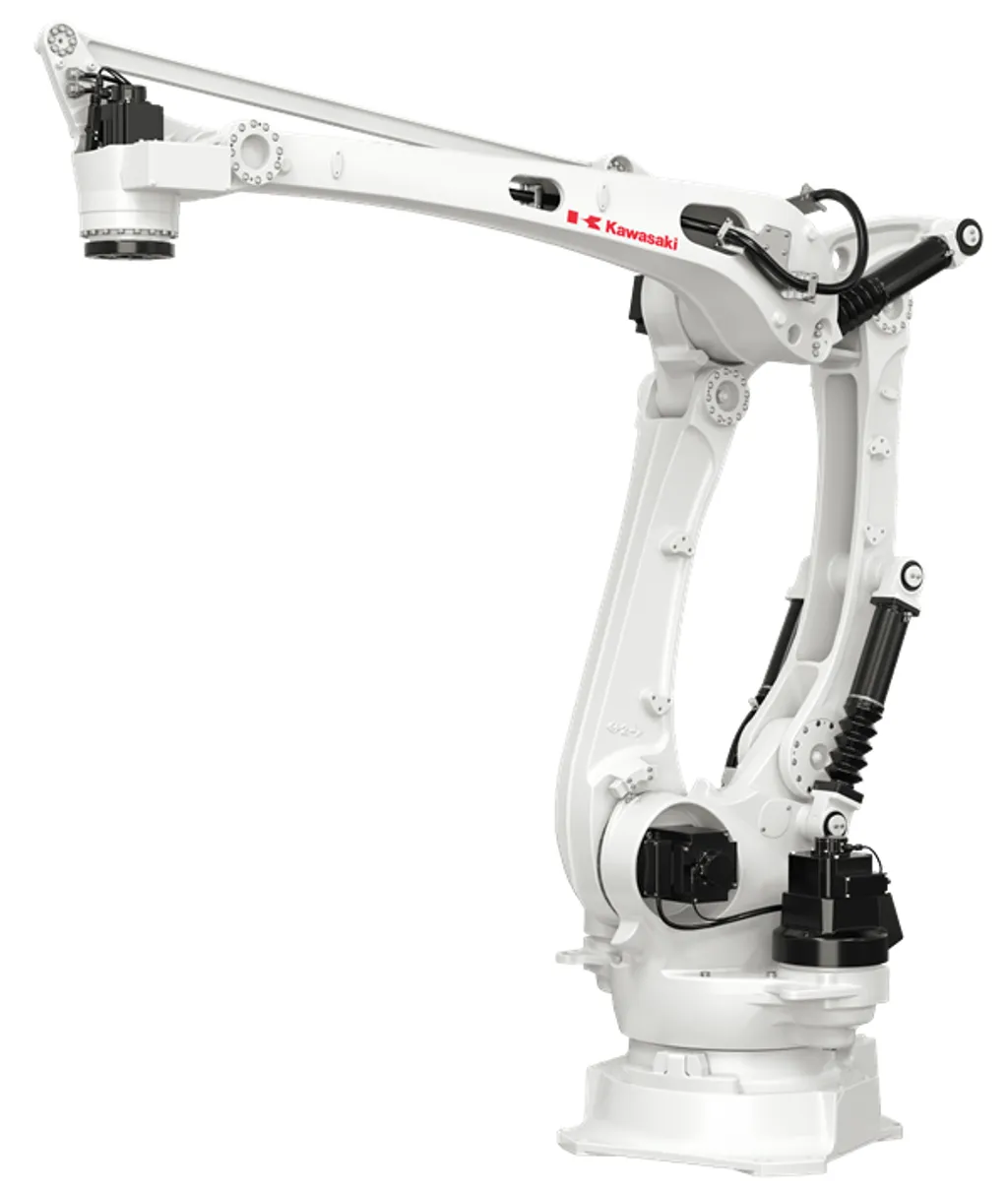
The throughput ceiling on a palletizing robot is not set by the robot’s headline speed spec. It is set by the pick strategy, single-case versus a multi-pick row gripper versus a full-layer head, and by whether the arm has the payload headroom to carry that gripper at all. A robot cycling at 10 cases per minute with a four-unit row gripper delivers the equivalent of 40 single picks per minute. Buy on cycle speed alone and you will undersize the cell.
What is the real ceiling for single-pick palletizing?
Single-case robotic palletizing, one gripper cycle placing one case, standardizes around 8 to 12 cases per minute (cpm) for a dedicated industrial arm (DNC Automation). Cobot palletizers are rated up to 9 to 10 cpm on the datasheet, but the same source puts real-world cobot output at 5 to 8 cpm, and that number drops further once the payload climbs into the 20 to 35 kg range, where a collaborative arm’s power-and-force-limited operation starts trading speed for safety margin.
A wider industry estimate agrees on the shape of that range: Standard Bots puts general robotic palletizing throughput at 6 to 15 cpm, depending on product weight, gripper style, and how the rest of the line is configured. Neither range is a fixed spec. Both move with case size, infeed conveyor speed, and how complex the pallet layer pattern is, a caveat that applies to every cpm figure in this piece and is worth stating once instead of hedging every number.
How much does a multi-pick or row gripper actually buy?
This is where the strategy, not the robot, sets the ceiling. Switching from a single-case end effector to a multi-pick or row gripper, one that lifts two, four, or more cases in a single cycle, moves the effective range to 16 to 48-plus cpm on the same class of arm (DNC Automation). The math is not subtle: a robot cycling at a fixed 10 cpm with a four-case row gripper places 40 cases in that same minute. The robot’s cycle rate barely changed. What changed is how many cases leave the gripper per cycle.
Standard Bots frames the same effect from the buyer side: switching from single-pick to multi-pick tooling is “often 50%+” throughput gain in practice on a comparable line, a conservative floor compared to the 4x ceiling implied by a full row-gripper swap. The catch is that a multi-pick gripper is heavier and physically larger than a single-case tool, which is the payload question the next section works through with our own database.
Where do conventional mechanical palletizers fit?
Non-robotic, mechanical layer palletizers exist as the throughput ceiling above anything robotic, but the exact number depends on which source’s test conditions you are reading. MMCI Automation puts conventional palletizers at up to 150 cases per minute (bags up to 40/min), against a robotic single-pick ceiling of about 30 cases/min or 40/min for bags. Cisco-Eagle, separately, states conventional/mechanical layer systems build “up to 40 bags per minute or 80 cases per minute.”
Those two conventional-palletizer figures, 150 cpm and 80 cpm, do not agree, and they should not be averaged into one number. They are each conditioned on a different case or bag type and a different layer-pattern complexity that neither source fully specifies. Present both, with attribution, rather than picking one: a mechanical layer palletizer’s real ceiling on your line depends on your case geometry, not on either published number alone. What both sources agree on is the tradeoff: conventional palletizers buy raw speed and give up the flexibility to handle variable SKUs or mixed-case pallets that a robotic arm handles natively.
What did a real plant gain by switching to multipick?
A pet-food plant case study from Robotiq is the clearest real-world data point in this space, and it should be read as one case study, not a general spec. The plant’s single-pick target was 10 to 13 boxes per minute. After switching to a multipick strategy, including interlayer placement and pallet changeovers in the measured cycle, the line achieved 17 to 22 boxes per minute, a roughly 75% real-world throughput gain. The source does not isolate a single-pick baseline measured under the same conditions as the multipick result, so treat the 75% figure as directionally strong rather than a precise multiplier you can apply to a different line.
Which of our 10 dedicated palletizers have the payload headroom for a bigger gripper?
This is the part a cpm range from a blog post cannot answer for your specific cell: does the arm you are pricing have enough payload budget left over to carry the gripper the throughput tier requires? A single-case vacuum head or clamp plate on a standard cell runs roughly 15 to 40 kg. A multi-case row gripper or a full-layer head has to hold roughly 2 to 4 times that mass, plus the cases themselves, because it is picking up multiple units and the structure needed to hold them rigidly. Payload headroom, not robot speed, gates which throughput tier a given model can realistically run.
Ranking the 10 dedicated palletizers (robotType: "palletizer") in our own database by payload makes the tiering concrete:
All 10 robots in the Industrial Robotics Hub database with robotType “palletizer”, ranked by rated payload. The 700 kg FANUC and 500 kg Kawasaki carry enough headroom for a full-layer head; the 30-80 kg tier (Doosan, Yaskawa PL80) fits a single-case or light multi-pick tool, not a row gripper built for four-unit lifts.
That spread also surfaces one exception worth flagging honestly. Across every robot in our database, only 3 publish an actual manufacturer cycle time rather than a derived or theoretical figure, and one of those three is on this list: the ABB IRB 460, rated at 110 kg payload, publishes 2,190 cycles per hour at a 60 kg load on its own datasheet, which works out to 36.5 cycles per minute. That is well above the 8 to 12 cpm “standard” single-pick range cited earlier, and the gap is exactly the caveat this whole piece keeps returning to: a manufacturer’s datasheet cycle is measured under ideal test-cell conditions, not with your conveyor indexing, your layer pattern, or your case variability added back in. It does not contradict the field data above so much as mark the ceiling that field conditions erode. Cycle-time publication is thin across the rest of the palletizer class (as covered in our general cycle-time and throughput framework), so treat this one data point as a single verified anchor, not proof the other 9 models would test the same way.
What this means for spec’ing a cell
Stop shortlisting palletizers by cpm rating alone. Start from the throughput tier your line actually needs, single-pick, multi-pick, or full-layer, work out the gripper mass that tier requires, and only then check whether a candidate arm has the payload budget left over to carry it at your required reach. A 700 kg arm like the FANUC M-410iB/700 has room to spare for a full-layer head; a 30 kg arm like the Doosan P3020 does not, no matter how fast its cycle rate looks on paper. Our payload sizing guide walks through the total-system-payload math in detail, our Cycle Time & Format Estimator turns a throughput target into a real cycle-time budget, and the full palletizer category and palletizing application page round out the shortlist once the gripper tier is decided, not before.
Sources: DNC Automation, “Cobot vs. Industrial Robot Palletizers”; MMCI Automation, “Robotic Palletizers vs. Conventional Palletizers”; Cisco-Eagle, “Palletizers: Robotic vs. Conventional”; Standard Bots, “Palletizing Robot Applications”; Robotiq, “How to Get 75% Higher Throughput Palletizing with Multipick”.
Compare these robots