Robot Operating Temperature: Only 5 of 152 Beat 0°C
Of 152 robots in our database that publish an operating range, only 5 work below 0°C and just one reaches -25°C. Cold-chain automation is nearly unserved.
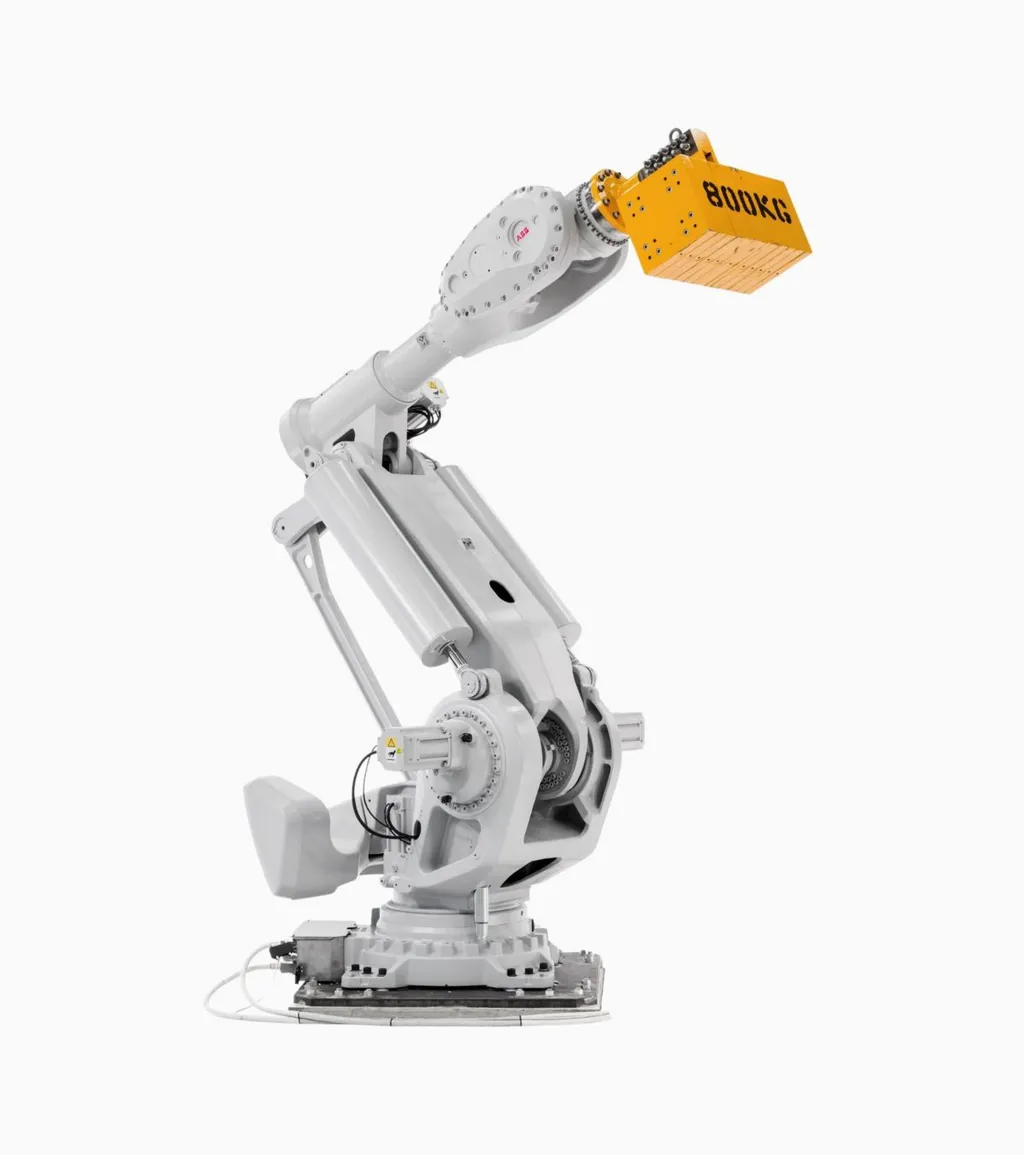
A frozen-food warehouse runs at -18°C to -25°C, the standard for frozen storage. Of 152 robots in our database that publish an operating temperature range, only 5 can work below 0°C, and exactly one reaches -25°C. Operating temperature is a spec buyers check last, if they check it at all, and for cold-chain automation it disqualifies almost the entire catalog before payload or reach ever enter the conversation.
How cold can an industrial robot actually work?
Not very. Of the 152 robots in our database that publish a minimum operating temperature, 97 of them (63.8%) floor out at exactly 0°C. Another 35 stop at 5°C and 15 more stop at 10°C. Add it up and 97% of robots that publish a range cannot go below 0°C, and 32.9% will not even go below 5°C. Only five robots in the entire database are rated for sub-zero work.
| Robot | Type | Min | Max | Band |
|---|---|---|---|---|
| ABB IRB 8700-550/4.2 | Articulated | -25°C | +55°C | 80°C |
| JAKA Pro 5 | Cobot | -10°C | +50°C | 60°C |
| JAKA Pro 12 | Cobot | -10°C | +50°C | 60°C |
| JAKA Pro 16 | Cobot | -10°C | +50°C | 60°C |
| JAKA S 5 | Cobot | -10°C | +50°C | 60°C |
Source: our analysis of 152 robots in the Industrial Robotics Hub database that publish an operating temperature range.
The chart below shows the wall at 0°C. The tiny bar at the bottom, five robots below zero, is the actual story here, not a rounding error.
Coldest temperature a robot can work at (count of robots by floor)
Source: our analysis of 152 robots in the Industrial Robotics Hub database that publish an operating temperature range.
Commercial frozen storage runs at about -18°C, with frozen warehouses often colder, near -25°C. Chilled or fridge storage is milder, roughly 0°C to 4°C, part of the broader cold chain that keeps perishables at controlled temperature from production to shelf. Against that yardstick, the ABB IRB 8700, the only arm in our database rated to -25°C, is the only robot that clears a true frozen-storage temperature. The four JAKA cobots at -10°C handle a chilled room fine, but none of them survive a frozen warehouse.
Why do so many robots stop at 0°C?
Because most robots are built for a heated factory floor, not a freezer. Below zero, condensation forms on cold electronics the moment humid air reaches them, grease and lubricant in the joints thicken and change viscosity, and seals and cabling stiffen and lose flexibility. None of that is catastrophic at 5°C. All of it becomes a reliability problem at -18°C. Vendors that want a sub-zero rating have to re-engineer the joint seals, swap lubricants, and often add heated enclosures around sensitive electronics, and that costs money for a use case that is a small slice of the market.
Worth noting: the ABB IRB 8700 is a 550 kg heavy industrial arm, not a purpose-built freezer cobot. It reaches -25°C because it is engineered as a heavy-duty foundry and die-casting arm that happens to tolerate cold as well as heat, not because ABB set out to build a cold-storage robot. JAKA’s Pro 5 cobot and its siblings get to -10°C, likely enough engineering margin for a chilled loading dock, but they are still general-purpose cobots, not cold-chain specialists. If you need a robot inside an actual freezer, the honest answer today is a heated enclosure around a standard arm, not a robot pulled straight off a spec sheet.
Which robot type handles the widest temperature range?
Median operating band width (max minus min) varies by robot class. Cobots have the widest median band at 50°C, while SCARA robots have the narrowest at 35°C.
Median operating temperature band by robot type
Source: our analysis of robots in the Industrial Robotics Hub database that publish min and max operating temperature, grouped by type.
Cobots and articulated arms both tolerate a wide swing between cold and hot, which fits their job: general-purpose deployment across whatever ambient conditions the plant floor happens to have. SCARA is the outlier, and not by accident.
Why is SCARA the most temperature-sensitive?
Most SCARA robots in our database floor at 5°C and cap at 40°C, a 35°C band, the tightest of any type. The likely driver is thermal expansion: as temperature changes, metal arm components expand and contract by tiny but measurable amounts, and that dimensional drift moves the end effector. For most robot classes a few hundredths of a millimeter of thermal drift is noise. For SCARA robots, it is not. SCARA is the precision class in our database, with a median repeatability around 0.01 mm in our earlier repeatability analysis, and at that tolerance a temperature swing that a cobot would shrug off can push a SCARA arm outside its rated accuracy. Vendors respond by specifying a tighter thermal window, protecting the number on the spec sheet rather than expanding the operating envelope.
How hot can a robot run?
The ceiling across the whole database tops out at 55°C, held by 13 robots, led by the ABB IRB 8700 and KUKA’s articulated lines. No robot in our database is rated above 55°C. More broadly, 54 of 152 robots (36%) reach 50°C or higher, so heat tolerance is far less scarce than cold tolerance. That asymmetry makes sense: factories run hot more often than they run cold, so vendors have more reason to engineer for heat.
Foundry and near-furnace environments often exceed 60°C in ambient temperature, well past any catalog spec in our data. Robots deployed there are not rated for it out of the box. They get there with heat shielding, forced-air or liquid cooling, and protective enclosures bolted onto a standard arm, the mirror image of what a cold-chain deployment needs.
The buying reframe
Operating temperature is a silent disqualifier. It knocks a robot out of consideration before payload, reach, or repeatability ever get compared, because if the arm cannot survive the room, none of those other numbers matter. For cold-chain work, assume you need either the ABB IRB 8700-class heavy arm or a heated enclosure around a standard cobot, because the catalog offers almost nothing built for sub-zero as a default spec. For a hot line, confirm the 55°C ceiling holds for your actual ambient temperature, and budget for shielding if you are anywhere near a furnace or oven. Pull the operating range off the datasheet before you fall in love with a payload number. It is a two-second check that saves a very expensive re-spec.
Compare these robots