ROS 2 Robot Support: Only 3 of 265 Robots Qualify
ROS 1 hit end-of-life on May 31, 2025. Only 3 of 265 robots in our database ship ROS 2 exclusively, and support splits cleanly along brand lines.
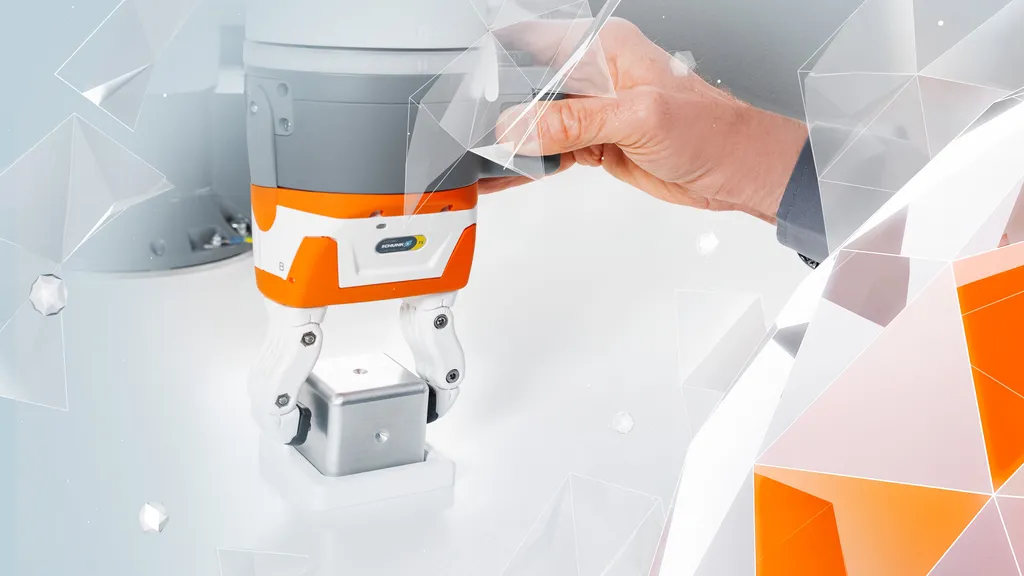
Three robots. That’s the entire ROS 2-exclusive shortlist in our database of 265 industrial robots, and all three are the same family: KUKA’s LBR iisy line. If ROS 2 support is a real requirement in your RFP today, not a “nice to have,” you are choosing between the 3 kg, 11 kg, and 15 kg versions of one cobot. That’s it.
How many robots even publish ROS support?
Of the 265 robots in the Industrial Robotics Hub database, 139 (52.5%) publish a control.rosSupport field at all. The other 126 simply don’t say, which is its own data point: half the market treats ROS compatibility as a spec worth documenting, half doesn’t bother.
Of the 139 that do report it, 91 support some flavor of ROS, ROS 1, ROS 2, or both, putting overall ROS support at 65.5% among robots that disclose the field. The breakdown:
- ROS 1 only: 63 robots (45.3%)
- Both ROS 1 and ROS 2: 25 robots (18.0%)
- ROS 2 only: 3 robots (2.2%)
- None: 48 robots (34.5%)
That means 28 robots, both plus ROS 2-only, have any ROS 2 capability at all: 20.1% of the reporting set. And a full third of robots that bother to publish a ROS field publish “none.”
How many support ROS 2?
Here’s the composition of that 139-robot set:
Source: our analysis of the 139 robots in the Industrial Robotics Hub database that publish a control.rosSupport field, out of 265 total.
The green sliver is the headline. Three robots, all KUKA LBR iisy 11 R1300, LBR iisy 3 R760, and LBR iisy 15 R930, ship ROS 2 with no ROS 1 fallback. That’s 2.2% of the reporting set and 1.1% of the entire database. If you’re spec’ing a new cell around ROS 2 as a hard requirement rather than a bonus, this is currently a one-brand, three-model market.
Is ROS support a brand decision or a model decision?
This is the part that surprised me. I expected ROS posture to vary model-by-model within a brand, some models modern, some legacy. It doesn’t. Looking at every brand with 5+ robots reporting the field:
| Brand | Robots reporting | ROS 1 | ROS 2 only | Both | None | Any-ROS % |
|---|---|---|---|---|---|---|
| Yaskawa | 21 | 21 | 0 | 0 | 0 | 100% |
| ABB | 17 | 17 | 0 | 0 | 0 | 100% |
| ROKAE | 14 | 0 | 0 | 0 | 14 | 0% |
| Estun | 13 | 0 | 0 | 0 | 13 | 0% |
| AUBO | 11 | 0 | 0 | 11 | 0 | 100% |
| Siasun | 11 | 0 | 0 | 0 | 11 | 0% |
| Universal Robots | 9 | 0 | 0 | 9 | 0 | 100% |
| Dobot | 9 | 7 | 0 | 2 | 0 | 100% |
| Inovance | 9 | 0 | 0 | 0 | 9 | 0% |
| Hans Robot | 8 | 8 | 0 | 0 | 0 | 100% |
| KUKA | 8 | 4 | 3 | 1 | 0 | 100% |
Every brand above is either 0% or 100% any-ROS. Nobody straddles the line, with one exception: KUKA is the only brand that splits its own catalog across all three postures, 4 robots on ROS 1 only, 3 on ROS 2 only, 1 on both. Yaskawa, ABB, AUBO, Universal Robots, and Hans Robot all report the identical ROS posture across every model they publish. ROS support isn’t a per-SKU spec here, it’s a corporate decision that gets applied to the whole product line.
That makes the ROS-Industrial history a little ironic. Yaskawa Motoman was one of three founding organizations, alongside Southwest Research Institute and Willow Garage, that launched the ROS-Industrial project in January 2012, with the ROS-Industrial Consortium Americas following in March 2013 (rosindustrial.org). Yaskawa helped start the whole effort to bring ROS to factory floors. Yet every one of the 21 Yaskawa robots in our database that reports ROS support is ROS 1 only. Zero ROS 2. Same story at ABB: 17 for 17 ROS 1 only. The founding brand and its legacy-giant peer are still running the deprecated stack in their published specs.
The ROS 2 presence that does exist comes from the newer cobot lines: KUKA’s LBR iisy, built specifically as a collaborative arm for non-experts, and the AUBO/UR “both” posture, where ROS 2 got added alongside ROS 1 rather than replacing it outright.
Which robot types actually get ROS support?
Break the same 139-robot set down by robot type and the pattern is even starker: newer, lighter classes lead, older heavy classes lag.
Source: our analysis of the Industrial Robotics Hub database, by-type any-ROS percentage among robots reporting the field. Palletizer sample is small (n=4); treat as directional.
Cobots lead at 80% any-ROS support, which tracks: cobots are the newest product category and the one most likely to ship with modern software stacks and open integration in mind. SCARA is the laggard at 18%, the smallest sample of the four charted types and the one most often bought as a fixed, vendor-programmed pick-and-place unit where ROS was never part of the sales pitch. Articulated arms sit in the middle at 52%, which is a strange place for the type ROS-Industrial was originally built around back in 2012. Welding robots (n=3, 100%) and AMRs (n=1, 0%) exist in the data too, but the sample sizes are too thin to chart with any confidence.
Why does this matter now that ROS 1 is dead?
ROS 1, specifically the last long-term-support release, Noetic Ninjemys, hit official end-of-life on May 31, 2025, confirmed by Open Robotics itself (discourse.openrobotics.org). No more security patches, no more bug fixes, no more official support. Ubuntu’s own engineering blog spelled out the practical fallout for anyone running a fleet on it: take action to maintain fleet security, because the safety net is gone (ubuntu.com/blog).
That’s the uncomfortable backdrop to the 45.3% of our reporting robots sitting on ROS 1 only. It’s not that those robots stopped working on May 31, 2025, they didn’t. It’s that any new integration work built against ROS 1 today is being built on a stack the maintainers have walked away from. If you’re planning a multi-year deployment and your integrator’s default is “we’ll just use ROS 1, that’s what we know,” you’re inheriting a security and maintenance liability on day one, not down the road.
The buying decision
If ROS 2 compatibility shows up in your RFP as a checkbox rather than a preference, the honest answer today is that your shortlist is three robots wide, all KUKA LBR iisy variants, like the LBR iisy 11 R1300 at 11 kg payload. Widen the requirement to “ROS 2 alongside ROS 1, either is fine” and the field opens up to include the Universal Robots UR5e and the rest of the AUBO and UR “both” cohort, 28 robots total with some ROS 2 capability. Given that ROS adoption tracks brand-wide policy more than individual model specs, the fastest way to filter is to ask the brand’s posture up front, not model-by-model. And given ROS 1’s EOL date has already passed, “does it run ROS 1” is no longer the question worth asking. “Does it run ROS 2, and when” is.
Compare these robots