Robot Programming Languages: Only 3 Brands Use Python
Only 15 of 265 robots in our database run Python, C++, C#, or Java out of the box. The other 17 brands each built their own proprietary language.
Fifteen. Out of 265 robots in our database, exactly 15 let you write real code in Python, C++, C#, or Java the day you unbox the controller. Everyone else hands you a language invented by that one company, for that one product line, and nowhere else on earth. There are 22 of these dialects across the robots that publish the field, and 20 brands, and almost none of it overlaps.
How many programming languages does the robot industry actually use?
Of the 265 robots in our database, 190 (71.7%) publish which language or languages their controller and SDK support. Between those 190 robots, we counted 22 distinct language names. Fourteen of the 20 brands each map to exactly one language that belongs to them and nobody else:
| Brand | Language(s) | Robots | General-purpose? |
|---|---|---|---|
| ABB | RAPID | 24 | No |
| AUBO | C, C++, Python, Lua | 11 | Yes (100% of lineup) |
| Dobot | Blockly + Lua (CR-series) / C++, C#, Python (Nova) | 9 | Partial (2 of 9) |
| Doosan | DRL (Doosan Robot Language) | 11 | No |
| Epson | SPEL+ | 16 | No |
| FANUC | KAREL / TP | 17 | No |
| Kawasaki | AS | 15 | No |
| KUKA | KRL / iiQKA (block language) / Java (LBR iiwa) | 19 | Partial (2 of 19) |
| Mitsubishi | MELFA BASIC VI | 11 | No |
| Omron | V+ (Viper/eCobra) / IEC 61131-3 (i4 SCARA) | 6 | No |
| Staubli | VAL 3 | 11 | No |
| Techman | TMflow Script | 10 | No |
| Universal Robots | URScript | 9 | No |
| Yaskawa | INFORM | 21 | No |
Six brands, 75 robots, don’t publish this field at all in our source data: Estun, Han’s Robot, Inovance, JAKA, Rokae, and Siasun. That’s a coverage gap, not a claim that those controllers lack language support. We just don’t have a verified answer yet.
Notice the pattern before you even get to the “portable” column: RAPID is ABB’s alone. INFORM is Yaskawa’s alone. VAL 3 is Staubli’s alone. KAREL and TP belong to FANUC. Even URScript, which reads like Python if you squint, is not Python. It is Universal Robots’ own interpreter, and code written for it does not run anywhere else. Every major brand independently built its own on-ramp, and none of them lead to the same road.
Which robots can you program in a language you already know?
Three brands break the pattern, and only partially.
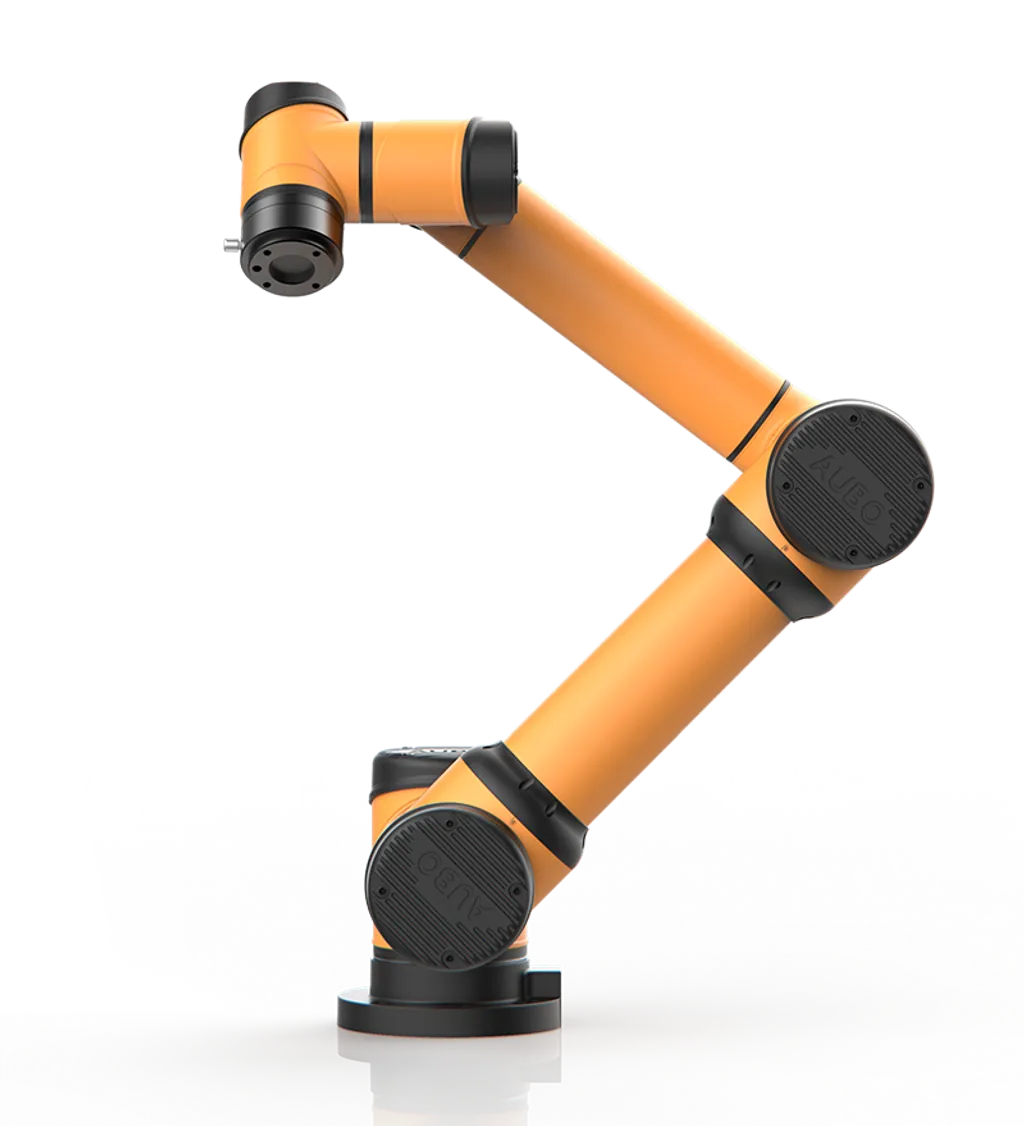
AUBO ships every single cobot in its lineup, 11 of 11, with native C, C++, and Python support, alongside its own Lua bindings. That’s not a flagship feature on one hero model. It’s the whole catalog, from the 3 kg i3 up to the 35 kg iS35.
Dobot splits its own product line down the middle. The seven CR-series cobots still run on Blockly (drag-and-drop blocks) plus Lua, no general-purpose language in sight. But the two Nova models, Dobot’s newer developer-oriented cobots, support C++, C#, and Python directly.
KUKA does the same thing at a smaller scale. Fourteen of its classic-controller robots run KRL, KUKA’s proprietary robot language, and three newer models run iiQKA’s own block-based interface. Only the LBR iiwa, KUKA’s collaborative arm, ships with a Java SDK (Sunrise.OS), and that’s just 2 of KUKA’s 19 robots.
Add it up and you get 15 robots total: AUBO’s full 11, plus 2 Dobot Nova models, plus 2 KUKA LBR iiwa models. That’s 5.7% of the entire 265-robot database, or 7.9% of the 190 robots that publish language data at all. One more distinction worth making: Omron’s i4 SCARA line runs on IEC 61131-3, the international PLC standard (ladder logic, structured text, and friends). That’s genuinely portable to a controls engineer who already programs PLCs, but it’s a different skill set than Python or C++, so we’re not counting it in the “general-purpose software language” column above.
Why did every major brand invent its own language?
Nobody publishes a clean history of this, so take the framing as commercial logic rather than a sourced timeline: a robot controller and its teach pendant were sold as one sealed product for decades, and a proprietary language kept training, certification, and support revenue inside the brand. If your integrators are certified in KRL, you buy KUKA next time, not because KRL is better than RAPID but because retraining costs money and time. IFR’s 2026 trend outlook names IT/OT convergence, the push for robots that plug into general software and data infrastructure instead of standing apart from it, as one of the industry’s top five directions for the year. The three brands above are an early, narrow instance of that convergence actually showing up in a shipping product line, not a press release.
The industry’s one standing attempt at a vendor-neutral layer is ROS-Industrial, which wraps proprietary controllers in a common ROS interface from the outside. It works, and plenty of integrators use it, but it’s a workaround bolted on top of the fragmentation, not a replacement for it. It also doesn’t appear in any of the 265 controller-native language lists above, because it’s middleware, not what the vendor ships in the box.
What does a proprietary language actually cost a buyer?
It doesn’t show up on the spec sheet, and that’s the point. A robot that requires KRL means your integrator either already knows KRL or bills you to learn it. A programmer you hired for a Python-based vision pipeline cannot walk over and touch your FANUC cell without picking up KAREL and TP first. Redeploying staff across a multi-brand floor, which is common once you’ve bought more than one robot type, means carrying institutional knowledge of RAPID and INFORM and VAL 3 simultaneously, in people, not in a portable resume line.
That’s the same shape as the “price on application” problem we’ve written about before: a cost that’s real, that a buyer eventually pays, and that never appears until after the purchase order is signed. Programming language is an integration cost exactly like the 4-6x multiplier on arm price. It just gets paid in training hours and hiring constraints instead of a line item.
The buying decision this data points to
If your team is built around software engineers rather than certified robot technicians, AUBO, Dobot’s Nova line, and KUKA’s LBR iiwa are the only three places in a 20-brand, 265-robot market where that team can start writing code on day one. Notice they’re all cobots, not coincidence. The brands opening a general-purpose on-ramp are the ones selling to a buyer who doesn’t have a robot-language specialist on staff yet, and may never hire one. Everyone else, including every classic industrial-arm brand in our database, is still selling you their own language along with their hardware. Budget for it.
Robots referenced: AUBO i5, Dobot Nova5, KUKA LBR iiwa 7 R800. Brand pages: AUBO, Dobot, KUKA.
Compare these robots