Best Robots for Assembly in 2026: SCARA vs Cobot vs Articulated Compared by Precision and Payload
192 assembly-tagged robots: 44% hit ±0.02 mm or tighter. How to choose between SCARA, cobot, and articulated by repeatability, payload, and reach.
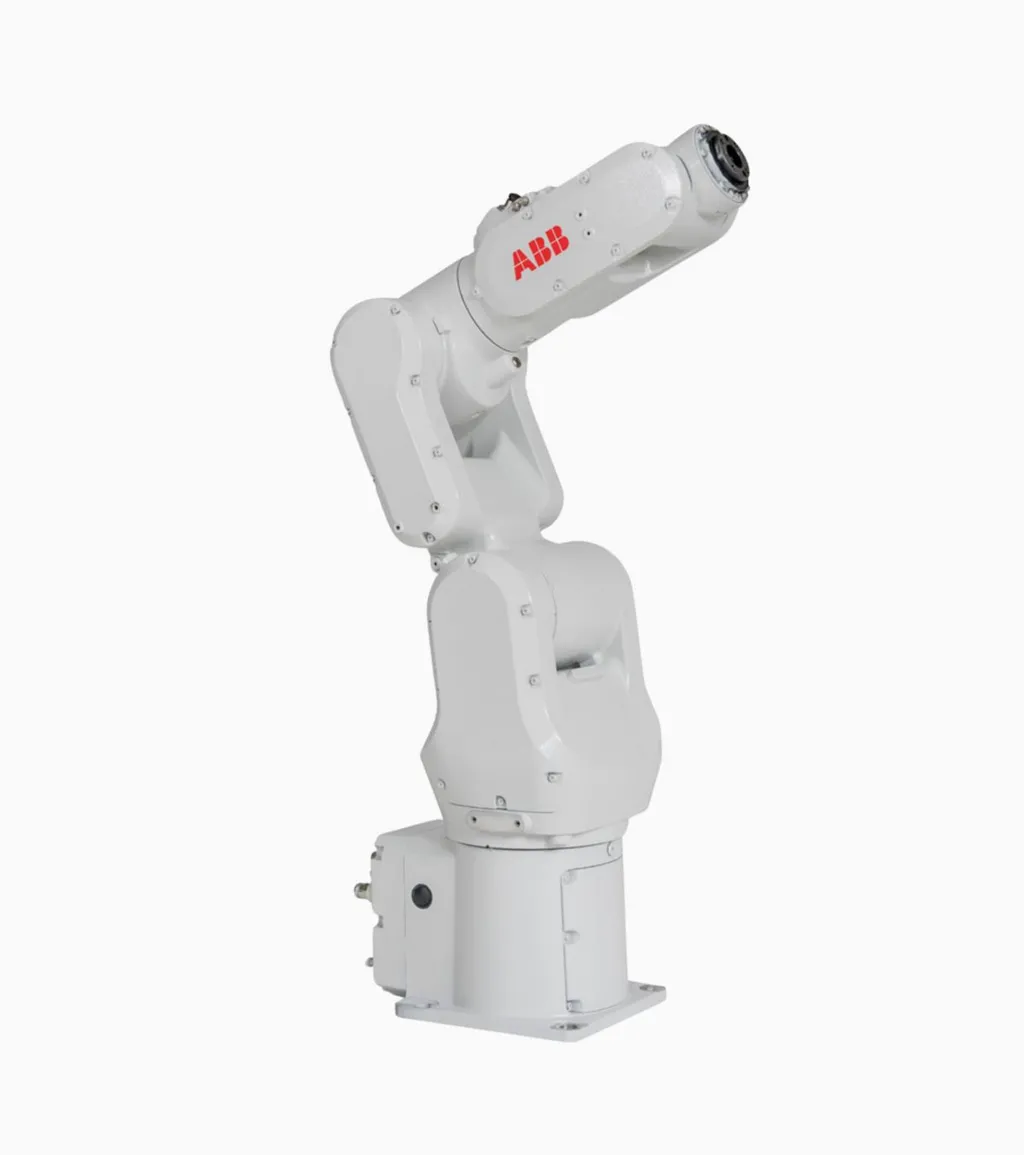
Assembly is the application where repeatability finally matters more than payload. Of the 192 robots tagged for assembly in the Industrial Robotics Hub database, 85 — 44% — hit ±0.02 mm or tighter. That is a dramatically higher precision concentration than any other application in our database. Palletizing robots average ±0.06 mm. Welding robots mostly run ±0.03 to ±0.08 mm. Assembly is where the ±0.01 mm arm earns its keep.
The choice between robot types for assembly — SCARA, small articulated, or collaborative — comes down to three questions in order: what is the part weight? How precise is the fit? And does a person need to be in the cell? Answer those three and the shortlist writes itself.
The four robot types for assembly and when to use each
SCARA. The planar 4-axis geometry makes SCARA the fastest and most repeatable format for horizontal assembly — inserting, pressing, screwing, snapping. Every SCARA in our database that publishes a repeatability figure hits ±0.04 mm or tighter; 14 of the 35 assembly-tagged SCARAs hit ±0.01 mm flat. The constraint is geometry: SCARA handles X-Y-Z plus rotation around Z. If your process requires part tilting, presentation at an angle, or 3D seam work, you need a 6-axis arm.
Small articulated. A 6-axis arm in the 1.5 to 10 kg payload class handles assembly tasks that SCARA geometry cannot: angled insertion, bolt tightening on a face that is not horizontal, glue dispensing around a curved seam. Repeatability at this size class runs ±0.01 to ±0.03 mm in our database — competitive with SCARA, just slower on pure horizontal cycles because 6 joints move rather than 4.
Cobot. When a human needs to be in the cell — to load parts, inspect, or hand-off to a downstream process — a cobot removes the fencing requirement. The tradeoff is speed: ISO/TS 15066 power-and-force-limiting mode caps effective TCP speed well below what a fenced SCARA or articulated arm runs. For high-volume pure-cycle assembly, cobots are slower. For mixed human-robot assembly or small-batch flexible lines, the fencing saving is real. The precision ceiling has risen: the ABB SWIFTI CRB 1100 is a ±0.01 mm cobot — essentially SCARA repeatability in a collaborative form.
Delta. Only 2 assembly-tagged delta robots appear in our database, both in the sub-6 kg class. Delta is fast at pick-place but limited to light parts and short vertical strokes. It appears in electronics kitting and small-part sorting, not in structural assembly.
Precision tiers: which band does your assembly land in?
The 44% ultra-precision share is assembly’s defining characteristic. Compare it to the welding category (where ±0.01 mm is uncommon) or palletizing (where it is irrelevant). If your assembly process tolerates ±0.05 mm — most automotive fastening does — the ±0.03 mm arms are fine and usually cheaper than the ±0.01 mm tier. Buy to the tolerance the part actually requires, not the tightest figure on the data sheet.
SCARA robots for assembly: the precision speed leaders
SCARA arms dominate high-cycle assembly because the 4-axis format accelerates faster than a 6-axis arm of equivalent payload. Less mass in motion means less inertia to overcome. For horizontal insertion, pressing, and screwdriving, a SCARA running a 1-second cycle outpaces any articulated arm at the same payload.
The top assembly-rated SCARA arms from our SCARA database:
| Robot | Payload | Reach | Repeatability | IP |
|---|---|---|---|---|
| Mitsubishi MELFA RH-20FRH | 20 kg | 1,200 mm | ±0.01 mm | IP20 |
| Mitsubishi MELFA RH-12FRH | 12 kg | 1,200 mm | ±0.01 mm | IP20 |
| Staubli TS2-60 | 8 kg | 600 mm | ±0.01 mm | IP65 |
| Staubli TS2-40 | 8.4 kg | 460 mm | ±0.01 mm | IP65 |
| KUKA KR SCARA R600 | 8 kg | 600 mm | ±0.01 mm | IP40 |
| Omron i4-850 | 15 kg | 850 mm | ±0.015 mm | IP20 |
| Omron i4-650 | 15 kg | 650 mm | ±0.015 mm | IP20 |
| ABB IRB 920-6/0.55 | 6 kg | 550 mm | ±0.01 mm | IP20 |
The Mitsubishi MELFA RH-20FRH is the heaviest-payload SCARA in this group at 20 kg — useful for larger subassemblies where SCARA geometry is still adequate. The Staubli TS2 series is notable for IP65 in a SCARA, which is unusual; most SCARA arms are IP20 (clean dry environment only). The IP65 rating on the TS2 opens pharmaceutical tablet assembly and food-packaging environments that a standard IP20 SCARA cannot enter.
One specification to watch: SCARA reach is the horizontal arm extension, not the vertical Z-stroke. The Z-stroke (how far down the quill travels) is a separate figure, typically 150 to 350 mm. If your assembly process requires more vertical travel — pressing a tall component into a deep housing, for example — confirm the Z-stroke before ordering, not after.
Small articulated robots for assembly: 3D work and angled insertion
When the assembly process requires a part to be tilted, presented at an angle, or worked on a face that is not horizontal, a 6-axis arm is the correct format. The same applies to glue dispensing around a curved perimeter or torque tightening on a fastener that is set at a compound angle.
The top small articulated assembly arms from our database:
| Robot | Payload | Reach | Repeatability | IP |
|---|---|---|---|---|
| ABB IRB 1010 | 1.5 kg | 370 mm | ±0.01 mm | IP40 |
| ABB IRB 1100 | 4 kg | 580 mm | ±0.01 mm | IP40 |
| Yaskawa GP7 | 7 kg | 927 mm | ±0.01 mm | IP67 |
| Inovance IR-R4-56S5 | 4 kg | 561 mm | ±0.01 mm | — |
| ABB IRB 1600-10/1.45 | 10 kg | 1,450 mm | ±0.02 mm | IP54 |
| KUKA KR 10 R900 sixx | 10 kg | 901 mm | ±0.02 mm | IP54 |
The ABB IRB 1010 is the smallest arm in the group at 1.5 kg payload and 370 mm reach. It is designed for micro-assembly — PCB component placement, optical alignment, miniature connector insertion — where the part is small and the cell footprint is tight. The Yaskawa GP7 stands out at this payload class for IP67: a 7 kg arm with full washdown protection is unusual, and it opens medical-device assembly environments where cleaning protocols are stringent without requiring a SCARA geometry.
The ABB IRB 1600 at 10 kg and 1,450 mm reach bridges the gap between compact assembly and the mid-size workhorse class. It is the longest-reach ±0.02 mm arm in this group, useful when the assembly cell has a large work envelope — a flat panel display line, a windshield seating station, or a module assembly jig that exceeds 1 meter.
Cobot assembly: the precision ceiling has risen
The case for collaborative assembly has always been the fencing trade-off: remove the safety barrier, and a human loader can hand parts directly to the robot instead of feeding through a hatch. The historic objection was precision: early cobots ran ±0.05 to ±0.10 mm, which is acceptable for many automotive assembly tasks but not for electronics or optical assembly.
That ceiling has moved. The ABB SWIFTI CRB 1100 reaches ±0.01 mm at 4 kg payload — the same repeatability figure as the ABB IRB 1100 articulated arm and the KUKA KR SCARA R600. If your assembly tolerates direct human involvement and your precision requirement is ±0.01 mm or looser, the SWIFTI eliminates the guarding cost without any repeatability compromise.
The top precision cobots for assembly from our cobot database:
| Cobot | Payload | Reach | Repeatability | IP |
|---|---|---|---|---|
| ABB SWIFTI CRB 1100 | 4 kg | 580 mm | ±0.01 mm | IP40 |
| JAKA Pro 16 | 16 kg | 1,713 mm | ±0.02 mm | IP68 |
| JAKA Pro 12 | 12 kg | 1,327 mm | ±0.02 mm | IP68 |
| AUBO iS7 | 7 kg | 886 mm | ±0.02 mm | IP67 |
| Rokae xMate CR7 | 7 kg | 988 mm | ±0.02 mm | IP67 |
| Techman TM7 | 7 kg | 900 mm | ±0.02 mm | IP54 |
| ABB GoFa CRB 15000 (5 kg) | 5 kg | 950 mm | ±0.02 mm | IP54 |
The JAKA Pro series at IP68 is the highest IP-rated cobot in this assembly shortlist. Most assembly environments are dry and do not need IP68, but pharmaceutical assembly under IPA cleaning protocol and medical device lines with frequent spray wipe-downs benefit from the margin. The Rokae xMate CR7 and AUBO iS7, both IP67, occupy the same sub-10 kg bracket at lower acquisition cost.
Note on cobot speed in assembly: under ISO/TS 15066 PFL mode, maximum hand-guiding speed is 250 mm/s and surface pressure is 65 N averaged across a 1 cm2 surface. In reduced-speed collaborative mode, the robot can run faster but the human must stay clear of the workspace. If your assembly cycle requires 1-second takt time and humans are present in the work envelope during the robot motion, collaborative speed limits will cut throughput. Model the cycle realistically before committing to a cobot format.
Which payload band does your assembly actually need?
The 5 to 14 kg payload band covers 103 of the 192 assembly robots in our database — 54% of the catalog. That is not a coincidence. Most assembly tasks involve parts under 5 kg, and the robot gripper, tool changer, and force sensor add another 3 to 6 kg. A 10 to 14 kg rated arm covers most sub-assembly applications with headroom.
Where buyers underspec: electronics PCB placement (parts weigh grams, but the placement head, vacuum array, and camera together weigh 3 to 4 kg). Where buyers overspec: buying a 20 kg arm for a 2 kg task because the data sheet lists it under “assembly.” Size the system at 1.5 to 2x the actual tooling-plus-part mass, not at the theoretical maximum payload.
Assembly robots and IP rating: less important, but not irrelevant
Most assembly environments are clean and dry — electronics lines, automotive interior assembly, consumer goods. IP rating for these is a maintenance spec, not a survival spec. An IP20 arm in a clean assembly cell is fine.
Where IP becomes a decision factor:
- Pharmaceutical tablet and capsule assembly: cleaning with IPA spray or steam. IP65 is the floor; the Staubli TS2-40 and TS2-60 are the only SCARA arms in our database that reach it.
- Medical device manufacturing: ISO 13485 cleanroom requirements may specify washdown capability. IP54 as minimum; IP67 preferred.
- Food packaging assembly: if the robot is in a zone that receives hose-down cleaning, IP67 is required. Most assembly robots at this IP level are 6-axis cobots (AUBO iS7, Rokae CR7) rather than SCARAs.
- Standard electronics or automotive assembly: IP20 or IP40 is adequate. Do not pay for IP65 in a dry controlled environment.
Where to start your assembly shortlist
- Set the precision floor from your tightest-tolerance joint. Electronics snap-fit or press-fit = ±0.02 mm or better. Automotive bolting = ±0.05 mm is usually fine. Structural subassembly with guide pins = ±0.10 mm may be acceptable.
- Identify the robot format by geometry: planar horizontal cycles → SCARA. 3D or angled work → small articulated. Human co-presence required → cobot.
- Size the payload at 1.5 to 2x the gripper-plus-part mass. Most assembly lands 5 to 14 kg rated capacity.
- Check IP only if your cleaning protocol is spray or above. For dry assembly, IP20 and IP40 are correct.
The full list of 192 assembly-tagged robots, sortable by repeatability, payload, and type, is at the assembly application page. The compare tool puts any two or three side by side on every spec.
Data: Industrial Robotics Hub database, 192 robots tagged for assembly across 18 brands. Specs sourced from manufacturer datasheets. Last verified June 2026.
Frequently asked questions
What is the most precise robot for assembly? +
14 SCARA arms and the ABB SWIFTI CRB 1100 cobot all hit ±0.01 mm -- the tightest repeatability in the assembly category of our database. Among articulated arms, the ABB IRB 1010, IRB 1100, and Yaskawa GP7 also reach ±0.01 mm.
SCARA or cobot for assembly -- which should I choose? +
SCARA for high-cycle horizontal insertion or screwdriving where no human enters the cell. Cobot when a person must load parts or work alongside the robot; the ABB SWIFTI CRB 1100 matches SCARA at ±0.01 mm.
What repeatability do I need for electronics assembly? +
PCB placement and optical connector insertion typically require ±0.02 mm or tighter. Most structural automotive assembly tolerates ±0.05 mm. Buy to the tolerance the part actually requires.
Which SCARA is best for pharma or food assembly? +
The Staubli TS2-40 and TS2-60 are the only SCARA arms in our database rated IP65 -- adequate for IPA spray cleaning. All other SCARA arms in our database are IP20 or IP40.
Compare these robots