Cleanroom Robots: Only 48 of 336 Publish an ISO Class
Only 48 of 336 robots publish an ISO 14644-1 cleanroom class. Just two brands, Techman and Mitsubishi, hit the semiconductor-grade ISO 3 tier.
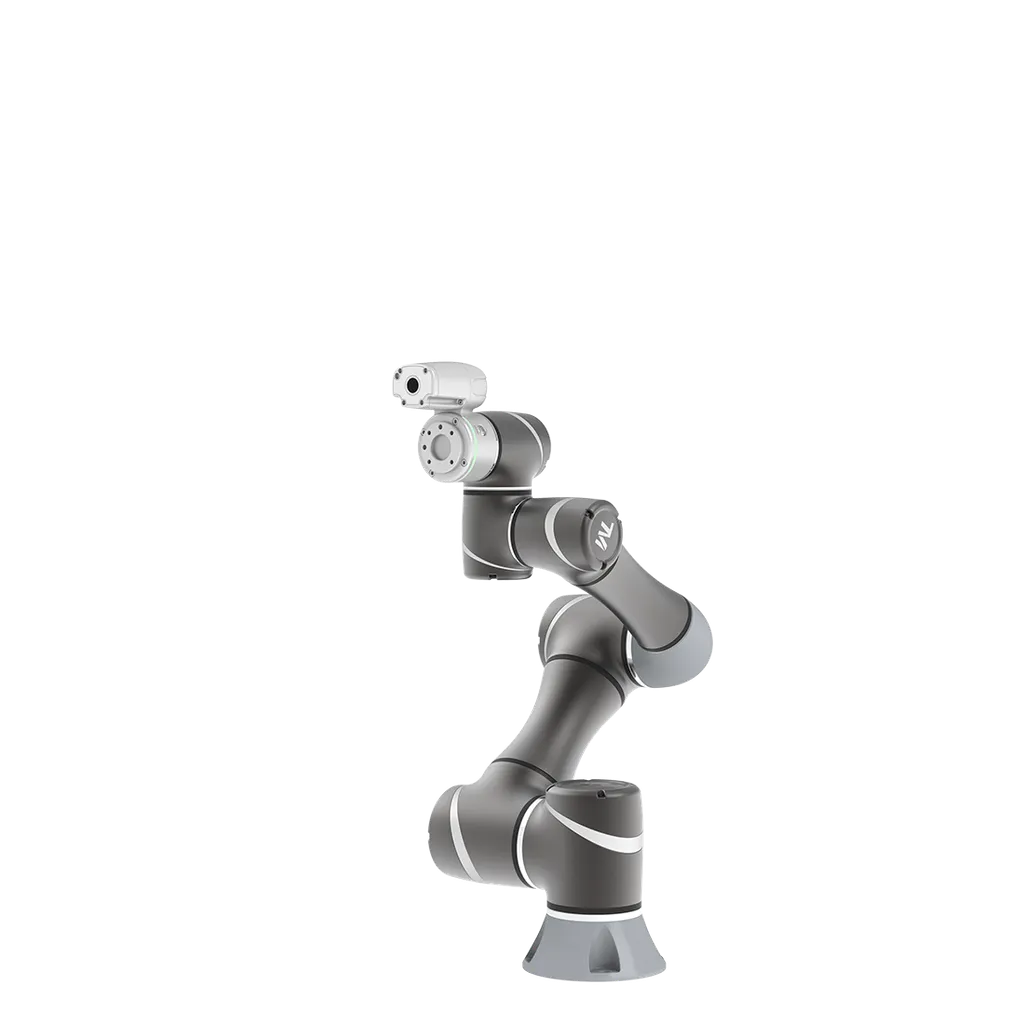
A cleanroom rating is one of the quietest filters in industrial robotics. It never shows up in a payload spec or a reach diagram, but it decides whether a robot is even allowed on a semiconductor, electronics, or pharma line. Of the 336 robots in our database, only 48 (14.3%) publish an ISO 14644-1 cleanroom class at all, and among those 48, just two brands, Techman and Mitsubishi, publish the semiconductor-grade ISO Class 3 rating. Everyone else who publishes anything sits at ISO Class 5 or 6, a looser tier built for general electronics and pharma packaging, not wafer fabs.
How many robots actually publish a cleanroom class?
48 of 336 (14.3%). ISO 14644-1 classifies cleanrooms (and the equipment rated to run inside them) by how many airborne particles of a given size are allowed per cubic meter: the lower the class number, the cleaner the air has to be. Class 3 permits roughly 1,000 particles ≥0.1 microns per cubic meter; Class 5 and 6 allow orders of magnitude more. Semiconductor fabrication areas, especially photolithography and etching, typically demand Class 3 or tighter, while general electronics assembly, pharma packaging, and food handling usually run at Class 5 to 8. A robot’s cleanroom class is not a marketing badge; it is a hard admission ticket to a specific tier of factory.
Coverage skews hard by robot type, out of every robot in each category:
Cobots publish it most often among the high-volume types (27 of 120, 22.5%), which fits their role bolting straight onto a bench-height assembly or inspection station inside a fab. Articulated arms publish it least (13 of 136, 9.6%) even though the type has the largest catalog in the database, and SCARA, the type most associated with electronics assembly by reputation, sits at only 10.6% (5 of 47). Palletizers, welding robots, painting robots, and AMRs publish zero cleanroom data across the board, unsurprising given none of those jobs happen inside a controlled-particle enclosure.
Which brands actually hit semiconductor-grade ISO 3, versus general electronics-grade ISO 5-6?
This is the real split. Among the 48 robots that publish a class, the distribution is not a smooth gradient, it is two separate tiers with almost no brand overlap:
| ISO Class | Robots | Share of the 48 | Typical use case |
|---|---|---|---|
| ISO 3 | 19 | 39.6% | Semiconductor wafer handling, photolithography-adjacent |
| ISO 4 | 1 | 2.1% | Transitional, precision electronics |
| ISO 5 | 22 | 45.8% | General electronics assembly, pharma packaging |
| ISO 6 | 6 | 12.5% | Light electronics, food-adjacent cleanroom work |
Source: our analysis of the Industrial Robotics Hub database, environment.cleanroomClass field, 48 of 336 robots.
Break that down by brand and the tiers barely mix:
| Brand | Robots rated | ISO class(es) | Robot type(s) |
|---|---|---|---|
| Techman | 10 | 3 (10/10) | Cobot |
| Mitsubishi | 9 | 3 (9/9) | SCARA (4), Articulated (5) |
| JAKA | 7 | 5 (7/7) | Cobot |
| Kawasaki | 6 | 5 (1), 6 (5) | Articulated |
| AUBO | 5 | 5 (5/5) | Cobot |
| Staubli | 5 | 4 (1), 5 (3), 6 (1) | SCARA, Articulated, Cobot, Delta |
| Siasun | 4 | 5 (4/4) | Cobot |
| ABB | 2 | 5 (2/2) | Delta |
Source: our analysis of the Industrial Robotics Hub database, brands publishing environment.cleanroomClass.
Techman and Mitsubishi are the only two brands in the database whose cleanroom-rated robots publish ISO Class 3, the tier that gets a robot into a semiconductor fab’s most sensitive process areas. Every other brand that publishes anything sits at ISO 5 or looser, general electronics and pharma-packaging territory, not wafer-fab territory. Notably, Techman’s entire cleanroom-documented lineup, all 10 models, clears ISO 3, and it is a cobot lineup, not a fenced industrial arm, which cuts against the assumption that only heavy, caged arms get the tightest rating. Mitsubishi mirrors that at the same tier but splits across both SCARA and articulated form factors.
Does a cleanroom rating also mean tight repeatability?
Not automatically, and that gap is a genuine buyer trap. Cleanroom class measures particle emission, not positioning precision, and the two do not move together:
| Robot | Brand | ISO Class | Repeatability |
|---|---|---|---|
| Mitsubishi MELFA RH-3FRH | Mitsubishi | 3 | 0.01 mm |
| Techman TM5-700 | Techman | 3 | 0.02 mm |
| Techman TM14 / TM16 / TM20 | Techman | 3 | 0.05 mm |
| Techman TM12 / TM6S | Techman | 3 | 0.10 mm |
| Staubli TP80 | Staubli | 6 | 0.05 mm |
Source: our analysis of the Industrial Robotics Hub database, cross-referencing environment.cleanroomClass with performance.repeatabilityMm.
Two Techman cobots (TM12, TM6S) carry the exact same ISO 3 particle-emission rating as the tightest Mitsubishi SCARA in the table (0.01 mm) while positioning five to ten times looser (0.10 mm). Our companion piece, the most accurate robots for precision assembly, covers repeatability on its own terms; the point here is narrower and easy to miss on a spec sheet: a Class 3 clean rating tells a buyer the robot will not contaminate a wafer, it says nothing about whether that same robot can place one within a hair’s width. Semiconductor buyers who need both specs have to check both fields, because neither one predicts the other.
What should a semiconductor, electronics, or pharma buyer actually ask for?
Don’t take “cleanroom-compatible” as a spec. Ask for the ISO 14644-1 class number specifically, and confirm which process area it was tested for, since the same “cleanroom” label covers everything from ISO 3 wafer-handling to ISO 8 general packaging. KUKA’s own semiconductor-automation materials describe ISO 3-certified robots handling wafers at facilities like Infineon specifically because the fab-floor tier is non-negotiable; a robot certified only to ISO 5 or 6 simply is not eligible for that work, regardless of how good its other specs look. And if positioning precision matters as much as particle count, as it usually does in wafer handling, verify repeatability separately. The cleanroom class and the repeatability figure are two different admission tickets, and in our database, only 48 robots hand you either one.
Compare these robots