The Most Accurate Robots: Tightest-Repeatability Models for Precision Assembly
23 robots tie at 0.01mm, the tightest published repeatability in our 298-robot database, and two of them are cobots. Repeatability is not accuracy.
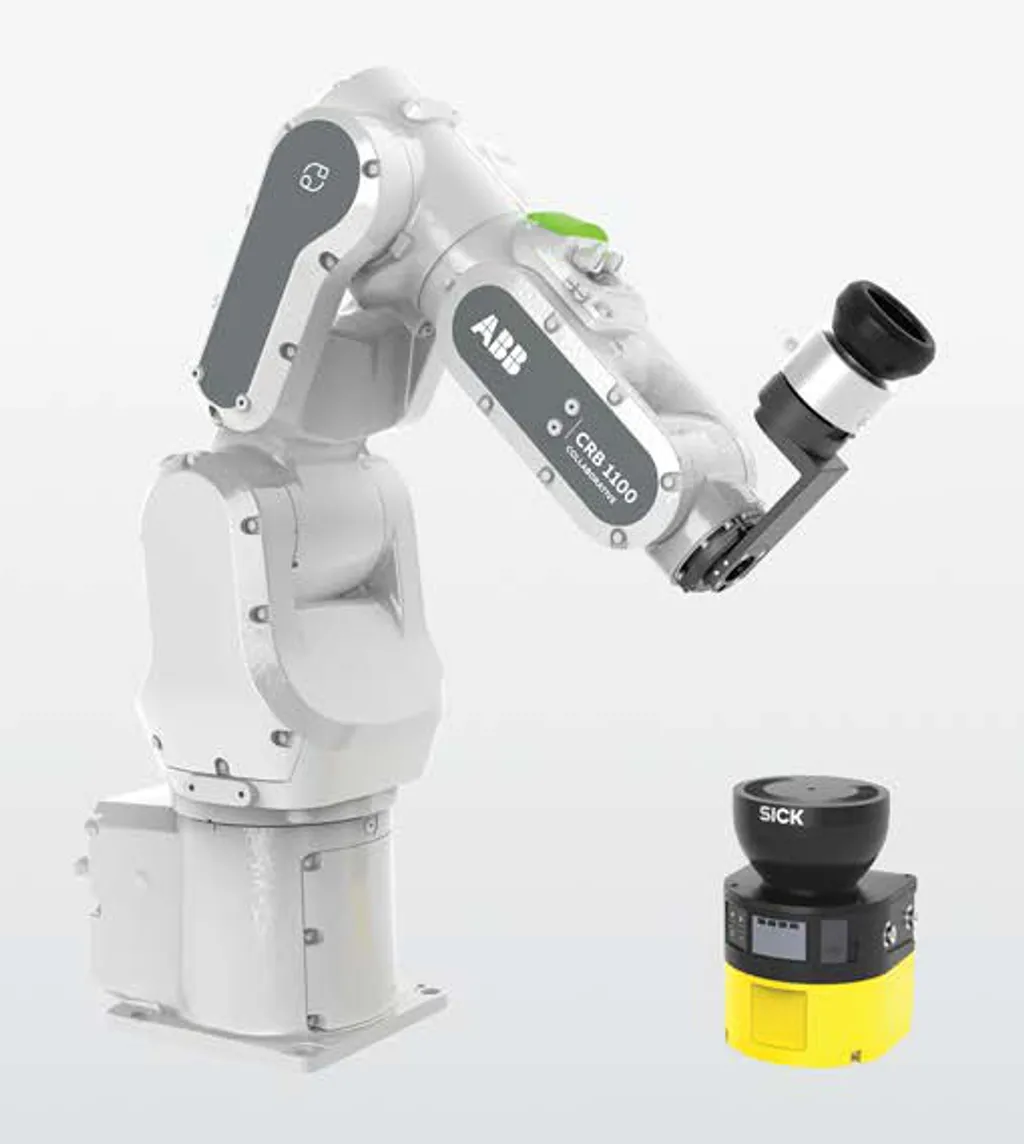
Buyers searching for “the most accurate robot arm” are usually asking the wrong question, because the number every datasheet publishes is repeatability, not accuracy, and those are two different specs. We pulled repeatability across 291 of the 298 robots in the Industrial Robotics Hub database and found 23 that tie at 0.01 mm, the tightest figure anyone in our catalog publishes. The shortlist spans four architectures, not one: 15 SCARA arms, 5 articulated arms, a welding robot, and two cobots. That last part surprises people. Cobots are usually pitched on payload and safety, not precision, yet they hold their own at the very top of the tolerance stack.
What’s the difference between repeatability and accuracy?
Repeatability is how tightly a robot returns to a taught point, cycle after cycle. Accuracy is how close that point actually lands to the coordinate you programmed. A robot with 0.01 mm repeatability can still be inaccurate if its kinematic model, joint offsets, or calibration are off, because repeatability only measures consistency, not correctness against an external reference.
This distinction is formalized in ISO 9283, the standard that defines how manufacturers test and publish both figures, and it is well documented as a common source of buyer confusion in industrial robotics (background on the standard and the repeatability/accuracy split). Every number in this article, and on every manufacturer spec sheet you will ever read, is repeatability. Almost nobody publishes accuracy, because measuring it requires an external metrology reference (a laser tracker or coordinate-measuring machine) rather than the robot simply confirming its own encoder position. A robot can be extremely repeatable and still be poorly calibrated. Repeatability tells you the arm will return to the same spot. It does not tell you that spot is where you think it is.
For precision assembly, this matters because most fixtures are taught, not programmed from a CAD coordinate. You jog the robot to the part, teach the point, and every cycle after that relies on repeatability, not accuracy, to hit it again. That is why repeatability, not accuracy, is the number buyers should actually be shopping on, and why it is the only one the market publishes in the first place.
How many robots hit sub-0.02 mm repeatability?
103 of the 291 robots that publish a figure, more than a third. That tier breaks down by type as follows.
That 31% cobot share is the real finding here. Cobots sit at 32 of 103 (31.1%) sub-0.02 mm robots, nearly matching articulated arms at 37 (35.9%) and beating SCARA at 31 (30.1%), even though cobots are almost never marketed as the precision choice. The pitch for a cobot is usually payload headroom and fenceless operation. The data says a meaningful slice of the collaborative market is also tolerance-competitive with dedicated precision arms, a fact that gets buried because nobody shops cobots by repeatability first.
Which robots sit at the tightest published figure, 0.01 mm?
23 robots, the entire 0.01 mm floor of our database. Nothing we track publishes finer than this. The list spans four robot classes.
| Robot | Brand | Type | Payload (kg) | Reach (mm) |
|---|---|---|---|---|
| IRB 1010 | ABB | Articulated | 1.5 | 370 |
| IRB 1100 | ABB | Articulated | 4 | 580 |
| IR-R4-56S5 | Inovance | Articulated | 4 | 561 |
| GP4 | Yaskawa | Articulated | 4 | 550 |
| GP7 | Yaskawa | Articulated | 7 | 927 |
| IRB 910SC-3/0.45 | ABB | SCARA | 3 | 450 |
| IRB 920-6/0.55 | ABB | SCARA | 6 | 550 |
| G3 | Epson | SCARA | 3 | 350 |
| LS3-B | Epson | SCARA | 3 | 400 |
| SR-3iA | FANUC | SCARA | 3 | 400 |
| SR-6iA | FANUC | SCARA | 6 | 650 |
| IR-S4-40Z15S3 | Inovance | SCARA | 4 | 400 |
| KR SCARA R600 | KUKA | SCARA | 8 | 600 |
| MELFA RH-3FRH | Mitsubishi | SCARA | 3 | 300 |
| MELFA RH-6FRH | Mitsubishi | SCARA | 6 | 600 |
| MELFA RH-12FRH | Mitsubishi | SCARA | 12 | 1,200 |
| MELFA RH-20FRH | Mitsubishi | SCARA | 20 | 1,200 |
| SA4A | Siasun | SCARA | 4 | 400 |
| TS2-40 | Staubli | SCARA | 8.4 | 460 |
| TS2-60 | Staubli | SCARA | 8 | 600 |
| SWIFTI CRB 1100-4/0.58 | ABB | Cobot | 4 | 580 |
| CR-7iA | FANUC | Cobot | 7 | 717 |
| AR900 | Yaskawa | Welding | 7 | 927 |
Source: our analysis of 291 robots in the Industrial Robotics Hub database publishing a repeatability figure, as of 2026-07-16 (updated 2026-08-04: the Omron i4-650/i4-850 were moved out of this tier after a spec correction put their real repeatability at 0.015 mm, not 0.01 mm). All 23 are the exact-tie floor at 0.01 mm; nothing in the database publishes finer.
Corrected 20 September 2026: the GP4 reach was previously listed as its vertical reach (1,008 mm); the horizontal reach per Yaskawa’s datasheet (550 mm) is shown.
SCARA dominates the count (17 of 25) for the same structural reason it wins on repeatability at every tier: the two-horizontal-joint, one-vertical-axis geometry minimizes the lever-arm effect that amplifies joint error at the tool tip, and every SCARA on this list is small (3-20 kg payload, all under 1,200 mm reach). But SCARA does not have the floor to itself, and that is the more useful finding for a buyer who is not locked into a planar layout.
Why do two cobots tie the industrial-arm floor?
The ABB SWIFTI CRB 1100-4/0.58 and the FANUC CR-7iA both publish 0.01 mm, matching every SCARA and articulated arm on this list. Both are small, light-payload machines (4 kg and 7 kg respectively, under 720 mm reach), which is the same size-driven pattern that explains SCARA’s dominance: a small arm with short structural members and light moving mass has less to flex or drift, regardless of what safety class the manufacturer certifies it under. The “collaborative” designation changes the safety envelope, not the mechanical precision ceiling. A cobot built at this size class can hit the same tolerance as a caged SCARA of similar reach.
The takeaway for a precision-assembly buyer evaluating a fenceless cell: do not assume trading a guarded arm for a cobot costs you tolerance. At this payload and reach band, it does not have to.
What about the welding robot at 0.01 mm?
The Yaskawa AR900 is the one outlier that is not obviously a precision-class machine by application. It is a 7 kg, 927 mm-reach arm purpose-built for arc welding, and it ties the SCARA and cobot floor at 0.01 mm. That is not a coincidence; precision arc welding needs the torch to return to the exact seam path every pass, or you get inconsistent penetration and bead quality. A welding robot at this size class needs SCARA-grade repeatability even though nobody shops for it under “precision assembly.” It shows up on this list because the underlying physics, small arm, light payload, short reach, is identical to what makes a SCARA tight, regardless of the tool bolted to the flange.
What sits just outside the 0.01 mm floor?
A handful of robots land at 0.012-0.015 mm, close enough to be worth knowing if your exact model is not on the 23-robot list above.
| Robot | Type | Payload (kg) | Reach (mm) | Repeatability |
|---|---|---|---|---|
| eCobra 600 | SCARA | 5.5 | 600 | 0.012 mm |
| eCobra 800 | SCARA | 5.5 | 800 | 0.012 mm |
| G6 | SCARA | 6 | 650 | 0.015 mm |
| IR-R7H-72 | Articulated | 7 | 722 | 0.015 mm |
| TS2-80 | SCARA | 8.4 | 800 | 0.015 mm |
| MYS650LF | SCARA | 6 | 650 | 0.015 mm |
| NEX10 | Articulated | 10 | 1,101 | 0.015 mm |
| i4-650 | SCARA | 15 | 650 | 0.015 mm |
| i4-850 | SCARA | 15 | 850 | 0.015 mm |
The Yaskawa NEX10 is worth a second look: it is a 10 kg, 1,101 mm-reach articulated arm, meaningfully larger and heavier-payload than anything else on either table, and it still lands within 50% of the tightest figure in the database. It is the clearest evidence that the size-precision relationship is a strong correlation, not an absolute ceiling; a well-engineered mid-size arm can crowd the floor that small SCARA and cobot units otherwise own outright.
What this means when you spec a precision-assembly robot
Do not shop by repeatability alone, and do not assume the number on the spec sheet is the number you get in production. Three things to carry into a real buying decision:
First, repeatability tells you consistency, not correctness. If your process relies on programmed CAD coordinates rather than taught points, a 0.01 mm repeatability figure does not guarantee 0.01 mm accuracy; verify how the integrator plans to calibrate the cell, and budget for it. Our Robot Repeatability by Type piece covers the by-class median and worst-case spread if you want the full 291-robot picture rather than just the tightest tier.
Second, the 0.01 mm floor is not a SCARA-exclusive club. Two cobots and a welding robot tie it, which means a fenceless or non-traditional-application robot can still be tolerance-competitive at the right size class. Check our cobot lineup and SCARA lineup side by side before assuming your architecture is locked in by the precision requirement.
Third, size drives the outcome more than the class label does. A 4-20 kg, sub-1,200 mm-reach robot of almost any architecture lands in the 0.01-0.02 mm band. Push past that size and the number drifts, the way the Yaskawa NEX10 shows at 10 kg. If your assembly cell needs both a bigger payload and tight tolerance, that trade-off is real and worth pressure-testing against the specific model, not the type. For a deeper look at how joint count and axis geometry shape what a robot can actually do at the tool tip, see How Many Axes Does a Robot Have?, and for application-specific filtering by tag, the assembly application page sorts the full database by repeatability alongside every other assembly-relevant spec.
Compare these robots