The Longest-Reach Industrial Robots in Our Database
Our July ranking of every robot over 2,500 mm reach. Corrected 20 September 2026: three Yaskawa entries had stored vertical reach, and on a horizontal basis the MPX3500 is not the longest robot we track.
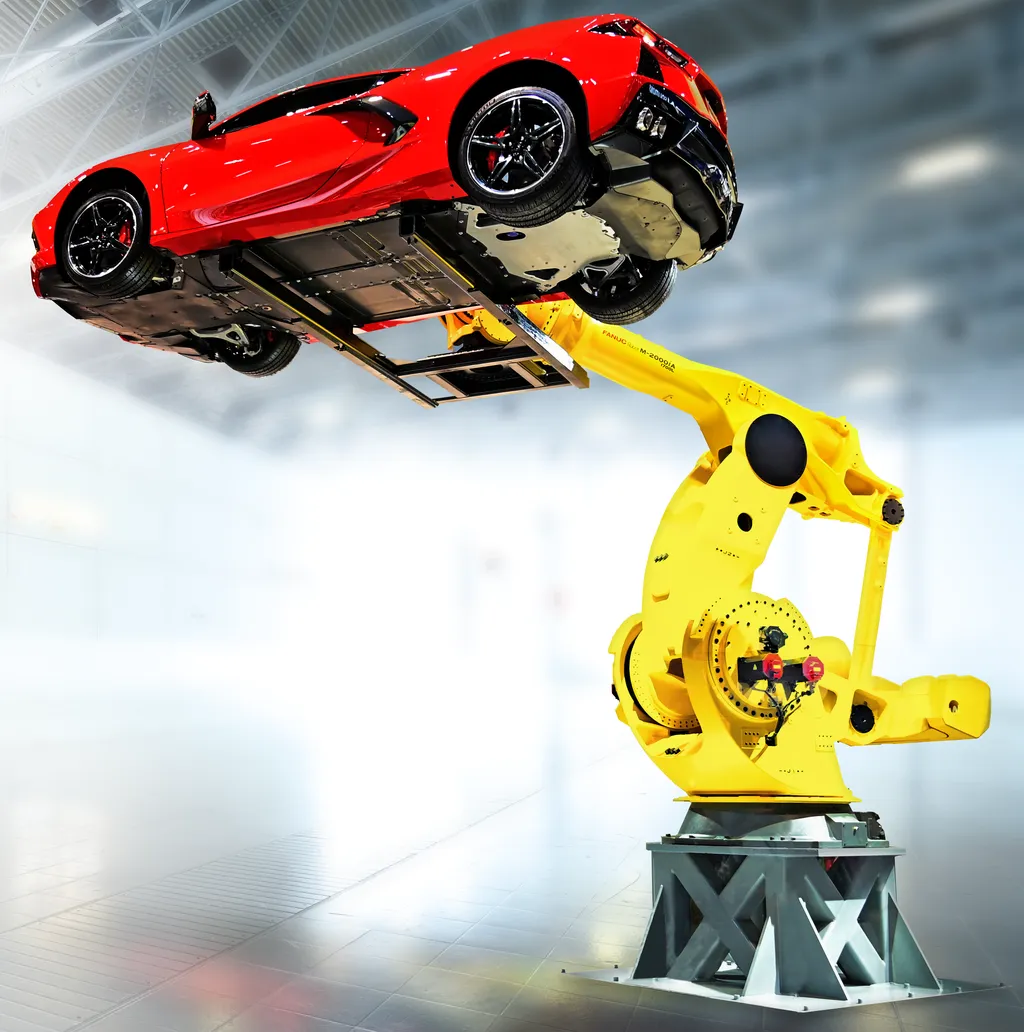
Correction, 20 September 2026. When this article was published, three Yaskawa entries in our database stored the manufacturer’s vertical reach where every other robot stores horizontal reach: the MPX3500 (5,095 mm vertical; 2,700 mm horizontal), the GP70L (4,715 mm vertical; 2,732 mm horizontal) and the SP100 (3,751 mm vertical; 2,236 mm horizontal), each per Yaskawa’s own datasheet. The ranking below therefore compared vertical and horizontal figures in one list. On a horizontal basis the MPX3500 is not the longest-reach robot we track; the ABB IRB 8700 at 4,200 mm leads the robots ranked here, and the SP100 falls below the 2,500 mm cut-off. The three affected rows are corrected and marked in the table below; the table order is left as published. Statements below that depend on the old figures (the #1 ranking, “fifth-longest”, and the counts of 33 robots over 2,500 mm and 21 over 3,000 mm, which are 32 and 18 for the corrected table) are superseded by this correction. The re-ranking against the current database is now published: Longest Robot Reach: FANUC’s 4,683 mm Beats ABB’s 4,200. It also finds that our stored reach for the FANUC M-2000iA/1700L (3,734 mm) was stale; FANUC’s own datasheet says 4,683 mm.
The longest-reach industrial robot in our database isn’t the one most listicles quote. Search for “longest reach industrial robot” and you’ll get the ABB IRB 8700 at 4,200 mm, or an unranked FANUC arm cited around 4,684 mm. Our own data, pulled from 291 robots in the Industrial Robotics Hub database that publish a reach spec, says otherwise: the Yaskawa MPX3500, a painting robot, reaches 5,095 mm - 895 mm past the ABB and further than anything else we track. It almost never shows up in generic round-ups because those round-ups filter out painting robots before they start counting. [See correction above: the 5,095 mm figure is the MPX3500’s vertical reach.]
Why does a painting robot beat every articulated arm?
Painting robots aren’t built to lift much. The MPX3500 is rated at just 15 kg, a fraction of what a heavy articulated arm carries. What it needs instead is arm mass moved a long way, fast, to sweep a spray gun across a car body or a large panel without repositioning the base. Reach, not payload, is the design target. The same pattern shows up twice more in our top 33: Yaskawa SP100 (welding, 3,751 mm reach, 100 kg payload) and the ABB IRB 5500 FlexPainter (painting, 2,975 mm reach, 13 kg payload). Welding and painting cells trade payload for envelope because the tool at the end of the arm is light and the workpiece is large. [See correction above: the 3,751 mm SP100 figure is its vertical reach; horizontal reach is 2,236 mm.]
That’s also why most “longest reach” lists miss the MPX3500. They’re built around articulated arms, the general-purpose category most buyers search for, and painting/welding robots get filtered out as a different class before the ranking even runs. Our database doesn’t drop them, so the real #1 shows up. [See correction above.]
Does reach trade off against payload?
Not the way most engineers assume. The FANUC M-2000iA/1700L reaches 3,734 mm, fifth-longest in our database [see correction above: rank positions shift on a horizontal basis], while carrying 1,700 kg - the single highest payload rating of any robot we track. It is simultaneously a top-5 reach machine and the heaviest lifter in the catalog, which contradicts the instinct that a robot has to choose one or the other.
The real split isn’t reach versus payload, it’s arm-mass-versus-payload. A robot like the M-2000iA is built with massive structural members and oversized actuators to move its own weight through a long arc; that structure happens to also support a huge end load. A painting or welding robot like the MPX3500 is built lightweight and fast specifically because it’s carrying almost nothing at the tool flange. Both hit long reach. Only one of them can lift a ton doing it. We covered the full 258-robot version of this relationship in our payload-vs-reach frontier analysis if you want the density-per-millimeter breakdown across every type, not just the long-reach tier.
Actually, before you compare that FANUC’s payload number to your own application: every figure in the table below is rated payload, not payload at that robot’s own maximum reach. Rated payload is measured well short of full extension, typically at 60-75% of arm length, and can drop 20-40% once you’re actually out at the numbers in this table. A robot pushing 3,700+ mm of reach is, by definition, working near its own ceiling for a lot of real applications. Treat the payload column here as an upper bound, not a guaranteed number at that reach.
Which type dominates the long-reach tier?
Of the 33 robots over 2,500 mm, the split is uneven. Articulated arms take the most slots (22 of 33), which makes sense given they’re the largest category in the database, but the more interesting pattern is in the palletizers. All 10 dedicated palletizers that publish reach land between 3,143 mm and 3,255 mm, a band just 112 mm wide. Every other type in this table spans hundreds or thousands of millimeters between its shortest and longest member. Palletizers don’t: a palletizer’s job (stack cases to a fixed pallet height and footprint) constrains reach to almost one number across the entire category, regardless of brand or payload rating.
Twenty-one of the 33 robots clear 3,000 mm. That’s the harder cutoff worth remembering if you’re scoping a cell: 3 meters of working envelope eliminates every cobot in our database (the longest, ROKAE’s xMate CR35, tops out at 2,246 mm) and puts you exclusively into articulated, palletizer, welding, and painting territory.
The full ranking: all 33 robots over 2,500 mm reach
| Robot | Type | Reach (mm) | Payload (kg) |
|---|---|---|---|
| Yaskawa MPX3500 (corrected, see note) | Painting | 2,700 | 15 |
| Yaskawa GP70L (corrected, see note) | Articulated | 2,732 | 70 |
| ABB IRB 8700-550/4.2 | Articulated | 4,200 | 550 |
| Yaskawa SP100 (corrected, see note) | Welding | 2,236 | 100 |
| FANUC M-2000iA/1700L | Articulated | 3,734 | 1,700 |
| FANUC M-900iB/400L | Articulated | 3,704 | 400 |
| Staubli TX340 SH | Articulated | 3,680 | 190 |
| Kawasaki CP180L | Palletizer | 3,255 | 180 |
| Kawasaki CP500L | Palletizer | 3,255 | 500 |
| Kawasaki MXP360L-A | Articulated | 3,234 | 360 |
| KUKA KR 1000 TITAN | Articulated | 3,202 | 1,000 |
| ABB IRB 6700-150/3.20 | Articulated | 3,200 | 150 |
| Yaskawa PL190 | Palletizer | 3,159 | 190 |
| Yaskawa PL320 | Palletizer | 3,159 | 320 |
| Kawasaki RS015X | Articulated | 3,150 | 15 |
| FANUC M-410iB/700 | Palletizer | 3,143 | 700 |
| FANUC M-410iC/185 | Palletizer | 3,143 | 185 |
| KUKA KR 20 R3100 IONTEC | Articulated | 3,101 | 20 |
| Siasun SR210A-DW | Articulated | 3,053 | 210 |
| Kawasaki MX350L | Articulated | 3,018 | 350 |
| Estun ER100B-3000 | Articulated | 3,000 | 100 |
| ABB IRB 5500 FlexPainter | Painting | 2,975 | 13 |
| Yaskawa GP600 | Articulated | 2,942 | 600 |
| KUKA KR 500 R2830 | Articulated | 2,826 | 500 |
| Estun ER700-2800 | Articulated | 2,800 | 700 |
| Yaskawa GP180 | Articulated | 2,702 | 180 |
| KUKA KR 120 R2700-2 | Articulated | 2,701 | 120 |
| Estun ER30B-2700-LI | Articulated | 2,700 | 30 |
| KUKA KR 210 R2700-2 (QUANTEC) | Articulated | 2,700 | 210 |
| FANUC R-2000iC/165F | Articulated | 2,655 | 165 |
| Estun ER220B-2650 | Articulated | 2,650 | 220 |
| Kawasaki BX200L | Articulated | 2,597 | 200 |
| ABB IRB 7600-500/2.55 | Articulated | 2,550 | 500 |
Source: our analysis of 291 robots in the Industrial Robotics Hub database that publish a reach spec, as of 2026-07-15.
How does this compare to reach by robot type?
This table ranks individual models, not categories. If you want the broader picture, median and max reach across all eight robot types (cobots max out at 2,246 mm, articulated hits a wider spread), see Robot Reach by Type. That earlier piece uses a wider 259-robot slice and answers a different question: what does a typical robot in each class reach. This one answers a narrower one: which specific 33 models, regardless of type, actually clear 2,500 mm, and which one is really #1.
What does this mean for cell layout?
If your application needs more than 2.5 meters of working envelope, you’re choosing from 33 specific models, not a category. Painting and welding robots belong on that shortlist even if your line isn’t a paint booth or a weld cell, because their reach-to-mass ratio is unmatched; you’d just need to check whether their light payload rating covers your actual tool weight. Palletizers are the safest bet for predictable envelope (that tight 3,143-3,255 mm band means you know roughly what you’re getting before you even open a spec sheet), but they’re single-purpose by design. And if you need both long reach and heavy payload in the same arm, the FANUC M-2000iA/1700L is currently the only robot in our database that delivers both at the top of their respective charts simultaneously.
Run any two of these side by side, including payload at your actual working distance, in the IRH compare tool before you commit a floor plan to one of them. The number on the datasheet and the number your application gets at full extension are rarely the same figure.
Compare these robots