Cobot Payload Overlap: 25 Models Now Beat 20 kg
IFR counts 542,000 industrial robot installations in 2024, with cobots already at 10.5% share and climbing. In our database, 25 cobots now lift 20 kg or more, landing in the same payload-and-reach envelope as 22 fenced articulated arms.
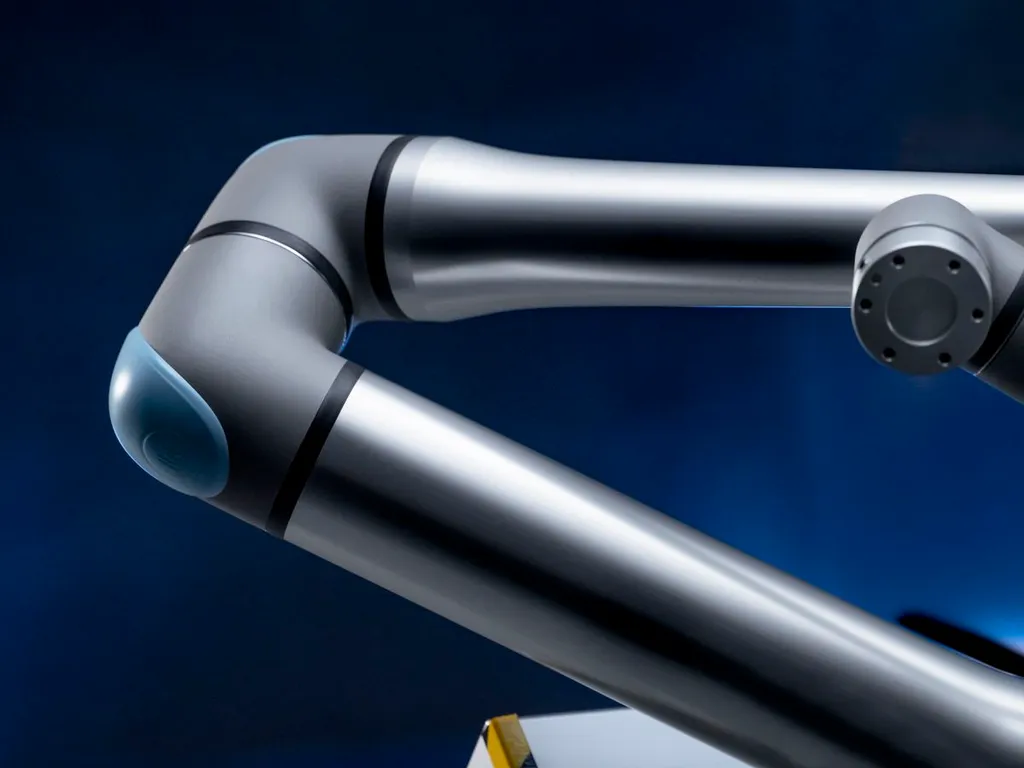
Of 120 cobots in the Industrial Robotics Hub database, 25 now carry a rated payload of 20 kg or more. That is not a cobot spec anymore, it is a fenced-arm spec. Cross-referencing those 25 against our 107 articulated robots turns up 22 traditional arms sitting in the exact same payload-and-reach envelope, from 20 to 50 kg and 1,300 to 2,246 mm reach. The cobot market has grown into the territory that used to belong exclusively to the arm behind the fence.
How many cobots now lift 20 kg or more?
Every cobot in our database publishes a payload figure, 120 of 120. Of those, 25 (20.8%) are rated at 20 kg or above, topping out at the FANUC CR-35iB’s 50 kg. Ten years ago a “heavy cobot” meant 12.5 kg. Now it means a robot that competes on spec sheet with a light industrial arm.
Fifteen more sit at exactly 20 kg: AUBO i20/iS20/iS20L, Dobot CR20A, Doosan H2017, FANUC CRX-20iA/L, JAKA Zu 20, ROKAE xMate CR20, Techman TM20, Universal Robots UR20, Yaskawa HC20DTP, plus five more clustered between 24 and 25 kg. Ten brands now field at least one 20 kg+ cobot: AUBO, Dobot, Doosan, FANUC, JAKA, ROKAE, Siasun, Techman, Universal Robots, and Yaskawa.
What do 542,000 installations and a 10.5% cobot share actually mean?
The database trend lines up with the market data. IFR’s World Robotics 2025 report puts total industrial robot installations at 542,000 units in 2024, with a global operating stock of 4,664,000 units, up 9% year over year. Cobots already made up 10.5% of all industrial robot installations in 2023, per IFR — and the trend line since has been consistently upward.
Our database shows what that growth looks like at the model level, not just the category level: cobots pushing into payload tiers that used to be the exclusive territory of fenced articulated arms.
Which fenced arms sit in the exact same envelope?
Payload alone can overstate the overlap, a 20 kg cobot with a 500 mm reach is not competing with a 20 kg arm that reaches 2 meters. So we bounded both axes: the 25 heavy cobots span 20 to 50 kg payload and 1,300 to 2,246 mm reach. Filtering our 107 articulated robots to that same box returns 22 arms.
That is 22 of 107 articulated robots, 20.6% of the entire fenced-arm catalog, sitting in territory a buyer could now cover with a cobot instead. For context, half the articulated catalog (54 of 107, 50.5%) is already under the 20 kg threshold where a heavy cobot starts.
Which brands are cannibalizing their own catalog?
Ten brands sell a 20 kg+ cobot. Three of them, FANUC, Siasun, and Yaskawa, also sell an articulated arm in that same payload-and-reach box, meaning the overlap is not just cross-brand, it is a brand competing with its own product line. (ROKAE, the fourth brand with a heavy cobot and an articulated lineup, keeps its articulated models at 4 kg, well outside this box, so its overlap is cross-brand only, not internal.)
| Brand | Heavy cobot(s) | Payload / reach | Overlapping articulated arm(s) | Payload / reach |
|---|---|---|---|---|
| FANUC | CR-35iB, CRX-20iA/L, CRX-25iA | 20-50 kg / 1,418-1,889 mm | M-20iD/25, M-710iC/50 | 25-50 kg / 1,831-2,050 mm |
| Yaskawa | HC20DTP, HC30PL | 20-30 kg / 1,700 mm | GP25, GP50, MH24, SIA20D | 20-50 kg / 1,498-2,061 mm |
| Siasun | GCR25 | 25 kg / 1,800 mm | SR25A-35, SR50A | 35-50 kg / 1,803-2,158 mm |
A buyer choosing between FANUC’s own CR-35iB cobot and its M-710iC/50 articulated arm, or between Yaskawa’s HC30PL and its GP50, is picking between two products from the same manufacturer that can do the same job. That is a deliberate hedge, not an accident: the vendor collects the sale either way and lets the buyer’s safety-cell budget, not the vendor’s catalog, decide the class.
So when does a heavy cobot actually replace a fenced arm?
Rated payload and reach are necessary but not sufficient. Speed is the tradeoff that does not show up in this comparison: cobots in this weight class are still governed by ISO/TS 15066 power-and-force limits, so a 30 kg cobot moving at collaborative speed will not match a 30 kg fenced arm’s cycle time even with identical payload and reach numbers. What the cobot buys back is the safety cage itself, its footprint, its installation cost, and the flexibility to redeploy the cell without a facility permit for a new fence.
The buying question this data actually answers is not “cobot or arm,” it is “do I need the cycle time a fence buys me, or do I need the floor space and flexibility a cage removes.” For 22 models in our database, both options now exist at the identical payload and reach. Check the full cobot lineup against the articulated catalog before specifying either.
Related reading: see how catalog composition (42.5% cobot) already outran 2025 order share (19.6% full year, 28.6% best quarter) in Cobot Orders Hit 28.6%. Catalogs Are Already at 42%., and where the 35-50 kg band sat before this year’s cobot growth in Robot Payload Gap: Only 6 Arms Lift 35-50 kg.
Compare these robots