Korea Has the World's Highest Robot Density. It Builds 14.
IFR ranks South Korea #1 worldwide in robot density (1,220 per 10,000 workers), yet Doosan builds only 14 of the 425 robots in our database.
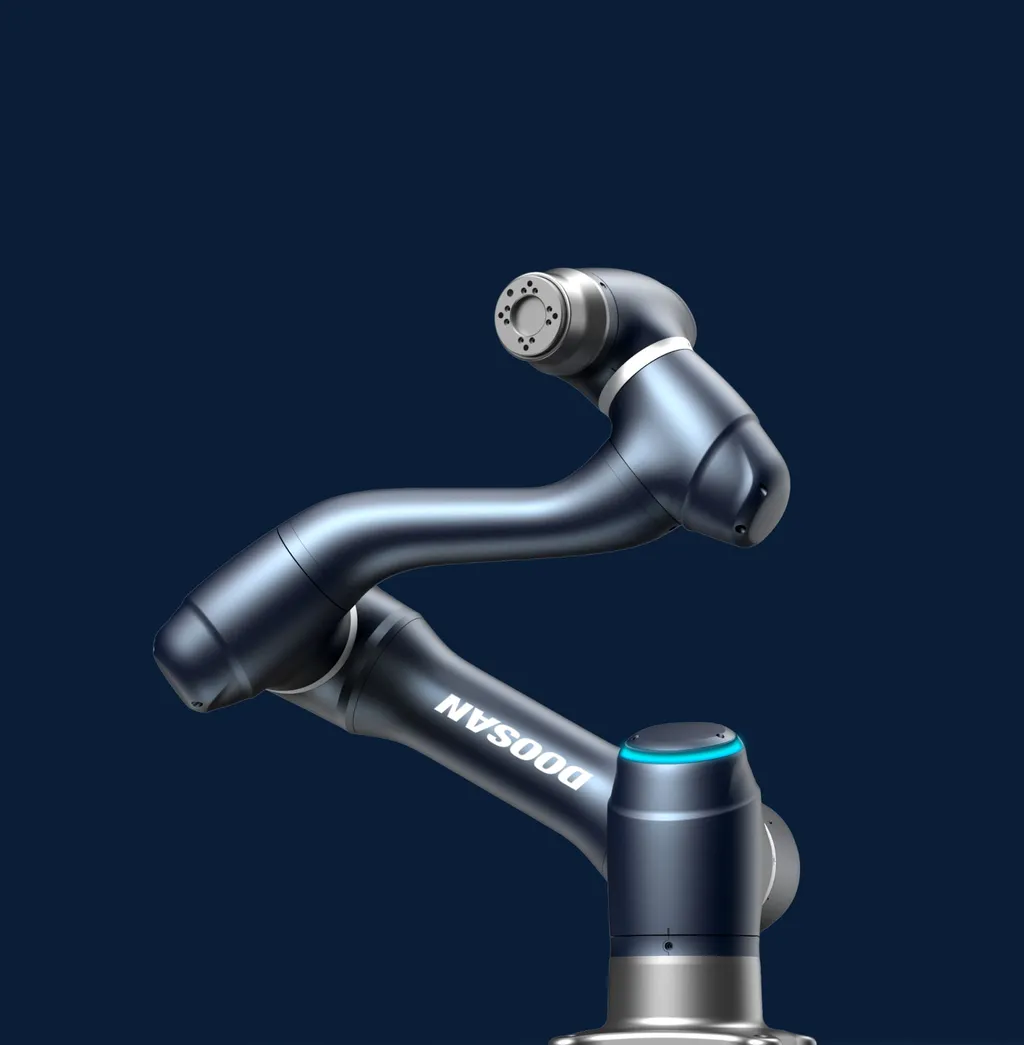
South Korea runs 1,220 industrial robots for every 10,000 manufacturing workers, the highest robot density on Earth by a wide margin, according to the International Federation of Robotics’ World Robotics 2025 report. Its only robot brand in our database, Doosan, accounts for 14 of the 425 robots we track, 3.3% of the catalog. The country that automates its factories harder than anywhere else builds almost none of the hardware doing it.
Which countries actually use the most robots per worker?
IFR measures robot density as operational robots per 10,000 people employed in manufacturing, a workforce-normalized number that lets a small country like Singapore compete with an industrial giant like China on the same scale. The 2024 data, presented April 2026, puts South Korea first by a wide margin: 1,220 units per 10,000 workers, growing 7% a year on average since 2019, driven by its electronics and automotive industries. Singapore is second at 818. Germany, Japan, Sweden, Denmark, Slovenia, the United States, Taiwan and Switzerland round out the top 10.
We cross-referenced that ranking against our own 425-robot database’s manufacturing country of origin, resolved by each robot’s own field or its brand’s home country, the same logic behind our country-of-origin breakdown published six days ago. The two numbers measure completely different things: one is how intensely a country automates its own factories, the other is where the robot on your floor was actually built. They barely move together.
| Density rank | Country | Robots per 10,000 workers | Our catalog share | Robots we track |
|---|---|---|---|---|
| 1 | South Korea | 1,220 | 3.3% | 14 (Doosan) |
| 2 | Singapore | 818 | — | 0 |
| 3 | Germany | 449 | 6.8% | 29 (KUKA) |
| 4 | Japan | 446 | 36.9% | 157 (six brands) |
| 5 | Sweden | 377 | — | 0 |
| 6 | Denmark | 329 | 2.1% | 9 (Universal Robots) |
| 7 | Slovenia | 315 | — | 0 |
| 8 | United States | 307 | — | 0 |
| 9 | Taiwan | 302 | 3.5% | 15 (Techman) |
| 10 | Switzerland | 294 | 14.6% | 62 (ABB, Stäubli) |
| 22 (world) | China | 166 | 32.7% | 139 (eight brands) |
Source: IFR World Robotics 2025 (robot density, 2024 data) cross-referenced with the Industrial Robotics Hub database (425 robots, September 2026).
Density and catalog share track different things. Japan is the only country high on both axes; South Korea and Germany sit high on density and low on catalog share, China runs the reverse.
Why doesn’t South Korea build the robots it uses the most?
Density measures adoption intensity, not industrial capacity. South Korea automates harder than anywhere else because its economy is concentrated in two robot-hungry sectors, electronics and automotive, both of which run dense robot lines per worker. But of the 20 brands in our catalog, only one, Doosan, is Korean. The other 1,206 robots Korean factories could be buying come from Japanese, Swiss, German, Chinese and Danish suppliers. The country that adopts robots fastest is still, for the most part, an importer.
Which country buys the most and builds the least?
The United States takes that mismatch further than South Korea does. It ranks 8th worldwide in robot density (307 per 10,000 workers) and is the largest single order market we track by value, North American robot orders ran $543 million in Q1 2026 and $622 million in Q2, most of it landing at US plants. But zero of the 20 brands in our 425-robot catalog are US-headquartered. Every dollar of that order volume buys foreign-built iron.
Singapore, Sweden and Slovenia sit in the same position: all three rank in the world’s top 10 for robot density, and none has a single robot in our database. That is a real gap, not a data-quality flag. Our catalog tracks 20 major branded manufacturers, and none of them happen to be domiciled in those three countries. A country can automate intensely without building a single robot of its own; South Korea and the US just do it at a scale worth naming.
Is any country both a heavy user and a real builder?
Japan is the one clean exception. It ranks 4th worldwide in density (446 per 10,000 workers, growing 5% a year since 2019) and supplies 36.9% of our entire catalog, more than any other country, across six brands: Yaskawa, FANUC, Kawasaki, Epson, Omron and Mitsubishi. No other country in the world’s top 10 for density also leads our catalog’s manufacturing share. Germany comes closest, 3rd in density and 6.8% of the catalog through KUKA alone, but that is a fraction of Japan’s footprint.
China runs the mismatch in the opposite direction from Korea and the US. It supplies 32.7% of our catalog, the second-largest manufacturing share behind Japan, across eight brands, but ranks just 22nd worldwide in density at 166 per 10,000 workers. IFR’s own explanation is the workforce, not a lack of automation intensity: China’s manufacturing employment base is so large, spread across both industrial hubs and rural regions, that even an enormous operational stock, about 2 million robots, roughly 4.5 times Japan’s, only produces a modest density figure. China installed 54% of all robots deployed worldwide in 2024, 295,000 units in a single year, and still lands outside the top 20 on a per-worker basis.
What this means for buyers
A country’s robot density tells you how automated its factories already are. It does not tell you where to source a robot, and for four of the world’s ten most robot-intensive economies, Singapore, Sweden, Slovenia and the US, the honest answer in our catalog is nowhere. Japan is the only country that both uses robots at real scale and builds the plurality of what the rest of the world buys. Everyone else, including the density champion itself, is running someone else’s hardware.
Sources: IFR, “Robot Density Surges in Europe, Asia, and Americas” and The Robot Report’s coverage.
Compare these robots