Five Million Robots Counted; the Rest Is Still Claimed
IFR counted 5 million working robots this week. Boston Dynamics, FANUC and TLD Robotics offered plans and claims, and only some came with a base.
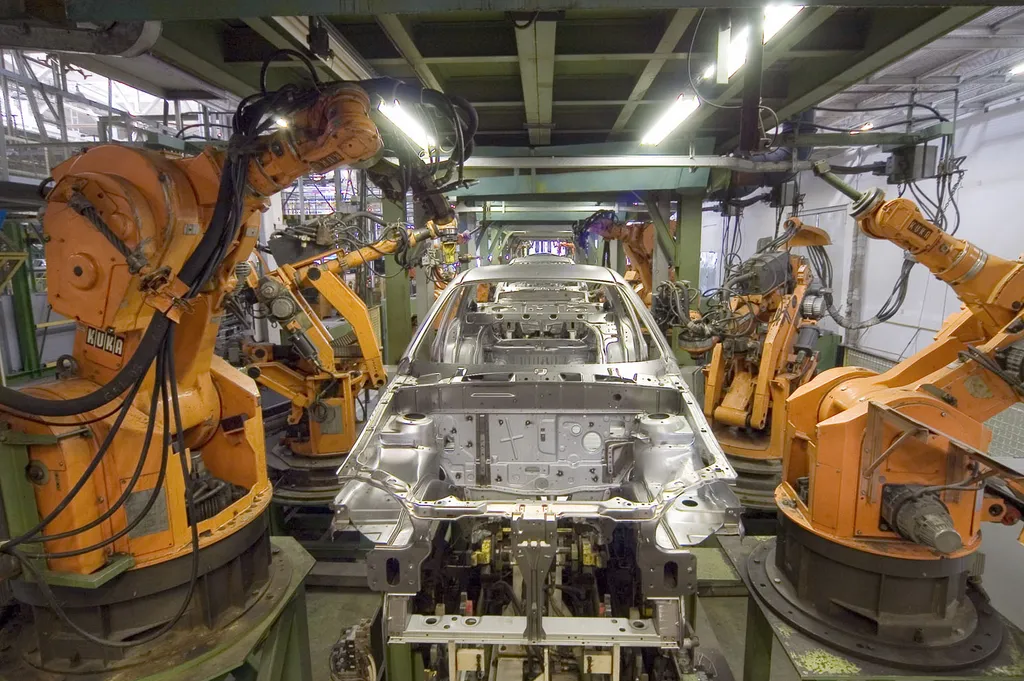
The most solid number in industrial robotics this week came from a counting exercise, not a launch. The International Federation of Robotics (IFR) said on September 24 that the global operational stock of industrial robots reached a record 5 million units in 2025, and that annual installations passed 600,000. Around it, three companies made announcements built on plans, claims and ship dates. Read together, the week’s stories sort into a useful pattern: what has been counted, what has been promised, and where the base is missing.
Thread 1: Counted versus claimed
IFR’s figures are member-reported survey data, not an audit, but they come with a base and a method. Our IFR World Robotics 2026 story shows installations up 11%, China at 354,000 (59%) and the US at roughly 38,400 (+12%). The release even contradicts itself in a small way: the main text says “almost 38,500” for the US while the US-specific release says 38,400. We flagged the gap instead of choosing one.
The other three stories are company statements, and their numbers behave differently:
- TLD Robotics claims a fleet “tripling every year” and a tenfold scale-up in three years, across more than 35 operations. No vehicle count is given, so neither multiple can be turned into a fleet size.
- Boston Dynamics plans 25,000 Atlas units and a factory able to build 30,000 robots a year, with no start year for either.
- FANUC names a December shipment date for its AI Welding Agent and no accuracy figure.
None of these is suspect on its face. The point is that a growth multiple with no base, or a unit plan with no date, tells a buyer much less than it seems to.
Thread 2: Two accounts of the same site that do not match
The Boston Dynamics release is the clearest case, because this desk had already covered the same facility on August 30 from Hyundai’s side. The two versions agree on the tenfold expansion but not on the date: the August story reported it by the end of 2026, while the September 21 release says next year. The August story described 25,000 units as guaranteed customer orders; the release describes internal deployment at Hyundai Motor and Kia plants “over the next few years.”
We do not decide which is right. The release also describes Atlas, in its own boilerplate, as “currently in development.” What is real and specific is smaller: a first-phase training site now operating inside the Georgia Metaplant, a named task (sequencing parts for assembly), and a stated 2030 target for component assembly.
Thread 3: Where the volume actually is
Against announced humanoid plans, IFR’s data is a reminder of where robots are working today. China supplied 59% of installations; by our arithmetic China plus the US is roughly 65% of a global total near 600,000. Automotive installations in China rose 38% to 78,900 and metal and machinery 44% to 78,700, both steady industrial categories.
Two details cut against easy stories. Chinese-brand suppliers’ home share slipped from 57% to 55% because foreign suppliers grew 27% in China, per IFR’s China release. And the US moved past Japan into second place while, IFR notes, most robots operating there are imported from Japan and Europe. For more on that gap between where a robot is built and where it works, see our analysis of robot density versus manufacturing origin and Chinese industrial robots in 2026.
Thread 4: New capability arrives through the customer you already have
FANUC and Boston Dynamics announced very different products, but both lean on existing relationships. FANUC says customers on CRX robots do not need a separate enterprise agreement with Google Cloud and can subscribe through their existing FANUC contract. Boston Dynamics says it is in discussions with existing Spot and Stretch customers in manufacturing, aerospace, semiconductors, logistics, food and beverage and life sciences to help collect training data for Atlas in 2027, and names none of them.
Even TLD Robotics fits. By the company’s own count its industrial sites (20-plus) outnumber its airports (15-plus), which puts an airport-equipment group’s newest business mostly inside factories. In each case the route to market is an installed relationship, and the open question is whether the customer signs on when the product ships.
What to watch
- Whether Boston Dynamics confirms a date for the larger RMAC building and a start year for the 30,000-a-year US factory.
- FANUC’s supported CRX models, price and cloud-connection requirements before the December ship date, and any first customer.
- A vehicle count from TLD Robotics, so that “tripling” has a base.
- Whether Europe’s 2025 declines in IFR’s data (Germany -8%, Italy -11%, France -8%, Spain -15%) continue into 2026.
- Two deals still open from earlier reporting: ABB’s robotics division sale to SoftBank, described as closing mid-to-late 2026, and SoftBank’s reported purchase of Hyundai’s Robotics and AI Institute, which this desk has not covered because no company confirmation was available at the time.
Sources
- Five million robots now operate in factories globally — International Federation of Robotics, Sep 24, 2026
- Boston Dynamics Opens Robotics Metaplant Application Center to Train Humanoid Robots for Manufacturing Tasks — Boston Dynamics, Sep 21, 2026
- FANUC Accelerates Physical AI in Arc Welding with the New 'AI Welding Agent' — FANUC CORPORATION, Sep 11, 2026
- TLD Robotics Launched as ALVEST Group Acquires EasyMile and TractEasy — EasyMile (press release), Sep 16, 2026
Frequently asked questions
What was the biggest industrial-robotics number this week? +
IFR's World Robotics 2026 release on September 24 put the global operational stock of industrial robots at a record 5 million units in 2025, up 9%, with more than 600,000 new installations, up 11%. China accounted for 354,000 of them, or 59%.
Is Boston Dynamics' Atlas available to buy? +
Not from anything published this week. The company's own boilerplate calls Atlas 'our electric humanoid platform currently in development', and the September 21 release gives no specifications, price or delivery date. The 25,000-unit plan describes deployment at Hyundai Motor Group and Kia plants.
Can FANUC's AI Welding Agent be bought yet? +
No. FANUC announced it on September 11 and says shipments start by the end of December 2026. It has not disclosed price, supported CRX models, welding processes or customers, and this desk found no independent hands-on results.
How many robots does TLD Robotics run? +
The launch release claims more than 35 operations in 10-plus countries and more than 50,000 autonomous missions, but gives no vehicle count and does not separate live deployments from pilots.
More news