Robot Ceiling Mounting Fell From 77% to 64.3%
Ceiling-mount capability in our 425-robot database fell from 77% to 64.3% since June, a 12.7-point drop from new heavy floor-only arms, not regression.
In June we reported that 77% of robots in our database could mount on a ceiling. Today that number is 64.3%. That is a 12.7-point drop in three months, and not one robot that could mount overhead in June lost that ability. The catalog grew from 263 robots to 425, and the entire decline is a composition effect: irh-catalog-discovery has spent the summer adding heavy industrial arms, and every heavy arm it adds is floor-only by physical necessity.
If you filter your shortlist by “collaborative” or “articulated” alone, you are now pulling in more floor-only options than you would have in June, and the spec sheet will not flag the change. Only the raw base rate moved.
How much has ceiling-mount capability actually fallen?
Our June 28 baseline post found 188 of 243 robots that published mounting data (77%) could go on a ceiling. Re-running the same query today against all 425 robots in the database gives a materially different answer.
| Metric | June 2026 (n=263 DB) | September 2026 (n=425 DB) | Change |
|---|---|---|---|
| Robots publishing mounting data | 243 of 263 | 403 of 425 (94.8%) | catalog +61.6%, mounting-data robots +65.8% |
| Ceiling-mount capable | 188/243 = 77% | 259/403 = 64.3% | -12.7 points |
| Wall-mount capable | 152/243 = 63% | 201/403 = 49.9% | -13.1 points |
| Floor-only (no ceiling, no wall) | 53/243 = 22% | 116/403 = 28.8% | +6.8 points |
Source: analysis of 425 robots in the Industrial Robotics Hub database, physical.mountingOptions field, September 15, 2026, cross-checked against the June 28, 2026 baseline in “Robot Mounting: Only 77% Can Mount on the Ceiling.”
The catalog nearly doubled and the pool of robots publishing mounting data grew even faster, proportionally, than the catalog itself (65.8% vs 61.6%). So this is not a disclosure problem. More robots than ever are telling you their mounting orientation. What they are telling you has changed.
Is this a real engineering regression, or something else?
Neither. It is a sampling shift, and it is worth being precise about that distinction because “capability fell” and “the mix of what got added changed” read very differently on a spec sheet.
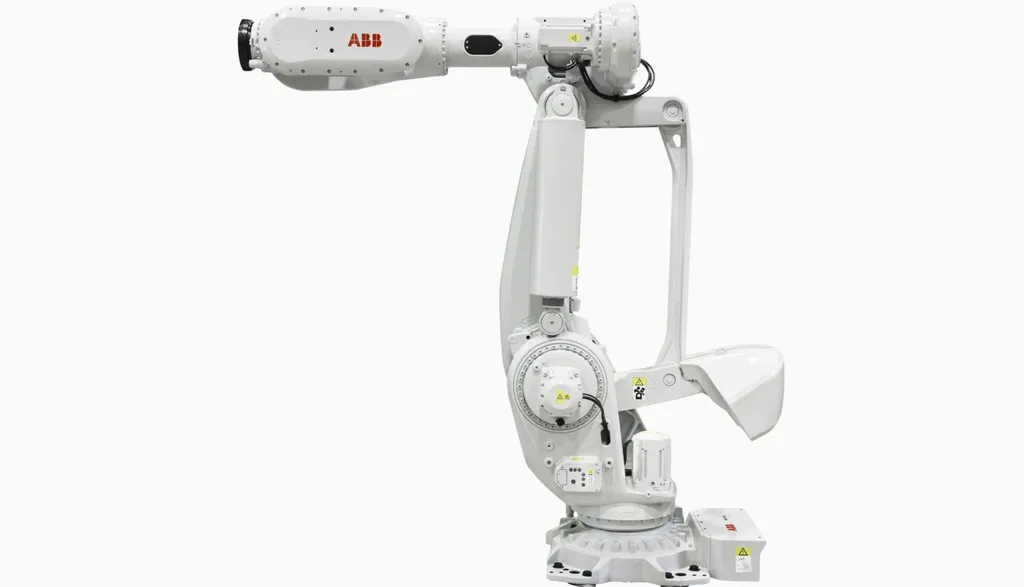
Every robot that could mount on a ceiling in June still can. What changed is the denominator. irh-catalog-discovery added dozens of new heavy articulated arms to the database since June, and five of them make the point cleanly: ABB IRB 7720 (620 kg payload), FANUC M-2000iA/2300 (2,300 kg, the heaviest robot in the whole database, covered here when it landed), KUKA KR 1000 Titan (1,000 kg), KUKA KR 500 R2830 (500 kg), and ABB IRB 7710 (500 kg). All five are stored with mountingOptions: ["floor"] and nothing else. Not a placeholder, not a disclosure gap. A 2,300 kg robot does not get bolted to a ceiling bracket, and no engineer would spec it that way.
Those five robots alone represent 5,120 kg of combined payload. The catalog is not just getting bigger, it is getting heavier, and heavier robots are structurally more likely to be floor-mounted because the pedestal has to absorb the load.
Which robot types took the biggest hit?
The by-type breakdown shows the drop is not evenly distributed. It landed almost entirely on articulated arms, because that is where the new heavy-payload cohort went.
| Type | June 2026 (n, ceiling%) | September 2026 (n, ceiling%) | Point change |
|---|---|---|---|
| Cobot | n=103, 97% | n=130, 93.1% | -3.9 |
| Articulated | n=90, 76% | n=179, 56.4% | -19.6 |
| SCARA | n=30, 37% | n=59, 28.8% | -8.2 |
| Palletizer | n=9, 0% | n=11, 0% | 0 |
Ceiling-mount share by robot type, June 2026 vs September 2026. Light blue = June baseline, gradient blue = today. Source: analysis of 425 robots in the Industrial Robotics Hub database.
Articulated arms took the steepest fall of any type: 76% to 56.4%, a 19.6-point drop, because the new heavy-arm cohort landed almost entirely in that bucket. The articulated sample nearly doubled too (90 to 179 robots), so this is not one or two outliers dragging a small denominator. It is a genuine shift in what “articulated arm” means in the catalog now.
Cobots barely moved: 97% to 93.1%, a 3.9-point drift. Cobots are still overwhelmingly lightweight, software-controlled arms where gravity compensation handles any mounting angle, and the segment simply grew more slowly (103 to 130 robots) than the heavy-arm cohort did. SCARA dropped 8.2 points, 37% to 28.8%, roughly proportional to its own growth. Palletizers did not move at all: 0% ceiling-capable in June, 0% now, for the same reason it was 0% in June. A palletizer’s working envelope points down from a fixed pedestal by design. Inverting one solves a problem nobody has.
Is there a hard payload ceiling for ceiling mounting?
There is an upper bound in the current data, but it is not the clean round number intuition suggests. The heaviest robot in the entire 425-robot database that can still mount on a ceiling is the KUKA KR 210 R2700-2 at 210 kg payload.
Re-running the query directly rather than assuming a threshold: 68 robots in the database carry a rated payload of 150 kg or more. Of those 68, exactly 3 support ceiling mounting: the KR 210 R2700-2 (210 kg), the Yaskawa GP180 (180 kg), and the Staubli TX2-200 (170 kg). The other 65 are floor-only or restricted to specialized mounts like shelf or rail. So the real story is not “150 kg is the cutoff.” It is that above roughly 170-210 kg, ceiling mounting becomes the exception rather than the rule, and the exceptions that do exist are frame designs specifically engineered for it, not a payload class that happens to qualify. Don’t assume a robot near 150 kg is safe to spec overhead just because it is lighter than the 2,300 kg flagship. Check the mounting field on that specific model.
What does this mean when you’re filtering a catalog by type?
Whether a robot can go on a ceiling is not a fixed fact about its class. It is a fact about the specific model, and the base rate for that fact has been sliding down as the catalog fills with heavier articulated arms.
A buyer running a cell-layout review who filters by “collaborative” or “articulated” and stops there will silently pull in more floor-only candidates in September than they would have in June, purely because the catalog got heavier. No individual robot’s engineering changed. The population did.
The practical fix has not changed since June: check the mounting field before payload and reach, not after. If your cell needs ceiling or wall capability, a cobot still clears the bar at 93.1%. An articulated arm now only clears it slightly better than a coin flip, 56.4%, down from a solid majority five months ago. A SCARA clears it less than 3 times in 10. A palletizer never will, and specifying one for overhead mounting is not a filtering problem, it is a kinematics problem that no spec revision fixes.
Run the filter first. The catalog keeps changing under you, and the “same” filter now returns a different answer than it did in June.
Analysis based on 403 of 425 robots in the Industrial Robotics Hub database that publish a mounting-orientation specification as of September 15, 2026, cross-checked against the June 28, 2026 baseline (243 of 263 robots) in “Robot Mounting: Only 77% Can Mount on the Ceiling.” Both snapshots computed directly from physical.mountingOptions.
Compare these robots