Toyota Targets 400,000 Factory Robots From 2028, Led by ELEY
Toyota says it could spend ¥1 trillion ($6.4B) a year from 2028 deploying 400,000 wheeled ELEY robots that learn tasks by imitation, not teleoperation.
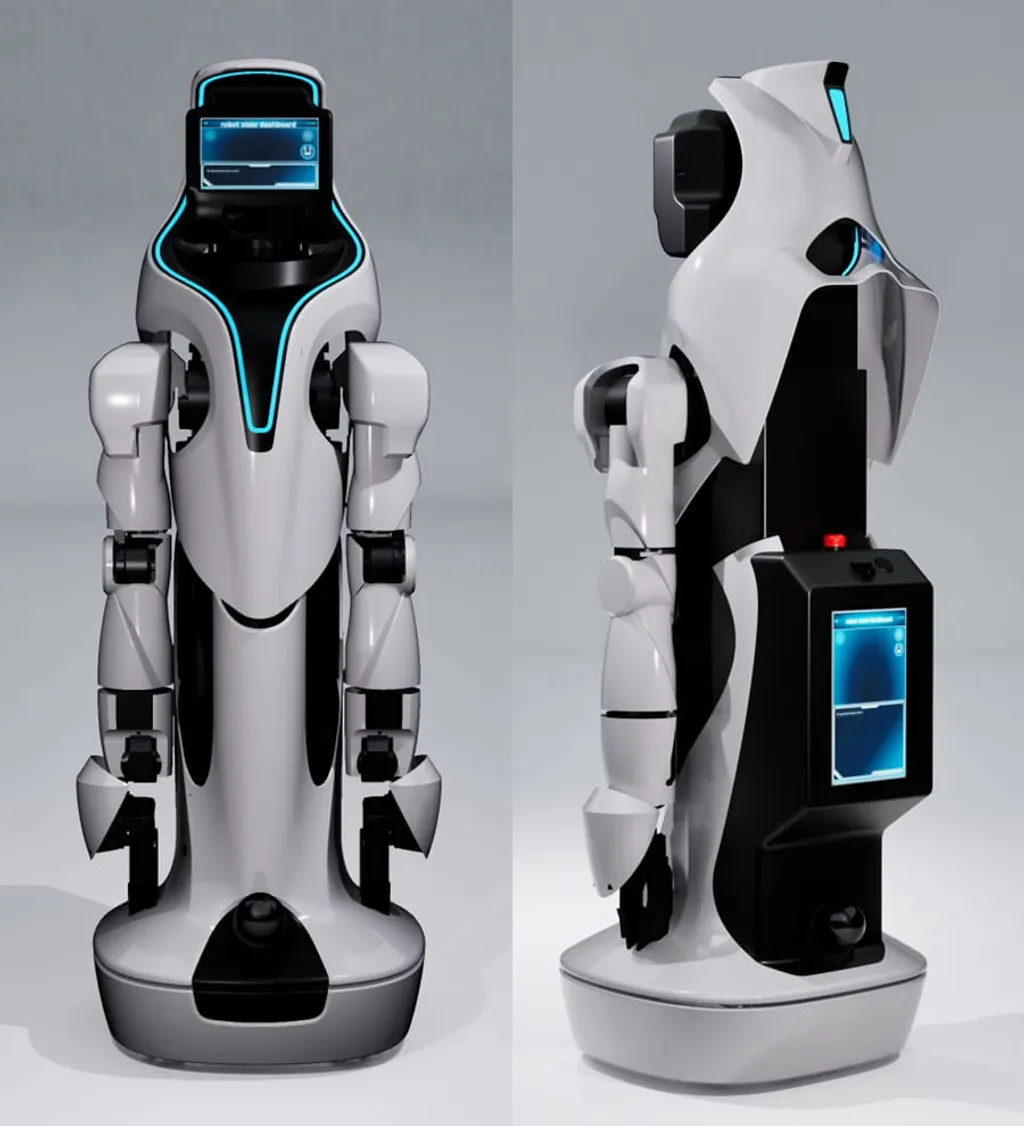
Toyota told investors on September 18 that it estimates spending roughly ¥1 trillion ($6.4 billion) a year starting in 2028 to put approximately 400,000 robots into its factories and those of its group affiliates, led by a 50-kilogram, wheeled, dual-arm robot called ELEY that learns tasks by watching people do them, not by being programmed or remote-controlled. The figure, disclosed by Toyota Motor Corp executive vice president Hiroki Nakajima at a technology briefing at the company’s European headquarters, would split roughly 150,000 robots into Toyota Motor Corp’s own plants and 250,000 across group-company facilities, according to Automotive World’s account of the briefing — a deployment scale that would dwarf every other single-company robot commitment this desk has covered in 2026, if it happens as described.
That “if” matters. Toyota’s own official Global Frontier Research page, published back on March 31, 2026, introduces ELEY’s design philosophy and hardware in detail but contains none of the 400,000-unit, ¥1 trillion, or 2028 figures — those numbers came only from the later investor briefing, as reported by trade press, not from any Toyota webpage or press release reviewed for this story. Automotive World’s own reporting on the briefing is explicit that Toyota “neither confirmed the investment would definitely proceed nor how many years it might continue.” This is a company estimate more than two years out, not an audited capital commitment.
What ELEY actually is
ELEY’s name stands for “Embodied Learning robot for Enhanced Yield,” per Toyota’s own research page, and its physical form is deliberately not a bipedal humanoid. It rolls on a wheeled base rather than walking, weighs about 50 kg, and measures roughly 478mm long by 450mm wide with a height that adjusts between 939mm and 1,619mm — sized, Toyota says, to roughly match an average adult male. Its two arms end in two-fingered hands built around what Toyota calls quasi-direct-drive (QDD) actuators: a low gear-reduction ratio of 10:1 or less paired with a high-torque motor, which lets the arm yield to external force instead of fighting it the way a conventional high-ratio geared robot arm would. That compliance is the point — Toyota’s research page frames it as the mechanism that lets ELEY “interact gently” with people and parts rather than requiring the caged, keep-away safety zones typical of older industrial arms.
The learning method is imitation, not teleoperation. Toyota’s own workers wear finger-shaped jigs modeled on ELEY’s hand geometry and perform a task repeatedly in front of cameras; that demonstration data — not simulation, not scraped internet video — trains what Toyota describes as a “large behavior model,” a lineage that traces back to work published by Toyota Research Institute on diffusion-policy imitation learning from camera images and touch sensing. At the September 18 briefing, Toyota reportedly had ELEY fold T-shirts for the assembled investors, with near-perfect accuracy after roughly 1,500 practice repetitions collected over about two weeks — a company-demonstrated result, not an independently timed or audited one.
A discrepancy worth flagging, not smoothing over
Not every account of how ELEY learns agrees. Repairer Driven News, covering the same September 18 briefing, described the training method differently: “Human workers train ELEY by wearing an exoskeleton that beams the movements to the robot in a process called teleoperation.” That is a materially different mechanism from the finger-jig, camera-based imitation learning described on Toyota’s own research page and corroborated independently by Automotive World, M4SNews and Yahoo Autos’s reporting on Toyota Research Institute’s diffusion-policy lineage. Four of the five sources checked for this story describe demonstration-based imitation learning with hand jigs; one describes exoskeleton teleoperation. Given Toyota’s own page is unambiguous about imitation learning “by imitating human movements,” and the majority of independent trade coverage lines up with it, this story follows the imitation-learning account as primary and flags the Repairer Driven News description as an outlier rather than silently picking one without saying so.
The labor-shortage backdrop
Toyota frames the program as workforce augmentation, not headcount reduction, against the backdrop of Japan’s manufacturing labor shortage: Toyota’s veteran “takumi” workers — roughly 18,000 of them, per M4SNews’s reporting on the briefing — are retiring, and their hand-skill knowledge does not transfer to a new hire the way a written work instruction does. Nakajima told investors: “We aim for a world where robots coexist with humans, rather than replacing them.” That is Toyota’s stated intent, not an independently verified labor outcome, and should be read as a company position, not a settled fact about headcount once 400,000 robots are running.
For scale, this desk’s recent coverage gives comparison points, though none are apples-to-apples. Boston Dynamics plans roughly 25,000 Atlas units across Hyundai and Kia plants via its RMAC training center at Hyundai’s Georgia Metaplant. Agility Robotics disclosed $300 million-plus in milestone-gated orders for its Digit 5 humanoid. AGIBOT marked its 20,000th cumulative robot off the line with a theme-park deployment. Toyota’s 400,000-unit figure beats all three by an order of magnitude or more — but it is also the least concrete: an estimate for a program that has not started, versus units already running, orders already booked, or robots already shipped.
Sources
- Toyota plans to deploy 400,000 factory robots from 2028 — Automotive World, Sep 18, 2026
- Toyota to deploy AI-powered robots at factories worldwide — Repairer Driven News, Sep 24, 2026
- ELEY: A Physically Learning Robot Aiming for High Performance — Toyota Motor Corporation (Global Frontier Research), Mar 31, 2026
- Toyota targets 400,000 factory robots from 2028, led by wheeled humanoid ELEY — M4SNews, Sep 19, 2026
- Toyota's ELEY factory robot has wheels, not legs, and learns by watching — Yahoo Autos, Sep 19, 2026
Frequently asked questions
Did Toyota actually commit to spending $6.4 billion a year on robots? +
Not exactly. At a September 18, 2026 investor briefing at its European headquarters, Toyota executive vice president Hiroki Nakajima said the company estimates it could spend roughly ¥1 trillion ($6.4 billion) annually from 2028 on factory robots. Trade press covering the briefing, including Automotive World, reported that Toyota did not confirm the spending would definitely happen or specify how many years it would continue. Treat it as a company projection, not a signed budget.
Is ELEY a walking humanoid robot? +
No. ELEY rolls on a wheeled, omnidirectional base rather than walking on legs. It has two arms with two-fingered hands and stands roughly 939mm to 1,619mm tall depending on a height-adjustable mechanism, but it does not have legs or feet, and Toyota has not described it as bipedal in any source reviewed for this story.
How does ELEY learn to do a factory task? +
By watching, not by being remote-controlled. Toyota's own workers wear finger-shaped jigs matching ELEY's hand geometry and perform a task repeatedly in front of cameras; that demonstration data trains what Toyota calls a large behavior model. At the September 18 briefing, Toyota said ELEY folded T-shirts for the audience after learning from about 1,500 practice repetitions collected over two weeks.
Is this about cutting factory jobs? +
Toyota is framing it explicitly as the opposite. Nakajima said Toyota wants ELEY to capture the skill of retiring veteran 'takumi' workers as training data rather than replace the people doing the work now, telling investors: 'We aim for a world where robots coexist with humans, rather than replacing them.' That framing is Toyota's own stated position, not an independently audited labor outcome.
More news