ABB Is Selling Robotics. It's 48 of Our 425 Robots
ABB agreed to sell its entire Robotics division to SoftBank for $5.4 billion. It's IRH's largest single brand: 48 of 425 robots, 11.3% of our catalog.
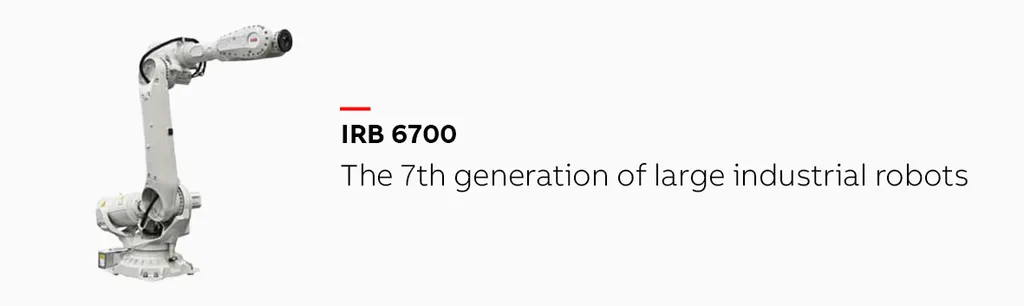
ABB agreed on October 8, 2025 to sell its entire Robotics division to SoftBank Group for $5.375 billion in enterprise value. Almost a year later the deal still has not closed. ABB’s own most recent public statement, the Q2 2026 results released July 16, 2026, still describes it as a pending divestment targeted for the second half of 2026, now carried as discontinued operations on ABB’s books. In the meantime, ABB is the single largest brand in the Industrial Robotics Hub database: 48 of 425 catalogued robots, 11.3% of everything we track, ahead of Yaskawa’s 46 and FANUC’s 38. Nobody has yet asked what a robotics division that big changing owners actually means against a catalog that big. That’s the point of this post.
How much of IRH’s database is one brand?
Six brands account for the majority of our 425-robot catalog. ABB leads by count, narrowly ahead of Yaskawa and comfortably ahead of FANUC, KUKA, Estun, and Kawasaki.
| Brand | Robots | Share of catalog |
|---|---|---|
| ABB | 48 | 11.3% |
| Yaskawa | 46 | 10.8% |
| FANUC | 38 | 8.9% |
| Estun | 29 | 6.8% |
| KUKA | 29 | 6.8% |
| Kawasaki | 24 | 5.6% |
Source: our analysis of 425 robots in the Industrial Robotics Hub database, live-counted 2026-09-13.
That table is why this deal matters to a buyer who has never thought about ABB’s corporate structure. When your largest single supplier by catalog weight changes hands, the ripple isn’t hypothetical, it’s roughly one in nine robots you could be speccing right now. For broader context on how ABB’s footprint spreads across industries (not just robot count), see our earlier breakdown of robot industry reach by brand.
What kinds of ABB robots are riding on this sale?
The 48 ABB robots in our catalog span six of the eight distinct robot types used anywhere in our 425-robot database (the full set: articulated, cobot, scara, delta, palletizer, painting, welding, amr). ABB has zero robots classified as welding cells and zero AMRs in our data, everything else it touches.
| ABB robot type | Count |
|---|---|
| Articulated | 29 |
| Cobot | 8 |
| SCARA | 4 |
| Delta | 3 |
| Palletizer | 3 |
| Painting | 1 |
Source: our analysis of ABB’s 48 catalogued robots, Industrial Robotics Hub database, 2026-09-13.
Articulated arms, mostly the workhorse IRB series like the IRB 6700, are 60% of ABB’s catalog footprint. Cobots, including the YuMi IRB 14000, are the second-largest slice. If you buy specifically in the cobot or articulated categories, ABB is not a peripheral brand, it’s a core option in both.
The payload range across those 48 robots also moved since we last measured it. Our robot brand payload ladder article, published June 26, 2026 against a 264-robot snapshot with 24 ABB robots, put ABB’s ladder at 0.5 kg to 550 kg. Today, across 48 ABB robots, that ceiling is 620 kg, set by the ABB IRB 7720, added to our catalog on August 6, 2026. The robot count under the ABB brand has doubled since that article published. The floor hasn’t moved: 0.5 kg is still the precision end.
One data note in passing: none of ABB’s 48 robots in our database publish a real price under commercial.msrpUSD. That’s consistent with the pricing-opacity pattern we’ve documented elsewhere in the catalog, not something specific to ABB or this deal.
What is SoftBank actually buying?
The headline number is $5.375 billion in enterprise value, per ABB’s own October 2025 announcement and SoftBank’s matching press release the same day. The unit changing hands generated roughly $2.3 billion in revenue in 2024 at a 12.1% operational EBITDA margin, with about 7,000 employees, a fraction of ABB Group’s roughly 110,000 total headcount, according to deal reporting from The Robot Report.
ABB has disclosed the expected transaction economics on its end: roughly $5.3 billion in net cash proceeds, a roughly $2.4 billion non-operational pre-tax book gain, about $200 million in separation costs, and $400-500 million in transaction-related cash tax outflows. The European Commission cleared the deal without conditions on March 12, 2026. In July 2026, a four-bank syndicate finalized a $1.75 billion loan backing SoftBank’s acquisition financing, per The Robot Report’s coverage.
SoftBank has framed the purchase as part of its “physical AI” strategy, pairing ABB Robotics’ platform, roughly 7,000 people, and global footprint with its existing robotics-adjacent bets in AutoStore, Agile Robots, and Skild AI. Masayoshi Son’s own framing, per that same reporting: the goal is to “fuse artificial super intelligence and robotics.” Sami Atiya, president of ABB’s Robotics & Discrete Automation division and an ABB executive-committee member, is stepping down from the executive committee by the end of 2025 and will serve as a strategic advisor through 2026 before departing fully.
ABB, for its part, is redeploying the proceeds rather than banking them. It plans to put the roughly $4.8-5.3 billion toward a separate, unrelated $5.5 billion acquisition of Rotork, a UK flow-control equipment maker with zero robotics overlap, expected to close in the first half of 2027. IRH’s news desk already covered the earnings side of this story, including ABB’s Q2 2026 order figures and how they stack up against Yaskawa, in ABB’s Q2 2026 record orders and the Rotork acquisition. We won’t restate those numbers here; this piece is about what the sale means for our own catalog composition, not the earnings call.
Has the sale actually closed?
No. As of this writing, ABB’s own July 16, 2026 Q2 statement is the most recent word on the matter, and it still describes the divestment as targeted for the second half of 2026, still pending, carried as discontinued operations rather than a completed sale. We found no source confirming the transaction has closed, and none confirming it has fallen through either. Both of those would be news. Right now, the honest answer is that it’s still in motion, roughly eleven months after signing and about four and a half months after EU antitrust clearance.
Should buyers of an ABB robot worry about parts and support?
The available evidence points toward continuity, not liquidation. ABB is selling Robotics as a going concern to fund a different acquisition entirely, not winding the unit down, and SoftBank is paying a premium enterprise value for a business with real revenue and margin, not distressed assets. Sami Atiya’s transition to a strategic-advisor role through 2026, rather than an immediate exit, also points toward a managed handover instead of a disruption.
What we can’t tell you is what happens to the ABB name on the robots themselves. No source we found states whether SoftBank plans to keep the ABB brand on robotics products after the sale closes, rename the unit, or fold it into something else entirely. ABB’s own public position on its remaining business is that its “ambitions for ABB are unchanged,” continuing to focus on electrification and automation, but that statement is about the parent company that keeps the name, not the robotics unit that is leaving it. If you’re speccing an ABB arm today, from the IRB 6700 to the YuMi cobot line, the honest answer on long-term branding is that it’s an open question. We’ll update this when ABB, SoftBank, or the closed deal itself gives us an answer.
That’s not a hedge, it’s the actual state of the record as of September 13, 2026. A brand that is 11.3% of our catalog is changing hands, the deal has cleared its major regulatory hurdle, financing is in place, and the close date is still “second half of 2026” nine months into that window. We’ll revisit this the moment that changes.
Compare these robots