35-50 kg Robot Gap: 11 Arms Now, Zero New Cobots
Re-read against maker datasheets, 11 of 424 robots rate 35-50 kg, up from 5 in June. All 6 additions are industrial arms, and the UR30 drops out at 30 kg.
In June we counted six robots rated 35 to 50 kg. Recounted across the 424 robots in our database that publish a payload, and re-read against each manufacturer’s own document, the number is 11, up from 5 on the same standard in June. All six additions are industrial arms. No new cobot has entered the band, and the robot that headlined the June post, the Universal Robots UR30, leaves it: UR’s datasheet leads with 30 kg and reserves 35 kg for “boundary conditions according to manual.”
The bigger finding is that this was never a smooth gap. Payload ratings in the catalog sit on a short ladder of round numbers, and the “gap” is the space between two rungs. That changes how you should shop for a 40 kg load.
Did the 35-50 kg gap actually close?
Not in share terms. Our June baseline found 6 of 263 robots (2.3%) in the band. Re-running it on 424 robots, with three payload figures corrected against manufacturer sources (explained below), gives 11 of 424 (2.6%). The catalog grew 61.6% while the band grew 120%, but from a base so small that the share barely moved.
| Measure | June table, as published | June table, re-read at source | Now (424 robots, re-read at source) |
|---|---|---|---|
| Robots rated 35 to under 50 kg | 6 | 5 | 11 |
| Share of robots with payload data | 2.3% | 1.9% | 2.6% |
| Cobots in the band | 4 | 3 | 3 |
| Articulated arms in the band | 2 | 2 | 8 |
| Brands represented | 5 | 4 | 8 |
Source: analysis of 424 robots in the Industrial Robotics Hub database that publish payloadKg, September 19, 2026, with the 13 robots in and around the band checked against manufacturer material (11 read directly at the maker’s own document, 2 partly, see the last section). “June, re-read” applies the same corrections to the six robots in the June table.
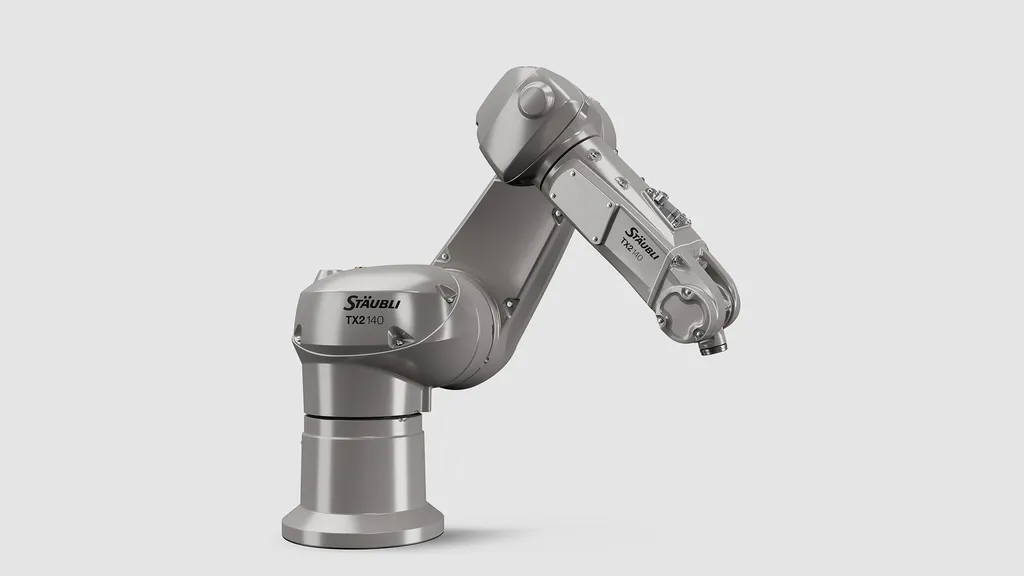
The six newcomers are the Estun ER35B-1810, the FANUC M-20iD/35, the KUKA KR 35 R1840-3, the Yaskawa NEX35, the Staubli TX2-140 and the Yaskawa MHP45L. None appear in June’s table, and every one is an articulated arm. Cobots held at three: AUBO iS35, Rokae xMate CR35 and Rokae xMate CR45. The June post read the four cobots in the band as the leading edge of a rising cobot ceiling. Three months and 162 more robots later, that ceiling has not moved.
Treat this as a change in what we track, not a change in the market. These arms arrived through catalog additions, and we cannot date any of them to a launch this summer.
Why does the UR30 drop out?
Because its headline payload is 30 kg. The UR30 datasheet lists “Payload 30 kg (66.1 lbs)” and, on the next line, “35 kg (77.1 lbs) with boundary conditions according to manual.” Its payload curve marks an “Expanded payload” region separately from “Full performance.” Our record stored 35 kg, the most flattering of the two numbers.
The UR30 is not alone. Inovance’s IR-S35-80Z42S-INT SCARA was stored at 35 kg, but the Inovance selection guide prints “Rated 20 kg” and “Maximum 35 kg” for the same model. Reading the maker’s headline figure moves both out of the band.
The correction cut the other way for one robot. The Staubli TX2-140/160 datasheet lists a load capacity of 40 kg for the TX2-140 (1,510 mm reach), 40 kg for the TX2-160 (1,710 mm) and 25 kg for the long-reach TX2-160L (2,010 mm). Our TX2-160 record carried 25 kg, the 160L’s rating, so it was swapped. The June post had that robot right, which means our own data drifted after it. All three records are flagged for correction; the reconciliation from 12 as stored to 11 is below.
| Step | Robots in band |
|---|---|
| As stored in our database | 12 |
| UR30: headline 30 kg, 35 kg conditional | -1 |
| Inovance IR-S35-80Z42S-INT: rated 20 kg, 35 kg maximum | -1 |
| Staubli TX2-160: datasheet 40 kg, record said 25 kg | +1 |
| Re-read at source | 11 |
Is it a gap, or a ladder?
Here is every payload rating between 25 and 70 kg in the catalog, counted by exact value. Fifty robots fall in that range, and every one sits on one of eight values.
Source: analysis of 424 robots in the Industrial Robotics Hub database, September 19, 2026. Robots at each exact rated payload, 25 to 70 kg. Dark bars are inside the 35-50 kg band. Counts outside the 13 robots re-read at source are as stored.
Seven of the 11 band robots sit at exactly 35 kg, the bottom edge. Only four sit strictly between 35 and 50 kg: the two Staubli arms at 40 kg, the Rokae CR45 at 45 kg and the Yaskawa MHP45L at 45 kg. The MHP45L is a painting arm approved for hazardous-area (Class 1, Div. 1) use, so it is not a general handling option. Above them, eight robots are recorded at exactly 50 kg, a second rung that includes the FANUC CR-35iB, the heaviest cobot in the database.
So the trough is real but narrow. The 20-to-35 kg band holds 59 robots (13.9%), the 35-to-50 kg band 11 (2.6%) and the 50-to-100 kg band 20 (4.7%). Manufacturers build to a preferred-number grid, and 35 and 50 are the rungs they chose. Almost nobody builds for 36 to 49 kg.
What should you do with a 40 kg load?
Start by adding up the real load. A 32 kg part in a 5 kg gripper is a 37 kg payload, and that already exceeds every 35 kg rung. Then compare it against the rated figure at your center-of-gravity offset, not the maximum on the cover page. That is exactly where the UR30 and Inovance figures diverge.
Your realistic options split three ways:
- Take the 40-45 kg rungs. Two Staubli arms (TX2-140 and TX2-160) at 40 kg leave zero margin for a 40 kg load. The Rokae CR45 at 45 kg gives 5 kg of headroom and keeps you collaborative, at 1,947 mm reach.
- Jump to the 50 kg class. Eight robots are recorded there, mostly conventional industrial arms, so you trade cell footprint for a much longer shortlist. This is the cobot-versus-industrial-arm overlap playing out at the top of the range.
- Ask for the payload curve. For anything rated 35 kg at the wrist, request the payload-versus-reach chart. Rated payload is a wrist figure at a defined center of gravity, and it falls as the load moves away from the flange.
If a vendor’s brochure says “35 kg,” ask which of the two 35s it is: rated or extended. Two of the 13 robots we re-read had a rated figure well below the number in the headline.
How did we check these numbers?
We checked the payload of 13 robots (the 11 in the band plus the UR30 and the Inovance SCARA) against manufacturer material on September 19, 2026, rather than trusting our stored values. Eleven were read directly at the maker’s own document. The sources: the UR30 datasheet, the Staubli TX2-140/160 datasheet, the Rokae xMate CR datasheet (CR35-35 at 35 kg, CR35-45 at 45 kg), FANUC’s M-20iD/35 page (max payload 35 kg), the Yaskawa NEX35 page (35 kg), the Yaskawa MHP45L datasheet (45 kg wrist payload), the KUKA product portfolio (KR 35 R1840-3, rated payload 35 kg) and the Siasun SR25A-35/1.80 page (35 kg).
The other two are not fully confirmed. AUBO’s US product page for the iS35 now returns a 404, though AUBO’s developer documentation states the iS series spans 3 to 35 kg. The Estun ER35B-1810 could not be re-read because Estun’s document server returned an HTTP 502 on every attempt, so its 35 kg rests on the model designation and our record. If either turns out lower, the band shrinks to 10 or 9, and the conclusions above hold.
A caveat on the whole exercise: this is a 20-brand, 424-robot slice of the market, not the market, and a brand missing from the band may simply have models we do not track. For the wider view of who covers which rung, see our brand payload ladder, and for the mass side of the story, see how payload-to-weight ratio varies by cobot and arm type.
The takeaway is not that the gap closed. It is that the number on the front of the datasheet and the number you can plan a cell around are sometimes 5 to 15 kg apart, and the market’s real product ladder has a rung at 35, a rung at 50 and very little in between.
Compare these robots