Longest Robot Reach: FANUC's 4,683 mm Beats ABB's 4,200
Re-ranking 417 robots on horizontal reach only: FANUC's M-2000iA/1700L, at 4,683 mm, passes ABB's IRB 8700 by 483 mm. Vertical reach figures broke our first list.
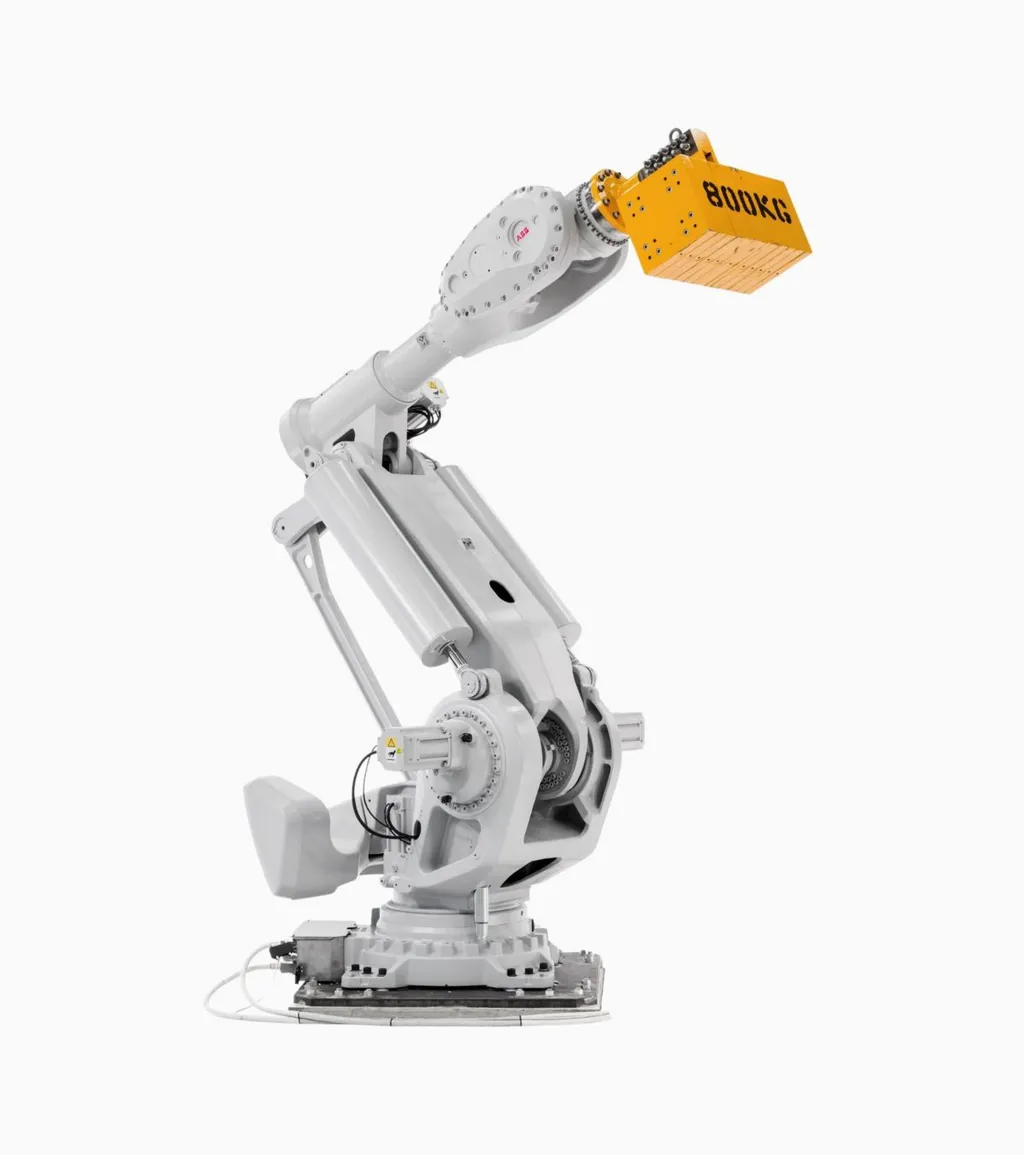
The longest-reach industrial robot we track is the FANUC M-2000iA/1700L at 4,683 mm, 483 mm (11.5%) past the ABB IRB 8700-550/4.20 at 4,200 mm. That is the corrected answer to the question our July ranking got wrong, and it took two fixes to get here: a mix of vertical and horizontal figures in one list, and a stale stored value on the FANUC itself. Only one other robot in our 425-robot database passes 4,000 mm; everything else sits at 3,734 mm or below.
What went wrong in the first ranking?
In July we published a ranking of the longest-reach robots that put a Yaskawa painting robot first at 5,095 mm. That number was the MPX3500’s vertical reach. Everywhere else in the database, reach means horizontal reach from the base axis. Yaskawa’s datasheets list both, and our record had stored the wrong one for three models. On a horizontal basis the MPX3500 reaches 2,700 mm and ranks 58th of 417. The GP70L drops to 2,732 mm (49th) and the SP100 to 2,236 mm (80th). The article now carries a dated correction; this piece is the re-ranking it promised.
The mix-up is not a one-off risk. Yaskawa’s own PH-series sheets show how easily the two numbers swap places. The PH200RF lists 3,505 mm horizontal and 2,629 mm vertical. The PH130RF lists 3,474 mm horizontal and 4,151 mm vertical, so on one model vertical is the bigger figure and on the next it is the smaller one. Sort a mixed column and the PH130RF would have jumped to third place on a number nobody plans a cell around.
Which robots have the longest horizontal reach?
Of 425 robots, 417 publish a reach figure. Here are the top 12, horizontal reach only.
| Rank | Robot | Type | Reach (mm) | Payload (kg) | Checked against |
|---|---|---|---|---|---|
| 1 | FANUC M-2000iA/1700L | Articulated | 4,683 | 1,700 | FANUC datasheet |
| 2 | ABB IRB 8700-550/4.20 | Articulated | 4,200 | 550 | ABB product specification |
| 3 | FANUC M-2000iA/2300 | Articulated | 3,734 | 2,300 | FANUC product page |
| 4 | FANUC M-900iB/400L | Articulated | 3,704 | 400 | FANUC catalog |
| 5 | Stäubli TX340 SH | Articulated | 3,680 | 190 | Stored value, not re-read |
| 6 | Yaskawa PH200RF | Articulated | 3,505 | 200 | Yaskawa datasheet |
| 7 | Yaskawa PH130RF | Articulated | 3,474 | 130 | Yaskawa datasheet |
| 8 | Estun ER350-3300 | Articulated | 3,300 | 350 | Stored value, not re-read |
| 8 | Estun ER420-3300 | Articulated | 3,300 | 420 | Stored value, not re-read |
| 10 | Kawasaki CP180L | Palletizer | 3,255 | 180 | Stored value, not re-read |
| 10 | Kawasaki CP500L | Palletizer | 3,255 | 500 | Stored value, not re-read |
| 12 | FANUC M-1000iA | Articulated | 3,253 | 1,000 | Stored value, not re-read |
The “checked against” column matters. I re-read the top four and the two Yaskawa PH models in the manufacturer’s own document before writing this. The other rows are the values stored in our database and have not been re-read this run. If you are sizing a cell around one of those, get the datasheet.
Why did the FANUC change places?
Our stored record for the M-2000iA/1700L said 3,734 mm. FANUC’s own datasheet says “Max. reach: 4683 mm” in the table for the 1700L, next to 1,700 kg of load at the wrist and 12,500 kg of mechanical weight (FANUC M-2000iA/1700L datasheet). The 3,734 mm figure belongs to the sibling M-2000iA/2300, which FANUC lists at 3,734 mm and 2,300 kg (FANUC America product page). I used 4,683 mm here. The database record itself is flagged for correction rather than silently edited, because the “verified” flag on it did not catch the error either.
The ABB figure is the maximum reach at wrist center for the IRB 8700-550/4.20, from ABB’s product specification, revision U (ABB product specification IRB 8700). ABB’s other variant, the 800/3.50, trades 700 mm of reach for 250 kg more capacity, the same trade FANUC makes across its two M-2000iA models.
Does more reach cost you payload?
Between the two FANUCs, yes, and the price is visible. The 1700L gives up 600 kg of payload against the 2300 and gains 949 mm of reach, 25.4% more. At the top of the table the pattern is arm mass, not a free lunch: both are floor-mounted machines weighing 11,000 to 12,500 kg. Rated payload is also measured well short of full extension, so the number on the datasheet overstates what you can hold at 4.6 m. Treat the payload column above as an upper bound.
Who builds the long-reach tier?
Thirty-five robots reach 3,000 mm or more, and 73 clear 2,500 mm. Of the 35, 25 are articulated arms and 10 are palletizers. By brand:
| Brand | Robots at 3,000 mm or more |
|---|---|
| Estun | 8 |
| ABB | 7 |
| FANUC | 6 |
| Yaskawa | 5 |
| Kawasaki | 5 |
| KUKA | 2 |
| Stäubli | 1 |
| Siasun | 1 |
Estun leads the count with eight models, but none of them reaches the top three. The palletizer group is tight: our 14 palletizers span 2,000 to 3,255 mm, and the two Kawasaki CP models set that ceiling. The cobot side stops far short. The longest of our 132 cobots, the ROKAE xMate CR35, reaches 2,246 mm, and only three cobots pass 2,000 mm. Past 3 meters you are choosing among industrial arms and palletizers, and the median reach by robot type tells the same story.
What should you check before you trust a reach number?
Three things. First, ask whether the figure is horizontal reach from the base axis or vertical reach, because vendors publish both and the larger one is not always the same one. Second, confirm the measurement point: ABB quotes reach at the wrist center, and other vendors may measure to a different reference. Third, ask for payload at your actual working radius, not at the rated point. A ranking like this one is a shortlist filter. The cell drawing decides the purchase.
The first list we published failed check number one. The second is only as good as the rows marked “checked” in the table, and I would rather say so than let the stored values pass for verified.
Compare these robots