Unitree Shares Soar 629% at Open in Shanghai STAR Market Debut
Unitree Robotics began trading on Shanghai's STAR Market at 150.80 yuan, opened 629% higher, then retreated to close up roughly 460% — becoming mainland China's first listed humanoid robot maker.
Unitree Robotics began trading on Shanghai’s Sci-Tech Innovation Board — the STAR Market — on August 19, 2026, becoming the first humanoid robotics maker listed on a mainland China exchange. Shares priced at 150.80 yuan opened at 1,100 yuan, up 629%, before giving back most of that gain during the session to close around 845 yuan, still a roughly 460% first-day gain. It’s the market-set follow-through to a story this desk covered on July 21, when China’s securities regulator cleared the IPO: Unitree’s $618M STAR Market approval and China’s humanoid funding race.
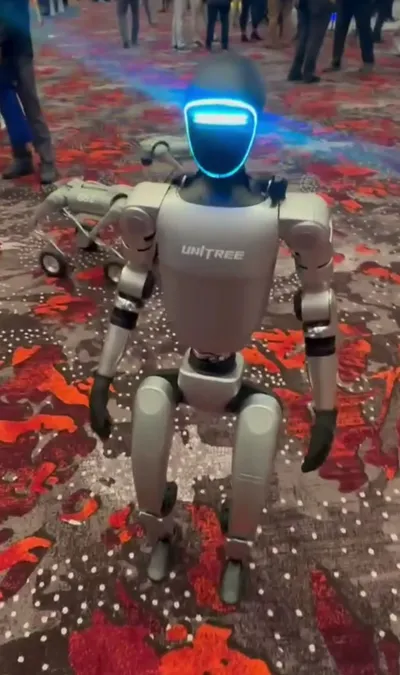
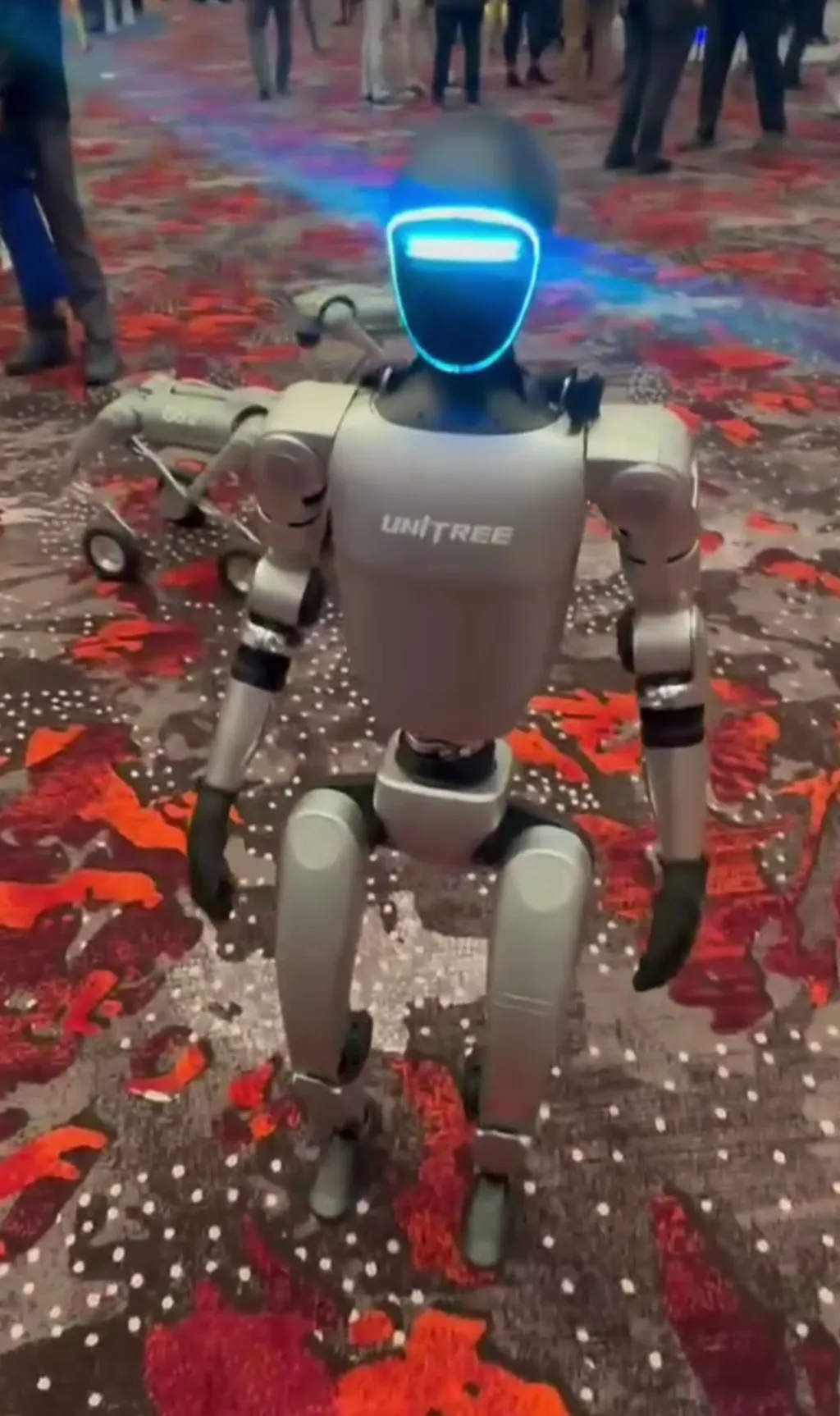
Unitree, founded in Hangzhou in 2016 by engineer Wang Xingxing, built its early reputation on quadruped “robot dog” platforms before expanding into bipedal humanoids. Its current lineup spans the G1 and H-series bipedal humanoids and the Go-series quadrupeds, alongside industrial quadrupeds and a robotic-arm/dexterous-hand line. CNBC reports the company holds roughly 70% of the global commercial quadruped market and that, days before listing, it unveiled a new humanoid called “Superman” that it says can jump two meters from standing and run at up to 12.66 meters per second — a company claim from a pre-IPO demo, not an independently tested figure.
What actually happened on the tape
The IPO itself was straightforward by China’s standards: Unitree sold about 40.45 million new shares, roughly 10% of the enlarged company, at 150.80 yuan each, raising approximately 6.1 billion yuan (about $904-905 million), according to Caixin Global and CNBC — comfortably above the roughly 4.2 billion yuan target this desk reported on July 3. Retail demand was intense: The Standard and TradingView News both report the retail tranche was oversubscribed more than 5,500 times, among the highest levels the STAR Market has seen (other outlets circulated a higher figure, closer to 8,000 times, that this desk could not independently confirm against its own sourcing list, so the 5,500-times figure — corroborated by two independent sources — is what’s published here). South China Morning Post separately reports about 9.8 million retail accounts applied against roughly 9.7 million shares set aside for the retail tranche, a different but related measure of how crowded the order book was.
The pre-IPO issue valued Unitree at approximately 61 billion yuan, or roughly $9 billion, consistent across Caixin, The Standard and TradingView. At the 1,100-yuan open, that implied a market capitalization near 445 billion yuan — reported as roughly $62-66 billion depending on which outlet’s yuan-to-dollar conversion is used (SCMP and TradingView both cite approximately $66 billion at the peak). By the midday trading break, SCMP put the stock at 883.9 yuan and the market cap closer to 357 billion yuan. By the close, CNBC reported shares at 845 yuan, meaning the stock gave back roughly a quarter of its opening pop but still finished the day up about 460% from the IPO price — a genuine, if smaller, gain rather than the headline 629% figure, which applied only to the opening print.
Founder Wang Xingxing’s stake is reported inconsistently depending on what’s measured: SCMP puts his direct holding at approximately 121.4 million shares, worth more than 107 billion yuan post-open. Caixin instead reports 68.8% of voting rights, while The Standard describes a combined roughly 30% economic stake (about 86.71 million shares direct, plus an indirect stake through an entity called Shanghai Yuyi) worth more than 100 billion yuan. Voting control, direct share count and combined economic ownership are three different things, and this desk could not fully reconcile the underlying numbers, so each outlet’s figure is reported as its own claim rather than picked as “the” number. Existing investors profited too: CNBC and Caixin both note Meituan’s roughly 420 million yuan stake was worth about 38.6 billion yuan post-debut, a return Caixin puts at more than 70 times its original investment; CNBC reports Chinese AI lab DeepSeek invested about 140.8 million yuan ahead of listing.
Why the stock swung so hard
TradingView News headlines the day’s volatility as a “price discovery malfunction,” but its own article body doesn’t explain a technical failure, and this desk could not independently confirm that framing. A more mundane, documented explanation fits: STAR Market rules impose no daily price-move limit for a newly listed stock’s first five trading days, after which the usual ±20% limit applies. That structural rule, not a system glitch, is consistent with a stock swinging 500-plus percent in one session on day one — flagged here as TradingView’s characterization, not independently verified fact. CNBC notes the debut follows memory chipmaker CXMT’s STAR Market listing the previous month, when shares also rose 466% on day one, suggesting a broader pattern of extreme first-day pops for high-profile Chinese tech listings, not something unique to Unitree or to humanoid robotics.
Sources
- Chinese Robot Maker Unitree Soars 629% in Shanghai Debut — Caixin Global, Aug 19, 2026
- Unitree Robotics surges 629%, US$66 billion valuation, in Shanghai share debut — South China Morning Post, Aug 19, 2026
- China's backflipping robot maker Unitree pops in Shanghai debut — CNBC, Aug 19, 2026
- Unitree Robotics Shanghai IPO debut jumps 629 percent, valuing the company at 61 bln yuan — The Standard (Hong Kong), Aug 19, 2026
- UNITREE: Robot Maker Explodes 629% in Shanghai Debut. Price Discovery Malfunctions — TradingView News, Aug 19, 2026
- Unitree to Debut at 61 Billion Yuan Valuation in Closely Watched Shanghai IPO — Caixin Global, Aug 18, 2026
- Unitree Clears $618M STAR Market IPO as China's Humanoid Funding Race Accelerates — Industrial Robotics Hub News Desk, Jul 21, 2026
Frequently asked questions
How much did Unitree raise in its Shanghai IPO, and at what price? +
Unitree priced its IPO at 150.80 yuan a share, selling roughly 40.45 million new shares (about 10% of the enlarged company) to raise approximately 6.1 billion yuan, or about $904-905 million, according to Caixin Global and CNBC.
How much did Unitree's stock price jump on its first day of trading? +
Shares opened at 1,100 yuan, up 629% from the 150.80 yuan IPO price. The stock then gave back much of that gain during the day, trading around 883.9 yuan at the midday break (South China Morning Post) before closing at 845 yuan, up roughly 460% for the day, per CNBC.
What is Unitree's stock code and where does it trade? +
Unitree trades on the Shanghai Stock Exchange's Sci-Tech Innovation Board, known as the STAR Market, under code 688836.SH. It is the first humanoid robotics maker to list on a mainland China exchange.
Does IRH's own robots database list any Unitree products? +
No. As of publication, Industrial Robotics Hub's robots database contains no Unitree entries, so this story carries no related-robot links. This is a capital-markets and industry-structure story, not a product-availability one — Unitree's G1, H-series and Go-series machines are not currently in our buyer-facing database.
More news