Unitree Clears $618M STAR Market IPO as China's Humanoid Funding Race Accelerates
China's securities regulator approved Unitree Robotics' roughly $618M Shanghai IPO, a rare profitable humanoid maker going public days after two more Chinese and Toyota-backed humanoid startups closed nine-figure rounds.
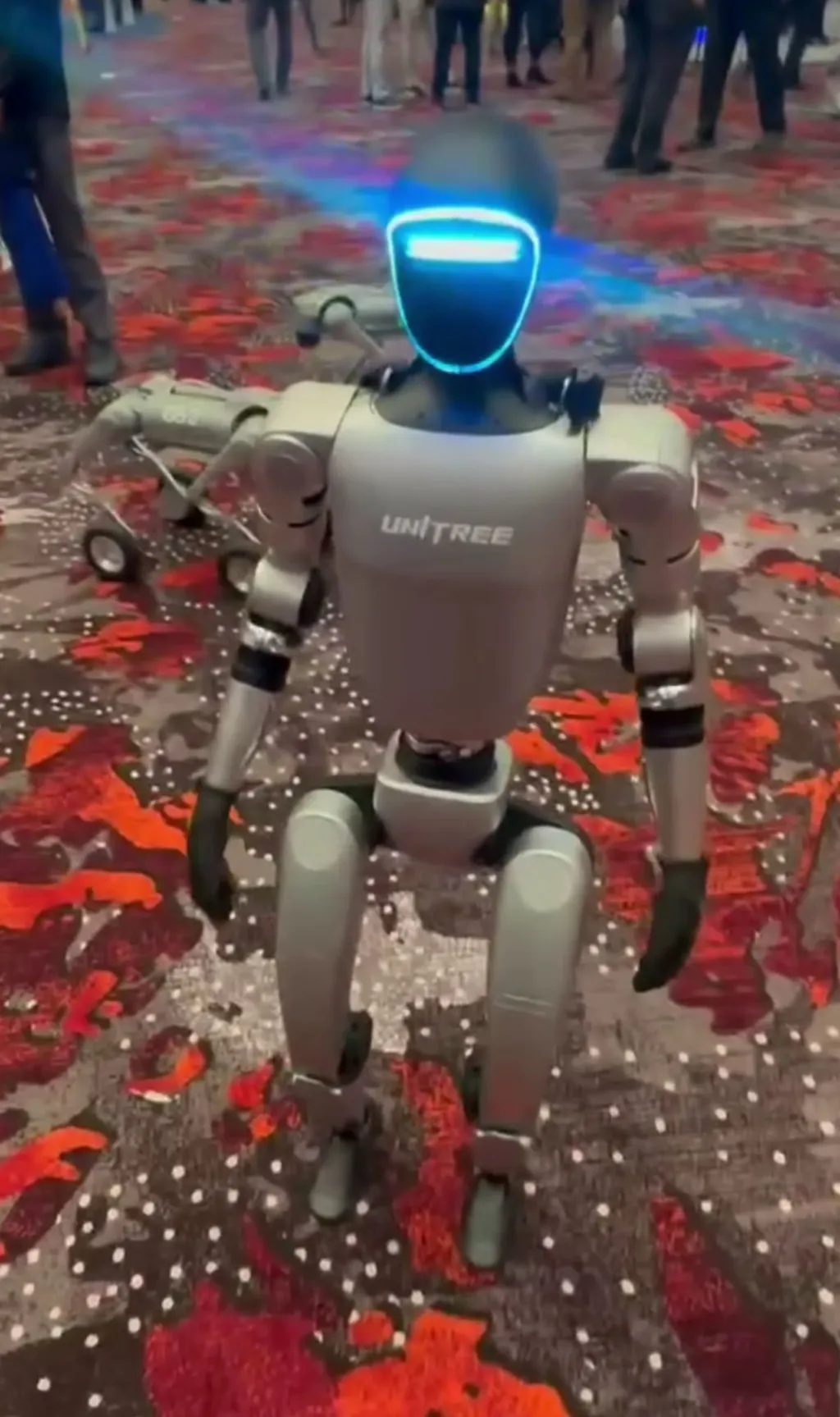
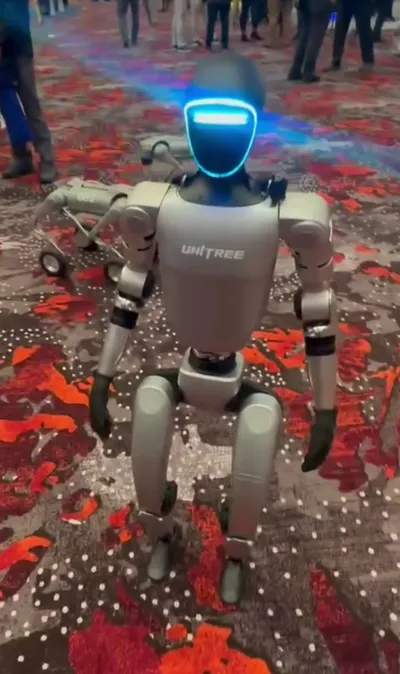
China’s securities regulator cleared Unitree Robotics for a roughly $618 million initial public offering on Shanghai’s STAR Market on July 3, 2026, and the company is now finalizing pricing and share subscriptions for a debut that could land as early as late July. That alone would be notable: Unitree is one of the few humanoid robot makers anywhere that is actually profitable. But it landed in the same two-week window as two more nine-figure raises, LimX Dynamics’ $200 million pre-IPO round and Walden Robotics’ $300 million seed, in a stretch of mid-July 2026 that makes the case Chinese and Toyota-linked humanoid capital is moving faster than the robots themselves are shipping.
A rare profitable humanoid maker
Unitree plans to sell at least 40.4 million shares, a minimum 10% stake, to raise about 4.2 billion yuan (roughly $618-619 million), implying a valuation of around 42 billion yuan, or roughly $5.9 billion, according to Caixin Global’s reporting on the CSRC approval. The company’s 2025 financials, disclosed as part of the listing process, show about 1.69-1.7 billion yuan in revenue and roughly 591 million yuan in adjusted profit, a real, audited-for-listing profit rather than a growth-stage burn rate. The South China Morning Post’s coverage puts that in context against UBTech Robotics, a competing Chinese humanoid and service-robot maker already trading in Hong Kong at a roughly HK$54.8 billion market cap: UBTech reported about 2 billion yuan revenue against a 700 million yuan net loss in 2025. Two Chinese humanoid-adjacent companies, comparable revenue scale, opposite bottom lines, is a genuine data point about which business models in this sector are actually working, not just which ones raise the most.
Unitree’s STAR Market approval came after what Caixin and other outlets describe as a record-fast regulatory review, and the company says proceeds will fund robot-model development, hardware research, new products and manufacturing capacity, standard IPO-prospectus language that nonetheless signals Unitree intends to keep spending on R&D rather than treat the listing purely as an investor exit.
LimX and Walden aren’t waiting for an IPO
Unitree isn’t the only Chinese humanoid maker moving toward a public listing. LimX Dynamics, founded in 2022, closed a roughly $200 million pre-IPO round on July 14, 2026, according to Caixin Global, at a valuation of about $2.2 billion (roughly 15 billion yuan), backed by Redstone VC, GGG Group, Lens Technology and Stone Venture among others. It’s LimX’s second $200 million-scale raise in six months, following a February 2026 Series B of similar size, putting roughly $400 million into the company inside two quarters. Caixin frames the round explicitly as pre-IPO positioning rather than a standalone growth raise, part of what it calls a broader wave of Chinese embodied-AI startups reaching unicorn status ahead of eyeing public listings.
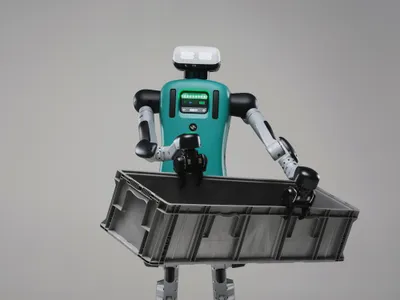
The wave isn’t confined to China. Walden Robotics, a Massachusetts-based humanoid startup spun out of Toyota Research Institute in January 2026 and led by MIT professor and former TRI executive Russ Tedrake, emerged from stealth on July 15, 2026 with about $300 million in funding at a $1.1 billion valuation. The round was led by Toyota’s own investment arms alongside Deviation Capital, with Nvidia, Boeing, Samsung Ventures, CoreWeave Ventures and more than a dozen other investors participating, an unusually broad and blue-chip backer list for a six-month-old spinout. More notable than the money: Walden says its general-purpose robots have been doing real production work, loading and unloading car parts, cleaning machinery, kitting for assembly, at a Toyota plant in North America since February 2026, moving from first pilot to production work in under two months. Tedrake’s own framing, per the company’s launch materials: “Core advances in Physical AI…has made disruptive change possible. But providing real value to customers…requires deep understanding of how manufacturing is done today,” a philosophy that puts deployment speed ahead of spec-sheet theatrics, echoing the same manufacturability argument AGIBOT made at WAIC 2026 the same week.
What this doesn’t tell you
None of this is proof that humanoid robots are broadly working in production at scale. It’s proof that a specific, narrow set of investors, Chinese state and financial capital chasing STAR Market and Hong Kong listings, plus Toyota’s own strategic arm backing a spinout of its own research lab, believe enough in specific teams and specific deployment stories to write nine-figure checks in the same two-week window. Unitree’s audited profit is real and rare; LimX and Walden’s valuations are still venture marks, not market prices, until (or unless) each company actually lists. Broader claims about total sector-wide Chinese humanoid investment for the quarter circulated in some coverage this month but couldn’t be independently corroborated against two solid sources as of publication, so this desk is not repeating a specific aggregate figure here.
Sources
- Unitree Robotics Wins Approval for $618 Million STAR Market IPO — Caixin Global, Jul 3, 2026
- Unitree IPO to test valuations as venture capital floods China robotics — South China Morning Post, Jul 19, 2026
- Chinese Robotics Startup Raises $200 Million — Caixin Global, Jul 14, 2026
- Walden Robotics Launches Humanoid Robots for Manufacturing and Logistics — DC Velocity, Jul 15, 2026
- From Toyota lab to $1.1B unicorn in 6 months: Walden Robotics raises $300M seed — Tech Funding News, Jul 15, 2026
Frequently asked questions
How much is Unitree Robotics raising in its STAR Market IPO? +
Unitree plans to raise about 4.2 billion yuan (roughly $618-619 million) by selling at least 40.4 million shares, a minimum 10% stake implying a valuation around 42 billion yuan (roughly $5.9 billion). China's securities regulator, the CSRC, approved the listing on July 3, 2026, and a debut as early as late July has been reported, though Unitree had not confirmed a final listing date as of this writing.
Is Unitree profitable? +
Yes, unusually for a humanoid robot maker. Unitree reported 2025 revenue of about 1.69-1.7 billion yuan and adjusted profit of about 591 million yuan, according to IPO-related reporting. For comparison, competitor UBTech Robotics, which trades in Hong Kong at a roughly HK$54.8 billion market cap, reported about 2 billion yuan revenue and a 700 million yuan net loss in 2025, per the same reporting.
What other Chinese humanoid funding rounds happened around the same time? +
LimX Dynamics closed a roughly $200 million pre-IPO round on July 14, 2026, at an approximately $2.2 billion valuation, its second nine-figure raise in six months after a February 2026 Series B, also roughly $200 million. Separately, Walden Robotics, a Toyota Research Institute spinout based in Massachusetts, emerged from stealth on July 15, 2026 with about $300 million in funding at a $1.1 billion valuation, backed by Toyota alongside Nvidia, Boeing, Samsung Ventures and CoreWeave Ventures.
What does Walden Robotics do, and is it actually deployed anywhere? +
Walden builds general-purpose humanoid robots for manufacturing and logistics work. It says it has had robots doing production work, loading and unloading car parts, cleaning machinery, and kitting for assembly, at a Toyota plant in North America since February 2026, moving from a first pilot to production work in under two months, according to the company and its own reporting partners.
More news