Product images © Kawasaki Robotics, shown for identification. Official source ↗.
Kawasaki Robotics
BX200L
A 200 kg heavy-duty arm with 2597 mm reach and hollow wrist designed for large weld guns — Kawasaki's BX200L handles the toughest spot welding and heavy material handling tasks at high speed.
💲 Price on application
Full specifications
Performance
How much it lifts, how far it reaches, how precisely it repeats.
- Payload
Maximum mass the robot can carry at the wrist flange, including the gripper/tool. Higher means it can handle heavier parts.
- 200 kg 77th pct in class
- Reach
Maximum horizontal distance from the base axis to the wrist — defines the size of the work area. Higher means a larger envelope.
- 2,597 mm 69th pct in class
- Repeatability
How close the robot returns to the same taught point on repeated tries (ISO 9283, ±). Lower is better — tighter precision.
- 0.06 mm 16th pct in class
- Axes (DOF)
Number of independently driven joints / degrees of freedom. 6 is standard for articulated arms; 4 for SCARA/palletizers; 7 adds elbow redundancy.
- 6
- Wrist inertia
Allowable moment of inertia at the wrist — how much rotating mass it can swing without overload. Higher is more capable.
- 199.8 kg·m² 84th pct in class
Motion range & speed
Per-axis travel limits and rotational speeds.
Motion range and maximum speed per joint.
| Axis | Range | Max speed |
|---|---|---|
| J1 | -160° to 160° | — |
| J2 | -77° to 90° | — |
| J3 | -60° to 76° | — |
| J4 | -210° to 210° | — |
| J5 | -120° to 120° | — |
| J6 | -125° to 125° | — |
Physical
Size, mass and how it mounts.
- Robot weight
Mass of the manipulator (arm) without controller. Lighter eases mounting and mobile use; heavier often means stiffer/higher payload.
- 890 kg
- Mounting
Orientations the robot can be installed in (floor, ceiling/inverted, wall, tilted, mobile base).
- floor
- Colour
Standard finish colour.
- Munsell 10GY9/1
Power & controller
Electrical supply and the control cabinet that drives it.
- Controller
The control cabinet / unit that runs the robot.
- F02 Controller
Environment
Conditions it can operate in — dust, water, temperature, cleanliness.
- IP rating (arm)
Ingress protection of the body against dust/water (IEC 60529). First digit = dust, second = water. Higher resists harsher environments.
- IP54 18th pct in class
- IP rating (wrist)
Ingress protection at the wrist, often higher than the body for wet/washdown duty.
- IP67 14th pct in class
Safety
Standards met and collaborative-operation capability.
- Collaborative
Whether the robot is designed to work safely next to people without fencing (power-and-force-limited).
- No
- Safety standards
Certified safety standards (ISO 10218-1, ISO/TS 15066) and functional-safety level (PLd/PLe, SIL2/3).
- ISO 10218-1
Control & software
Programming, languages and ecosystem.
- Programming
How the robot is taught: pendant, hand-guiding (lead-through), block/flow-chart, scripting, offline simulation.
- teach-pendant, offline-sim
- Languages
Native robot programming language(s) — e.g. KRL (KUKA), RAPID (ABB), URScript (UR), INFORM (Yaskawa).
- AS
- Offline programming
Whether programs can be built and validated offline in a digital twin before deployment.
- Yes
Connectivity & I/O
Signals, fieldbuses and tooling interfaces.
- Fieldbus
Industrial networks supported for PLC/cell integration (PROFINET, EtherNet/IP, EtherCAT, Modbus TCP, CC-Link, etc.).
- PROFINET, EtherNet/IP, EtherCAT
Industrial Robotics Hub — industrialroboticshub.com
Safety certifications
- ISO 10218-1 — the primary industrial-robot safety standard covering design and construction requirements
Specifications sourced from Kawasaki Robotics official datasheet ↗. Specs last verified 2026-07-16.
Owner reviews
Real, first-hand feedback from people who run the Kawasaki Robotics BX200L. Sign in with LinkedIn so we know reviews come from actual operators. You choose whether to post under your name or anonymously.
We only read your name, photo and headline. Posting anonymously hides all of that from public view.
Frequently asked questions
What is the payload of the Kawasaki Robotics BX200L? +
The Kawasaki Robotics BX200L has a maximum payload of 200 kg.
What is the reach of the Kawasaki Robotics BX200L? +
The Kawasaki Robotics BX200L has a maximum reach of 2,597 mm (2.60 m).
What is the repeatability of the Kawasaki Robotics BX200L? +
The Kawasaki Robotics BX200L has a pose repeatability of ±0.06 mm (ISO 9283), making it suitable for precision work.
How many axes does the Kawasaki Robotics BX200L have? +
The Kawasaki Robotics BX200L is a 6-axis articulated arm robot.
What is the Kawasaki Robotics BX200L used for? +
The Kawasaki Robotics BX200L is typically used for spot-welding, material-handling, palletizing.
What controller does the Kawasaki Robotics BX200L use? +
The Kawasaki Robotics BX200L runs on the F02 Controller controller.
What is the IP rating of the Kawasaki Robotics BX200L? +
The Kawasaki Robotics BX200L arm carries an IP54 ingress-protection rating.
How much does the Kawasaki Robotics BX200L cost? +
Kawasaki Robotics BX200L: Price on application. Industrial robots are typically quoted per project through authorized distributors.
Similar articulated arm robots
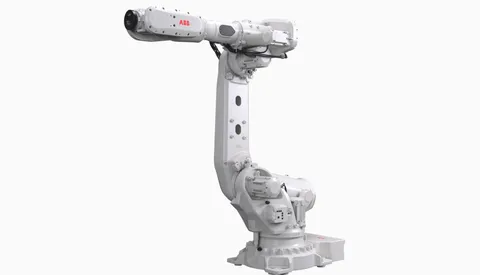
ABB Robotics
IRB 6710-210/2.65
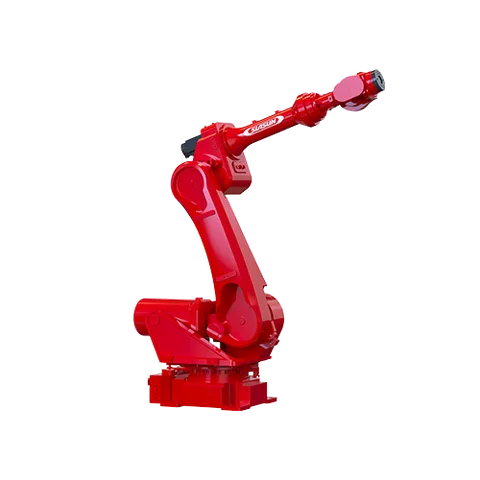
Siasun
SR210A
KUKA
KR 210 R2700-2 (QUANTEC)
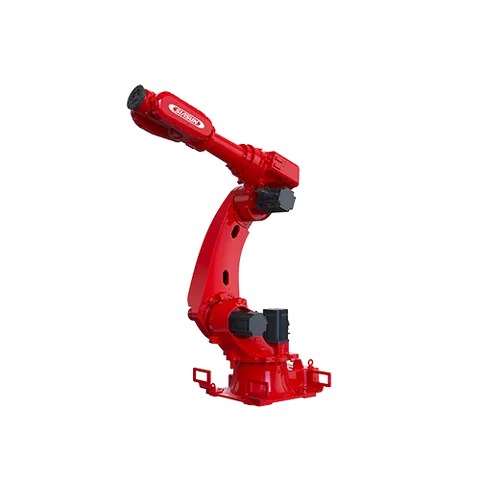
Siasun