Robot Industry Reach by Brand: Dobot Ties ABB at 11
Our 425-robot database tags 29 industries served. Dobot reaches 11 of them with a fifth of ABB's robot count. Siasun, with 19 robots, reaches just 4.
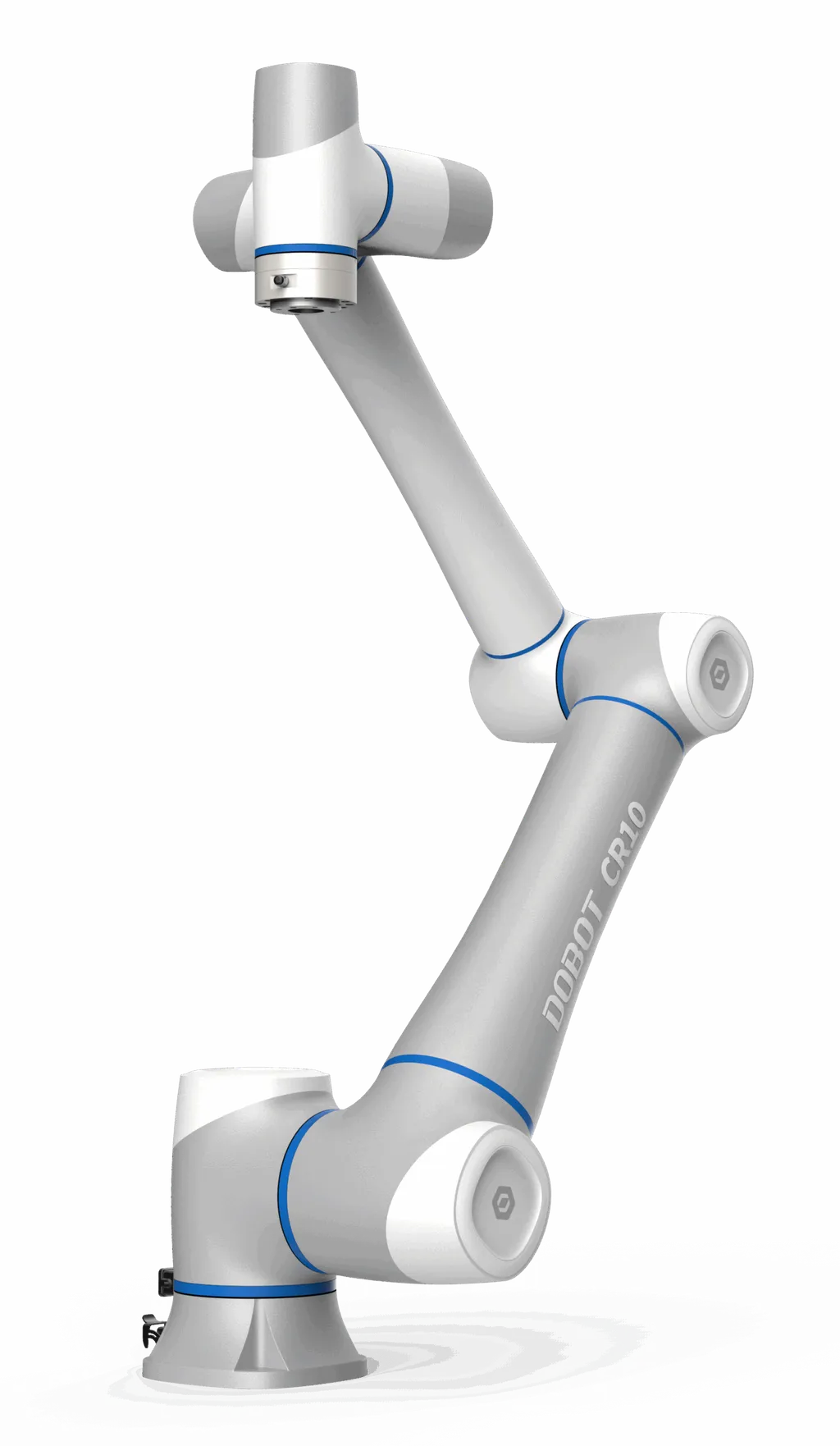
Catalog size does not predict how many industries a robot brand actually serves. Dobot carries 11 robots in our database and reaches 11 of the 29 industries we track, tied with ABB, whose 48-robot catalog, 4.4 times larger, reaches that same 11. Dobot’s industries-per-robot ratio is 1.00. ABB’s is 0.23, less than a quarter as efficient. At the other end, Siasun reaches only 4 industries from a 19-robot catalog, the narrowest absolute spread in the field and one of the worst per-robot ratios (0.21).
Every one of the 425 robots in the Industrial Robotics Hub database carries an industries field, drawn from each manufacturer’s own product page. 416 of them (97.9%) list at least one value. The raw tags are messy: food-bev, food-beverage and food-and-beverage all describe the same market, and the same spelling duplication shows up for semiconductor, medical, pharma, metalworking and general manufacturing. We merged those variants into single canonical tags before counting anything below. After normalization, the catalog spans 29 distinct industries, from automotive (298 of 425 robots, the most common tag by far) and electronics (238) down to a long tail of single-digit niches like laboratory, shipbuilding and cosmetics.
How many industries does each robot brand actually reach?
Here is every brand in our database, ranked by distinct industries reached, with its robot count and the resulting ratio:
| Brand | Robots | Industries reached | Ratio (industries/robot) |
|---|---|---|---|
| Yaskawa | 46 | 17 | 0.37 |
| JAKA | 18 | 13 | 0.72 |
| KUKA | 29 | 13 | 0.45 |
| ABB | 48 | 11 | 0.23 |
| Dobot | 11 | 11 | 1.00 |
| Kawasaki | 24 | 11 | 0.46 |
| Estun | 29 | 10 | 0.34 |
| FANUC | 38 | 10 | 0.26 |
| Staubli | 14 | 10 | 0.71 |
| ROKAE | 21 | 8 | 0.38 |
| AUBO | 12 | 7 | 0.58 |
| Doosan | 14 | 7 | 0.50 |
| Epson | 21 | 7 | 0.33 |
| Han’s Robot | 8 | 7 | 0.88 |
| Omron | 17 | 7 | 0.41 |
| Techman | 15 | 7 | 0.47 |
| Universal Robots | 9 | 7 | 0.78 |
| Mitsubishi | 11 | 6 | 0.55 |
| Inovance | 21 | 5 | 0.24 |
| Siasun | 19 | 4 | 0.21 |
Yaskawa leads on absolute reach at 17 industries, which makes sense for a 46-robot catalog spanning cobots, SCARA, welding, palletizing and heavy articulated arms. Seven brands tie at exactly 7 industries (AUBO, Doosan, Epson, Han’s Robot, Omron, Techman, Universal Robots), which puts the median across all 20 brands at 7.5. Below that median sit two very different stories: Inovance, a 21-robot catalog reaching only 5 industries, and Siasun, a 19-robot catalog reaching just 4.
The ratio column tells a separate story from the reach column, and it is the more useful one for a buyer. Sorted the other way, from most industries-per-robot to least:
Why does a small cobot catalog out-diversify a giant?
Dobot builds one thing: cobots. We covered this directly in our architecture-breadth analysis, where Dobot is one of five brands that build exactly 1 of the 8 robot types we track, all of them cobot-only. That narrowness is exactly why the industry-reach number works the way it does. A cobot is a general-purpose arm with a light payload and a safety rating that lets it run without a fence. The same 10 kg model that tends a CNC machine in an automotive shop can palletize boxes in a warehouse, assemble components on an electronics line, or hand parts to a technician in a lab, with a gripper swap and a new program, not a new robot. ABB’s 48-robot catalog includes heavy fenced arms built for one job at one station: a 460 kg-payload arm bolted into an automotive body shop is not getting redeployed to a food-packaging line next quarter. That specialization is a feature for the automotive buyer who wants it, but it caps how many different industries any single ABB model realistically serves. Universal Robots (0.78) and JAKA (0.72) show the same cobot-flexibility pattern at smaller and larger catalog sizes. We flagged this same redeployability logic in our cobot orders versus catalog share piece: cobots keep winning share outside automotive precisely because one arm covers more ground.
Does more architectural variety guarantee broader industry reach?
No, and Siasun is the cleanest counterexample we have. Siasun builds articulated arms, cobots and SCARA units, 3 of the 8 architecture types in our taxonomy, more variety than Dobot’s single cobot-only line. Yet Siasun reaches only 4 industries against Dobot’s 11. Building more types of robot did not translate into serving more markets; Siasun’s 19 robots cluster tightly, most of them tagged for the same core automotive-and-electronics work, rather than spreading across the wider industry list the way a similarly-sized but more cobot-heavy catalog does. Architecture breadth (how many robot types a brand builds) and industry breadth (how many end markets its robots are tagged for) are two different axes, and this table shows they do not move together. A brand can diversify its product line without diversifying its customer base, and a brand can diversify its customer base with a single product line, if that product happens to be a cobot.
What should a buyer actually do with this finding?
Don’t read “industries reached” as a proxy for engineering quality or catalog depth, and don’t assume it either. It measures something narrower and still useful: how flexible a brand’s typical robot is across different plant types, which matters most if you expect your own application to evolve or if you are buying for a multi-purpose integrator rather than one fixed line. If you need a single arm that can plausibly serve several different production contexts over its life, a high-ratio brand like Dobot, Han’s Robot or Universal Robots is doing more of that work per model, by construction, because the model itself is a cobot. If you already know your exact application (say, high-speed automotive spot welding) and you’re not going to redeploy the arm elsewhere, industry-reach is close to irrelevant; check payload, reach and cycle time for that one job instead, and don’t penalize a brand like ABB or Siasun for concentrating where the volume actually is. The ratio tells you how general-purpose a brand’s typical model is. It does not tell you which brand builds the best robot for your specific cell. Run both checks, in that order, before you write the RFQ.
Compare these robots