ABB Posts Record $12B Orders, Advances $5.5B Rotork Deal
ABB booked record Q2 2026 orders of $12.04B (+28% comparable) and 20.2% EBITA margin, as its $5.5B Rotork deal and robotics divestment both advance.
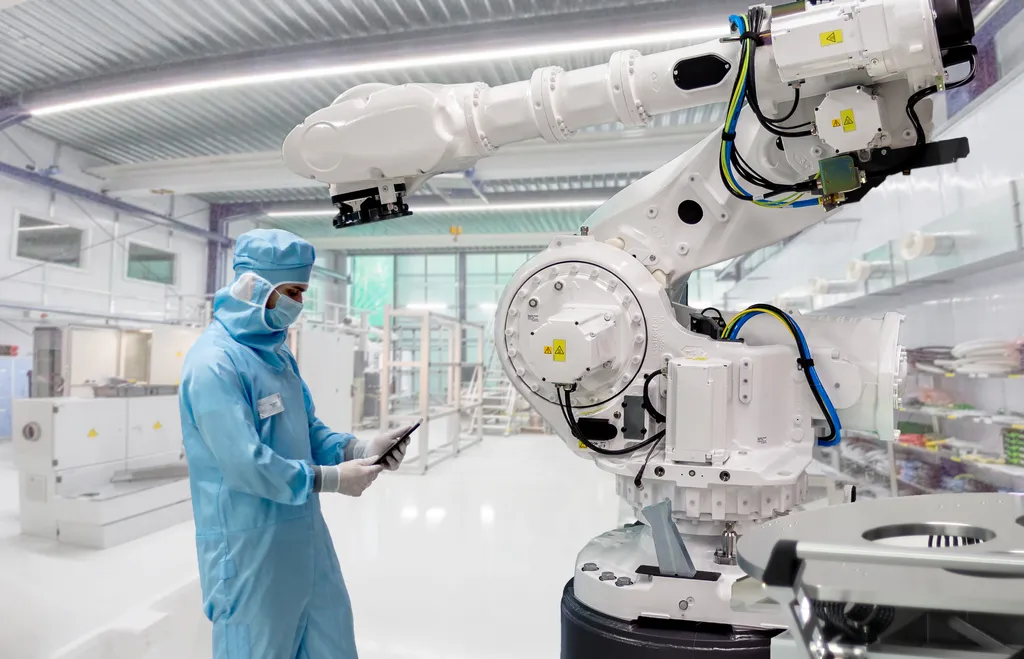
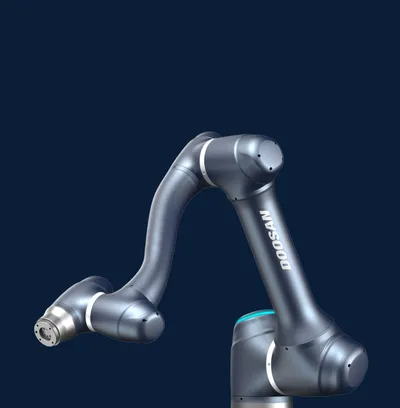
ABB reported record second-quarter orders of $12.04 billion on July 16, up 30% year-over-year (28% on a comparable, currency- and portfolio-adjusted basis), alongside revenue of $9.475 billion, up 14% (12% comparable), and an operational EBITA margin of 20.2%, up 90 basis points from a year earlier. The order figure is the company’s highest for a single quarter on record. Behind the headline number, two structural moves are advancing in parallel: a $5.5 billion agreed cash offer for UK flow-control maker Rotork, and the previously announced divestment of ABB’s own Robotics business — the unit that builds the GoFa cobot and IRB 7600 pictured above — which ABB still expects to close in the second half of 2026.
What ABB actually reported
ABB now organizes its continuing operations into three business areas: Electrification, Motion, and Automation. Robotics — historically a fourth — is being separated from the group and reported on a “discontinued operations” basis in ABB’s own 2026 guidance tables, a sign the exit is already treated as settled internally, ahead of its formal close.
Growth wasn’t even across the three continuing units. Electrification, ABB’s largest business area, posted orders of $7.231 billion, up 60% (58% comparable) — its first quarter ever above $7 billion — with revenue up 20% to $5.2 billion and operational EBITA margin improving 100 basis points to 24.9%. Motion posted orders of $2.592 billion, up 23% (20% comparable), though its operational EBITA margin slipped 130 basis points to 18.5% on weaker performance from the recently acquired Gamesa Electric business and delayed production volumes in its Traction division. Automation — the business area whose remit is closest to industrial robotics and factory automation — was the outlier: orders fell 13% (14% comparable) to $2.454 billion, though ABB attributes the decline mainly to a tough comparison against a roughly $600 million order booked in the same quarter last year, not to weaker underlying demand. Automation’s revenue and margin both improved: revenue up 9% to $2.193 billion, operational EBITA margin up 120 basis points to 15.4%.
Regionally, the Americas led with orders up 53% (52% comparable), driven by 62% growth in the United States; Europe rose 16% (12% comparable); Asia, Middle East and Africa rose 13% (12% comparable), including 17% growth in China. ABB’s order backlog stood at $30.0 billion, up 27% year-over-year, with a book-to-bill ratio of 1.27, meaning orders are running well ahead of what the company can currently bill — a signal revenue growth should continue as that backlog converts.
Data centers, named explicitly as a demand driver
ABB was specific about where the order strength is coming from. In its Electrification segment commentary, the company said “rapidly expanding investments in data center build-out remained a primary catalyst, driving exceptional triple-digit growth in the segment.” It also pointed to a new product built for that demand, HiPerGuard 34.5kV, a medium-voltage UPS it says lets data centers connect directly to the grid without voltage conversion, and CEO Morten Wierod’s shareholder letter described a VoltaGrid microgrid partnership extension “enabling the voltage stability required by next-generation AI chips.” None of that demand runs through ABB’s robotics or discrete-automation lines directly — it’s a power-infrastructure story — but it’s the single largest driver named in a quarter where ABB is also exiting the robot-building business.
The Rotork deal, and how it connects to the robotics exit
On July 16, after the quarter closed, ABB confirmed the terms of a recommended cash offer for Rotork, a UK-listed maker of electric actuators and flow-control equipment for energy and process industries. The offer is 503 pence per Rotork share, plus an interim dividend of up to 3 pence, valuing the deal at roughly $5.5 billion. ABB frames it as complementary to Automation rather than overlapping with existing robotics or discrete-automation products, and says the deal should be immediately positive for its operational EBITA margin and EPS-accretive in its second year. The transaction is expected to close in the first half of 2027, subject to a Rotork shareholder vote and regulatory approvals.
The funding link to robotics is explicit in ABB’s own language: it plans to “redeploy the expected ~$4.8 billion in net cash proceeds from the divestment of ABB Robotics, anticipated to be completed in the second half of 2026,” toward the Rotork purchase. That chains two separately timed transactions together — a Robotics exit closing in H2 2026, and a Rotork close roughly six to twelve months later. ABB’s Q2 results already carry a preview: the Corporate and Other segment booked $25 million in “stranded corporate costs” this quarter, part of a roughly $100 million full-year framework tied to the divestment. ABB has not disclosed a buyer for Robotics or specified whether the separation is a trade sale, spin-off, or IPO.
Why this matters for robotics buyers and integrators
Industrial Robotics Hub tracks ABB’s robot lineup — including the GoFa CRB 15000 collaborative arm and the 500 kg-payload IRB 7600 pictured above — under the ABB brand page, and that catalog sits inside the business being divested, not the parts of ABB reporting this quarter’s record numbers. ABB’s own guidance already separates “Group” figures from a “discontinued operations” view that excludes Robotics, a reasonable signal that buyers evaluating a multi-year ABB robot deployment should watch for news of who ends up owning the business, not just the closing-date target. See IRH’s ABB robots buying guide and FANUC vs. ABB comparison for lineup context, and Teradyne Robotics’ Q2 2026 earnings for a useful contrast — Teradyne’s Universal Robots and MiR businesses are growing inside a company that isn’t simultaneously trying to sell them.
Sources
- Q2 2026 results — Record-high orders, strong operational execution and value creation through M&A — ABB, Jul 16, 2026
- ABB Q2 2026 Press Release (Interim Report) — ABB, Jul 16, 2026
Robots mentioned
Tap a card to open the full spec sheet.
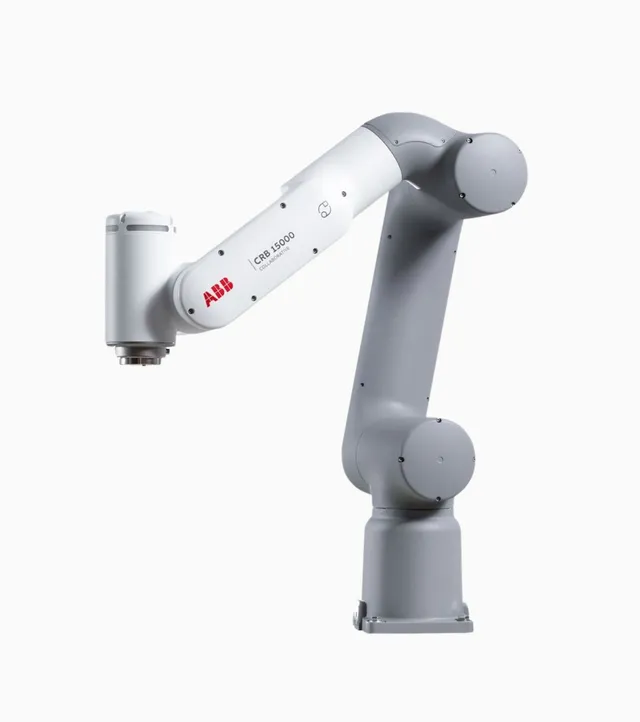
Collaborative
GoFa CRB 15000-12/1.27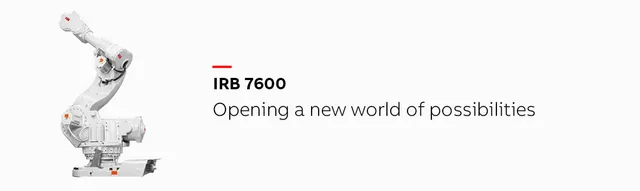
Articulated arm
IRB 7600-500/2.55Frequently asked questions
What did ABB actually report for Q2 2026? +
Record orders of $12.04 billion, up 30% year-over-year (28% on a comparable basis), on revenue of $9.475 billion, up 14% (12% comparable). Operational EBITA came in at $1.925 billion, a 20.2% margin, up 90 basis points year-over-year. All figures are ABB's own unaudited interim results, disclosed under Swiss stock exchange ad hoc rules.
Is ABB Robotics — the maker of the GoFa cobot and IRB 7600 — being sold? +
ABB's Robotics business is being divested as a separate transaction, unrelated to the Rotork deal, with closing anticipated in the second half of 2026. ABB's Q2 report already presents its 2026 full-year guidance on a discontinued-operations basis that excludes Robotics, and books quarterly 'stranded costs' ($25 million in Q2) tied to separating the unit. ABB's press release does not name a buyer or specify whether the separation is a sale or a spin-off.
What is Rotork, and how is it connected to the robotics divestment? +
Rotork is a UK-listed maker of electric actuators and flow-control equipment for energy and process industries — not a robot maker. ABB's offer values it at roughly $5.5 billion (503 pence per Rotork share), recommended by Rotork's board. ABB says it will fund the deal largely with the ~$4.8 billion in net cash proceeds it expects from the separate Robotics divestment. The Rotork deal itself isn't expected to close until the first half of 2027, later than the Robotics exit.
What is driving ABB's order growth? +
Data centers, by ABB's own account. The company's Electrification business area — its largest, with $7.231 billion in Q2 orders — cited 'exceptional' data center order growth, including triple-digit growth in that specific segment, plus a new medium-voltage UPS product (HiPerGuard 34.5kV) built for direct grid connection at data centers. ABB's Automation business area, in contrast, saw orders decline 13% year-over-year against an unusually large prior-year comparable.
More news