ARM Institute Gets Nearly $90M to Modernize Military Manufacturing
The Department of War is funding 10 robotics and AI projects across 12 aging military plants — no per-project dollar breakdown has been disclosed.
The ARM Institute will lead 10 robotics, AI and drone projects worth nearly $90 million across a dozen U.S. military manufacturing sites, funded through an “Organic Industrial Base Modernization Challenge” issued by the Department of War. The Pittsburgh-based nonprofit announced the award September 3, and 15 of its member organizations will deliver the work over a two-year window — a rare, sizable federal bet on modernizing some of the oldest manufacturing infrastructure the U.S. military still depends on.
What’s actually being funded
The money comes from the Office of the Under Secretary of War Manufacturing Technology Office — OSW ManTech, in the program’s own shorthand — through a challenge aimed squarely at the Organic Industrial Base, or OIB. That’s the government’s term for the network of arsenals, depots and ammunition plants that build and maintain military equipment domestically, as distinct from the private contractors that make up most of the defense-industrial base most coverage focuses on. The ARM Institute’s own announcement calls the OIB “a complex network of arsenals, depots, and ammunition plants that build and maintain the equipment that powers our military, playing a critical role in both supporting our warfighters and ensuring national security.”
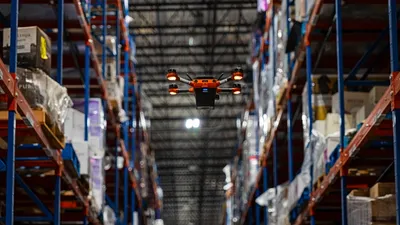
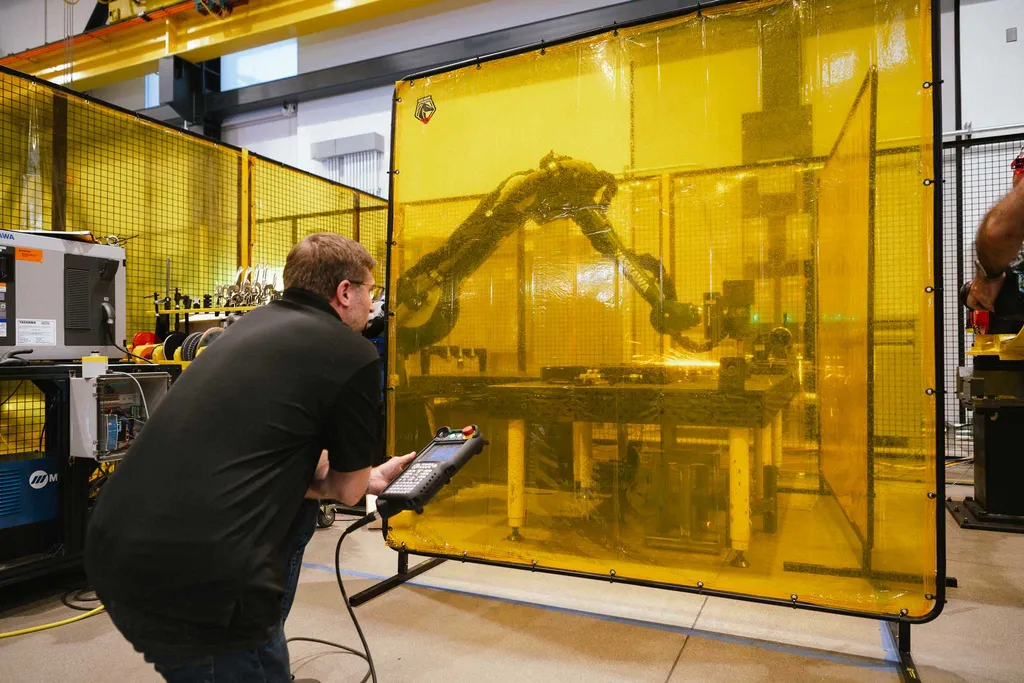
Twelve of those sites across the U.S. are the initiative’s actual targets. The 10 selected projects fall into three broad categories, per the ARM Institute’s own summary: improving safety in energetics production (the manufacture of explosives, propellants and pyrotechnic materials — inherently hazardous work) while increasing manufacturing quality through AI; accelerating mission readiness using drones; and removing manufacturing bottlenecks through robotics. That’s a real, meaningful sketch of the initiative’s scope, but it’s also where the public disclosure stops. Neither the ARM Institute’s announcement nor The Robot Report’s independent writeup names which of the 15 member organizations is doing what, how the roughly $90 million splits across the 10 projects, or which of the 12 sites gets which technology. This is a funding-and-scope announcement, not a project-by-project rollout — that detail may follow as individual projects kick off, but it isn’t available yet.
One thing that is specified for every project: a workforce-readiness component, led by the ARM Institute itself alongside its workforce partners, running in parallel with the technology work on each of the 10 projects. That means identifying what skills a modernized site actually needs, then building upskilling and recruitment strategies for the people who’ll operate the new equipment — not just installing hardware and software and leaving site staff to catch up. For a government workforce with its own hiring and training pipelines, that’s a deliberate and non-trivial design choice for the program.
Why the Organic Industrial Base needs this
The OIB’s age problem isn’t new, and it’s not really a robotics story on its own — it’s a capacity story that robotics happens to be one lever for fixing. Many of the arsenals, depots and ammunition plants that make up the OIB date back decades, some to World War II-era construction, and have absorbed comparatively little capital modernization relative to the private defense-industrial base over that time. That’s become a more visible bottleneck as recent geopolitical demand has strained U.S. production capacity for munitions and other military materiel — the kind of gap that shows up as backlogs and slower replenishment rather than a single dramatic failure. A modernization push aimed at safety, AI-assisted quality control, drone-enabled logistics and robotics-driven bottleneck removal is a direct response to that capacity constraint, even though this announcement doesn’t quantify how much capacity the 10 projects are expected to add.
Why the ARM Institute is running it
The ARM Institute exists precisely for programs shaped like this one. It’s a nonprofit under the federal Manufacturing USA network — the same public-private innovation-institute model that also produced institutes focused on biofabrication, flexible electronics and other manufacturing sectors — and its own consortium counts more than 500 member organizations across industry, academia and government, according to The Robot Report’s independent background on the organization. That structure lets a single federal award fund a portfolio of projects executed by many different member companies and research groups, rather than one large single-vendor contract, and it’s the same consortium model the Institute has used for prior manufacturing-technology programs.
CEO Jorgen Pedersen framed the award as recognition of that structure directly: “This funding award recognizes not only the leadership role the ARM Institute plays in modernizing manufacturing, but the key role our member consortium plays in these efforts. We are honored to work on this important initiative for our nation, and we congratulate our members on the role they will play in this historic effort to modernize the Organic Industrial Base.”
Lisa Masciantonio, the Institute’s Chief Workforce Officer, tied the funding explicitly to the workforce piece built into every project: “Innovation cannot exist in a vacuum. A skilled workforce is needed to support these technologies. We are thrilled that the Department of War recognizes the importance of the human workforce. We look forward to working with OIB sites across the nation to not only upgrade their technologies but also ensure that their workforce is ready for the forthcoming improvements to their operations.”
Sources
- ARM Institute Works with Consortium to Modernize Military Manufacturing Sites — ARM Institute, Sep 3, 2026
- ARM Institute gets $90M for 10 projects to modernize military manufacturing — The Robot Report, Sep 5, 2026
Frequently asked questions
What exactly is the Organic Industrial Base? +
It's the network of government-owned arsenals, depots and ammunition plants that build and maintain U.S. military equipment — as opposed to private defense contractors. The ARM Institute's own announcement describes it as "a complex network of arsenals, depots, and ammunition plants that build and maintain the equipment that powers our military," and calls it critical to both supporting warfighters and national security. Many of these facilities are decades old, which is the underlying reason a modernization challenge like this one exists.
Which companies or specific sites are getting the money? +
That hasn't been disclosed. The ARM Institute's announcement and The Robot Report's independent coverage both describe the 10 funded projects only by category — energetics-production safety and AI-driven quality, drone-enabled mission readiness, and robotics-driven bottleneck removal — without naming the 15 member organizations delivering them, the specific dollar split among the 10 projects, or which of the 12 target sites map to which project. Industrial Robotics Hub could not independently source that breakdown from either source.
Why does the announcement say 'Department of War' instead of 'Department of Defense'? +
Department of War (DoW) is the current name used in this program's own funding documents and in the ARM Institute's announcement — the office issuing the challenge is named the Office of the Under Secretary of War Manufacturing Technology Office (OSW ManTech). This site has used the same DoW naming in prior coverage of the FCC's covered list and its August monthly highlights; this story follows the same convention rather than the more familiar Department of Defense name.
What is the ARM Institute, and why is it the one distributing this funding? +
The ARM Institute (Advanced Robotics for Manufacturing Institute) is a Pittsburgh-based nonprofit and part of the federal Manufacturing USA network, with a consortium of more than 500 member organizations spanning industry, academia and government. It exists specifically to run public-private robotics and manufacturing-technology programs like this one — pairing government funding with member companies and research institutions that actually build and deploy the technology.
More news