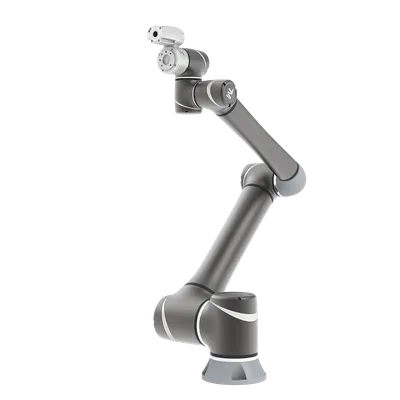
JAKA Counter-Sues Teradyne Robotics Over Patent Dispute Claims
JAKA is seeking an injunction against Teradyne Robotics' public statements, says no infringement suit has actually reached it, and cites 300+ patents and two clean FTO reviews in its defense.

JAKA Robotics is now suing Teradyne Robotics — not over the patents Teradyne accused it of infringing, but over what Teradyne has said about the case in public. In a statement given directly to The Robot Report and published September 3, JAKA says it’s seeking injunctive relief against Teradyne’s “false, misleading and damaging” public statements, and — more strikingly — that as of September 2 it has seen no actual court filing against it at all, despite Teradyne’s public announcement a week earlier that it had sued.
This is the next chapter in a fight this desk covered on August 28, when Teradyne Robotics filed a patent infringement case against JAKA’s German subsidiary at the Unified Patent Court’s Copenhagen Local Division, alleging both software and hardware patent violations across an unnamed range of JAKA’s EU-marketed cobots (see Teradyne Robotics Sues JAKA at Europe’s Unified Patent Court). A week later, JAKA has gone from silent to combative — and the two companies now disagree on basic facts, not just on who’s right.
What JAKA is arguing
JAKA’s statement, reported in full by The Robot Report, makes three separate claims. First, on the substance: JAKA says it develops its cobot technology through years of independent R&D, holds more than 300 granted patents worldwide, and — before entering the European market — commissioned two independent Freedom-to-Operate (FTO) analyses, neither of which flagged infringement concerns. An FTO analysis is a standard piece of legal due diligence: before launching a product in a given market, a company hires patent counsel to search the patents already active there and assess the risk that the new product treads on one of them. It’s a common, sensible precaution — but it’s an opinion, not a verdict, and it can miss a patent, read its claims narrowly, or simply come to a different conclusion than a court later does.
Second, JAKA pushes back on tone rather than law. It says Teradyne’s public statements implied JAKA’s cobots are lower-quality or less safe “because of the company’s Chinese origin,” calling that framing unsubstantiated. JAKA’s counter-argument is that collaborative-robot safety is a property of the full application — design, integration, configuration, and risk assessment — not a function of where the manufacturer is headquartered. It’s a fair technical point on its own terms: ISO 10218 and ISO/TS 15066, the standards that actually govern cobot safety certification, assess exactly those application-level factors, not country of manufacture.
Third, and sharpest: JAKA says that as of September 2, 2026, no court proceedings concerning the alleged patent infringement have actually been filed or opened against it in the relevant court system. It says it has received no direct communication, no legal documents, and no court notification from Teradyne or its lawyers — and that it learned of the entire matter only through Teradyne’s public and social-media announcement, followed by media inquiries. JAKA frames Teradyne’s public statements, absent an actual served suit, as an attempt to create “anti-competitive uncertainty” in the market rather than pursue the dispute through the legal process.
JAKA says it “continues its business operations, customer support, product development and commercial activities as normal” and remains committed to its European customers, partners, and integrators.
Teradyne’s response
The Robot Report put JAKA’s statement to Teradyne Robotics and published the reply in full, attributed to David Brandt, vice president of research and development and chief technology officer at Universal Robots. Brandt says flatly that Teradyne has filed the case with the courts in Copenhagen, and that if it hasn’t yet been served on JAKA, that’s most likely ordinary court processing time — “they should receive it shortly.”
On JAKA’s FTO defense, Brandt is dismissive on two levels. He suggests the analyses were simply inadequate if they missed Teradyne’s patents, and separately argues that the count of patents JAKA holds is beside the point entirely: “it is not about the quantity of patents but the strength of the patents.” That’s a real distinction — a company can hold hundreds of patents on its own inventions and still infringe a competitor’s specific patent on a specific mechanism, because patent-count defenses and patent-infringement claims aren’t measuring the same thing. Brandt also said Teradyne is “not concerned” about JAKA’s threatened German legal action.
Why the venue and the timeline both matter
The UPC detail from the original filing still matters here: Copenhagen Local Division rulings can extend across the UPC’s participating EU member states plus the UK and Spain, meaning a single infringement finding could restrict JAKA’s cobot sales across close to 19 countries at once if Teradyne ultimately prevails. That scale is exactly why JAKA’s procedural objection — that it hasn’t actually been served — carries weight beyond a technicality: a week of public “we sued them” framing without a corresponding legal notice reaching the defendant is the kind of gap that either resolves quickly as ordinary court lag, or becomes its own dispute about how the original announcement was timed.
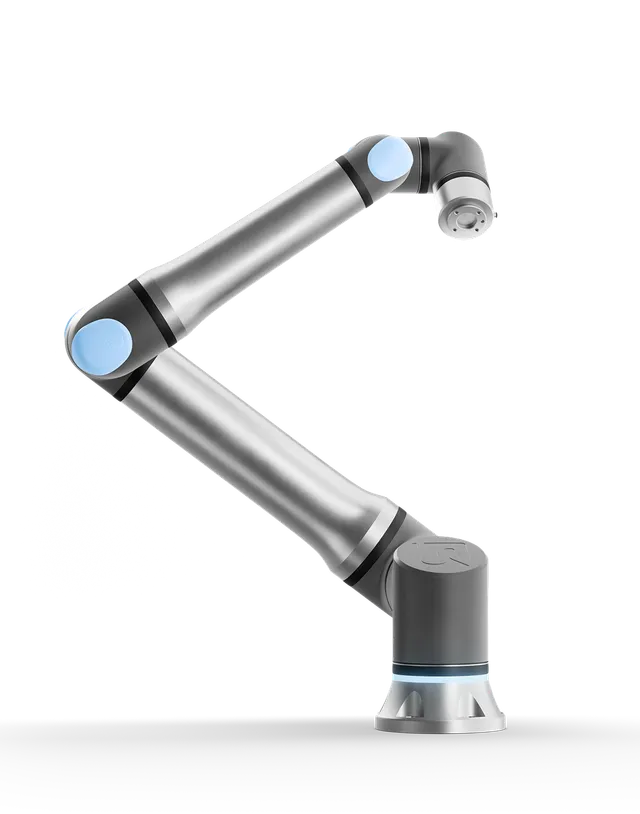
For the original UPC filing’s full details, see Teradyne Robotics Sues JAKA at Europe’s Unified Patent Court. For background on JAKA’s collaborative-robot lineup, including the Zu5 pictured here, see the JAKA Zu5 robot page and the JAKA brand page; for the Universal Robots cobot at the center of the original filing, see the UR15 robot page. For the safety standards both companies’ cobots are certified against, see this desk’s coverage of ISO 10218-1:2025.
Sources
- JAKA hits Teradyne Robotics back over patent dispute — The Robot Report, Sep 3, 2026
- Collaborative robot leader Teradyne Robotics files patent infringement against Chinese robot competitor at European Court — Universal Robots, Aug 27, 2026
- Teradyne Robotics sues another Chinese cobot maker — The Robot Report, Aug 27, 2026
Robots mentioned
Tap a card to open the full spec sheet.

Frequently asked questions
Is JAKA disputing the patents themselves, or something else? +
Something else, for now. JAKA's new legal action doesn't ask a court to rule on whether its cobots actually infringe Teradyne's patents. It seeks an injunction against what JAKA calls Teradyne's "false, misleading and damaging" public statements about the dispute and about JAKA's product quality and safety. The underlying patent question is still Teradyne's original UPC case, unresolved.
Has Teradyne's original lawsuit actually been served on JAKA? +
The two companies disagree. JAKA says that as of September 2, 2026, no court proceedings had been filed or opened against it in the relevant court system, and that it has received no legal documents or direct communication from Teradyne. Universal Robots CTO David Brandt says Teradyne has filed the case in Copenhagen and that any delay in service is normal court processing time. Industrial Robotics Hub has no independent access to UPC case dockets and cannot verify either claim directly.
What is a Freedom-to-Operate (FTO) analysis, and does it settle the matter? +
An FTO analysis is a legal review, commissioned before launching a product, that checks existing patents in a target market and assesses the risk that the product infringes them. JAKA says it commissioned two independent FTO analyses before entering Europe and neither flagged infringement concerns. That's a real due-diligence step, but it isn't a court ruling — an FTO opinion can miss a patent, read one narrowly, or simply reach a different conclusion than a judge later does. Brandt's response argues exactly this: that JAKA's analyses missed Teradyne's patents.
Does holding 300+ patents mean JAKA can't be infringing Teradyne's? +
No — the two facts aren't related. A company can hold hundreds of its own patents on its own inventions while still infringing a competitor's separate patent on a different specific mechanism or method. Brandt's response makes this point directly, calling the number of patents JAKA holds irrelevant to whether JAKA's products cross the line on Teradyne's specific patents.
More news