ISO 10218-1:2025 Is Live. 7 Robots Still Cite 2011
ISO 10218-1:2025 replaced the 2011 edition 17 months ago. In our 336-robot database, 7 Dobot cobots still cite the superseded standard today.
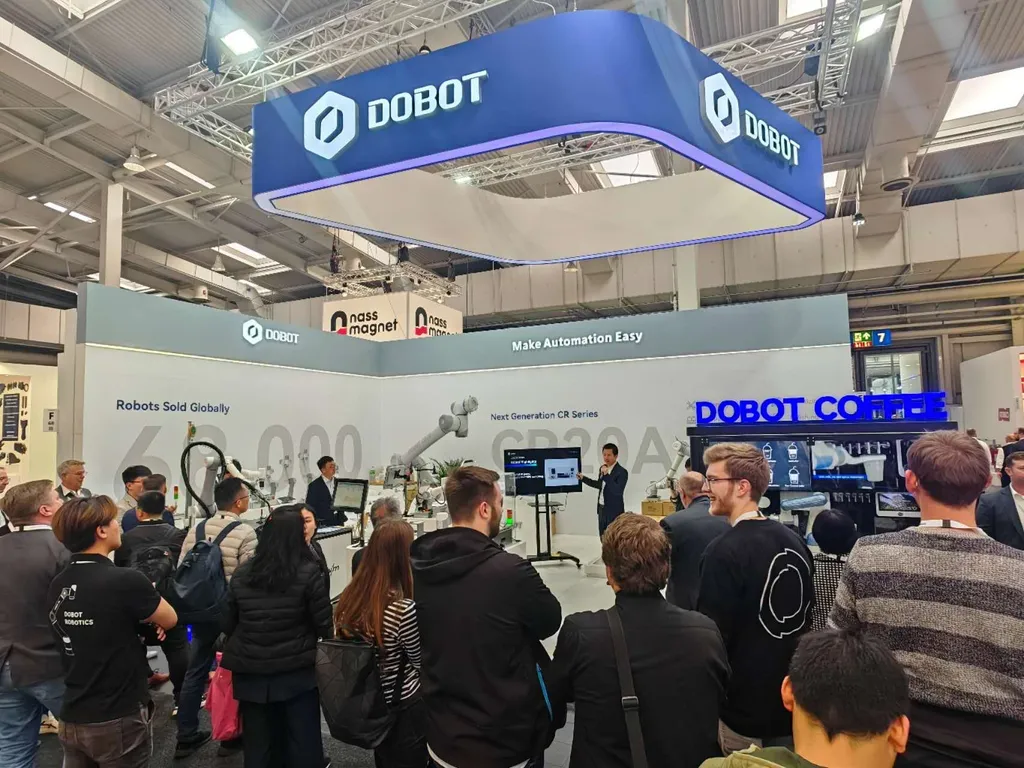
ISO 10218-1:2025 replaced the 2011 edition of the industrial robot manufacturer safety standard on February 5, 2025, folding the separate collaborative-robot force-limit document (ISO/TS 15066) directly into the standard itself. Seventeen months later, our own 336-robot database still shows 7 robots (all Dobot cobots) whose current, live manufacturer datasheet explicitly cites “ISO 10218-1:2011”, the exact edition that no longer exists. Zero robots in the database cite the 2025 edition by name.
A July 5, 2026 Interact Analysis report found supplier readiness for the new standard “uneven” across the industry. Our database backs that up with a specific, checkable number instead of a general impression.
What actually changed in ISO 10218-1:2025?
The 2025 revision cancels and replaces ISO 10218-1:2011 outright, it is not a patch or an addendum. The headline change: safety requirements for collaborative applications, previously scattered across ISO 10218-1, ISO 10218-2, and the standalone technical specification ISO/TS 15066, are now written directly into Part 1 itself. A robot manufacturer building to the 2025 edition no longer needs a separate TS 15066 citation to cover power-and-force-limiting; it is already in the standard they are certifying against.
The compliance deadline is real, not academic. In the EU, ISO 10218-1:2025 becomes the reference standard for CE-marked robots under the new Machinery Regulation, with conflicting national standards required to be withdrawn by March 2027. In the US, A3 and ANSI jointly released the aligned R15.06-2025 standard in September 2025, though it remains a voluntary consensus standard rather than a legal market-access requirement. Either way, a robot’s own safety-standard citation is about to stop being a footnote and start being a procurement question.
For the deeper mechanics of what integrators specifically owe under Part 2 (Declarations of Conformity, Performance Level documentation, risk assessments), see our companion piece on CE marking for robot cells. This post is narrower: what does our own catalog of manufacturer-published safety citations actually say, robot by robot, right now?
How many robots in our database cite a safety standard at all?
303 of 336 (90.2%) publish something in the safety.safetyRatings field. The other 33 (9.8%) publish nothing there, not necessarily non-compliant, just undocumented in the source datasheet we have on file.
| Standard cited | Robots | Share of 336 |
|---|---|---|
| ISO 10218-1 (any edition) | 293 | 87.2% |
| - edition unspecified | 286 | 85.1% |
| - explicitly “2011” (superseded) | 7 | 2.1% |
| - explicitly “2025” (current) | 0 | 0.0% |
| ISO/TS 15066 (collaborative force limits) | 108 | 32.1% |
| PLd Cat.3 / ISO 13849-1 Category d | 85 | 25.3% |
| CE | 16 | 4.8% |
| SIL 2 | 14 | 4.2% |
| UL / UL 1740 | 10 | 3.0% |
| ISO 3691-4 (mobile robot safety, AMRs) | 6 | 1.8% |
| IEC 61508 | 4 | 1.2% |
| Other (ATEX Ex, IEC 60601, EN 1525, SIL 3, PLe) | 5 | 1.5% |
Source: our analysis of 336 robots in the Industrial Robotics Hub database, safety.safetyRatings field. Rows do not sum to 336 because most robots cite multiple standards at once.
The gap between “cites ISO 10218-1” (87.2%) and “cites it with an edition year attached” (2.1%) is the real story. An unqualified “ISO 10218-1” on a spec sheet does not tell a buyer whether the robot was certified against the 2011 requirements or the 2025 ones, and for a collaborative robot specifically, that distinction now determines whether the force-limit methodology behind the “collaborative” label is the old TS 15066 approach or the updated one folded into the 2025 standard.
Which robots still cite the superseded 2011 edition, and did we verify it?
Every one of Dobot’s 7 CRA-series cobots (CR3A, CR5A, CR7A, CR10A, CR12A, CR16A, CR20A), all of Dobot’s collaborative lineup, carries “ISO 10218-1:2011” as a named safety citation, paired with “ISO 13849-1:2015” and “ISO/TS 15066”. We pulled that citation directly from Dobot’s own current CRA-series product page rather than trusting a scraped snapshot, and as of this writing it still reads “ISO 10218-1:2011 and ISO 13849-1:2015” verbatim.
| Model | Slug | Payload | Cited standards |
|---|---|---|---|
| Dobot CR3A | dobot-cr3a | 3 kg | ISO 10218-1:2011, ISO 13849-1:2015 PLd Cat.3, ISO/TS 15066, CE, UL |
| Dobot CR5A | dobot-cr5a | 5 kg | ISO 10218-1:2011, ISO 13849-1:2015 PLd Cat.3, ISO/TS 15066, CE, UL |
| Dobot CR7A | dobot-cr7a | 7 kg | ISO 10218-1:2011, ISO 13849-1:2015 PLd Cat.3, ISO/TS 15066, CE, UL |
| Dobot CR10A | dobot-cr10a | 10 kg | ISO 10218-1:2011, ISO 13849-1:2015 PLd Cat.3, ISO/TS 15066, CE, UL |
| Dobot CR12A | dobot-cr12a | 12 kg | ISO 10218-1:2011, ISO 13849-1:2015 PLd Cat.3, ISO/TS 15066, CE, UL |
| Dobot CR16A | dobot-cr16a | 16 kg | ISO 10218-1:2011, ISO 13849-1:2015 PLd Cat.3, ISO/TS 15066, CE, UL |
| Dobot CR20A | dobot-cr20a | 20 kg | ISO 10218-1:2011, ISO 13849-1:2015 PLd Cat.3, ISO/TS 15066, CE, UL |
Source: src/content/robots/dobot-*.json, safety.safetyRatings, cross-checked against Dobot’s own CRA-series product page.
To be precise about what this finding does and does not mean: it does not mean these cobots are unsafe or non-compliant today, ISO 10218-1:2011 was the valid standard for most of these models’ certification lifetime, and a 2011-edition Declaration of Incorporation issued before 2025 remains a legitimate historical record. What it does mean is that Dobot’s own current marketing page for an actively-sold product line has not been updated to reflect the standard that has existed for a year and a half, which is exactly the kind of gap a buyer, integrator, or notified body will start asking about as the EU’s 2027 withdrawal deadline for conflicting national standards approaches.
Is this a Dobot-specific gap, or does it show up elsewhere in the catalog?
It is concentrated, not universal. Across the other 19 brands in the database, nobody else’s current safety citation explicitly names the 2011 edition. But brand-level coverage of any safety citation at all varies widely, and that variance is its own signal of how consistently a brand’s documentation gets refreshed:
| Brand | Robots with a safety citation | Coverage |
|---|---|---|
| FANUC | 17 / 25 | 68.0% |
| Rokae | 11 / 16 | 68.8% |
| Yaskawa | 21 / 30 | 70.0% |
| Dobot | 8 / 11 | 72.7% |
| Kawasaki | 20 / 24 | 83.3% |
| ABB | 24 / 28 | 85.7% |
| Estun, Inovance, KUKA, Mitsubishi, Omron, Siasun, Staubli, Techman, AUBO, Doosan, Epson, Han’s Robot, JAKA, Universal Robots | 100% each | 100% |
Source: our analysis of 336 robots, safety.safetyRatings non-empty by brand. 14 of 20 brands publish a safety citation on every model in our database; 6 fall short of full coverage.
The 7 outdated citations sit inside Dobot’s 8-of-11 coverage figure, meaning every Dobot robot that does publish a safety standard cites the superseded one. That is a narrower, more specific problem than “Dobot has gaps”, it is “Dobot’s entire collaborative lineup’s stated compliance basis is out of date,” which matters more to a buyer than a raw coverage percentage does.
What should a buyer actually check before assuming a “collaborative” label is current?
Do not treat “ISO 10218-1” on a spec sheet as a single fact. Ask the vendor, in writing, which edition (2011 or 2025) the Declaration of Incorporation was issued against, and if it names TS 15066 separately, ask whether that citation has been reconciled with the merged 2025 requirements or is still running the pre-merge methodology. For any deal closing after the EU’s March 2027 withdrawal deadline for conflicting national standards, that answer stops being a compliance nuance and starts being a legal one. Our own catalog shows the industry is already 87.2% of the way to citing ISO 10218-1 in some form, but only 2.1% of the way to saying which edition, and that gap is exactly where a buyer’s own risk sits today.
Compare these robots