Bedrock Robotics' Excavators Now Dig With No One in the Cab
Bedrock Robotics says its retrofit kit now runs 20-to-80-ton excavators with nobody in the cab on live U.S. job sites, not supervised trials.
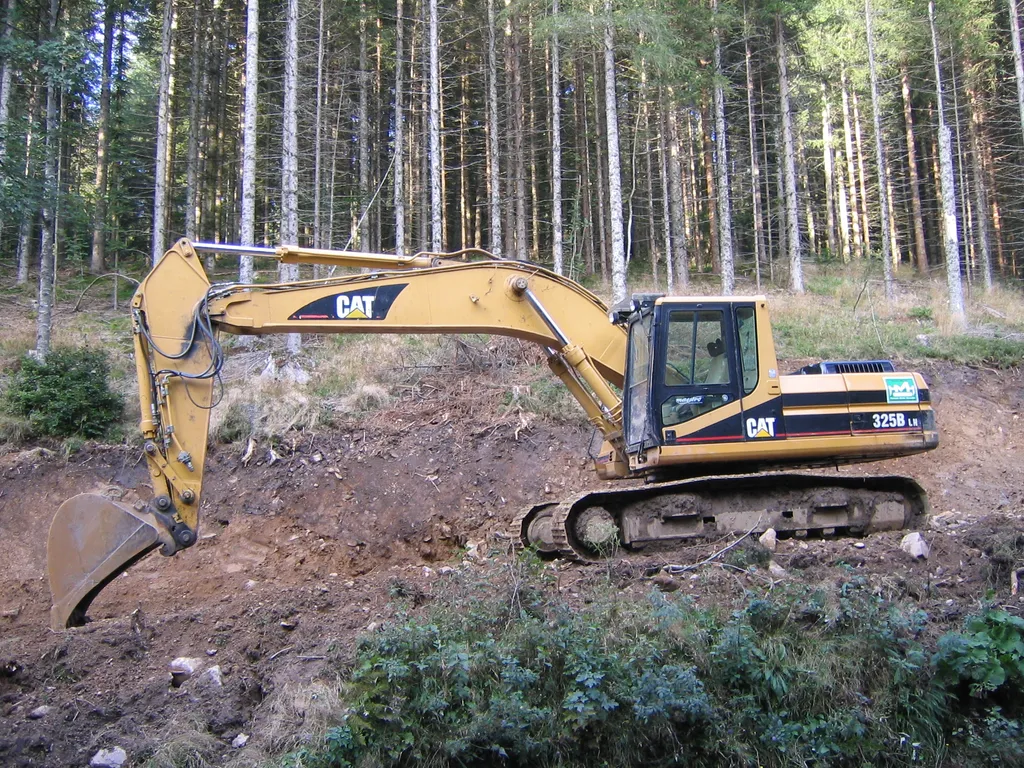
Bedrock Robotics said on August 19 that its retrofitted excavators are now digging with nobody in the cab on live customer job sites, not supervised test runs. The San Francisco startup, founded in 2024 by four former Waymo autonomous-trucking engineers, says this is the first time excavators have run fully unsupervised in production, on real infrastructure and earthwork projects in Nevada, Texas and elsewhere, rather than under a safety operator’s watch.
That distinction, supervised versus unsupervised, is the entire story. Plenty of construction-tech companies have shown an excavator digging on its own with an engineer riding along or watching from a trailer. Bedrock’s claim is narrower and more specific: the cab is empty, the machine is on an active job site alongside other equipment and workers, and it is doing billable production work, not a demo.
From robotaxis to jobsites
Bedrock’s founding team came directly out of Waymo’s self-driving truck program: CEO Boris Sofman led that unit before co-founding Bedrock with Kevin Peterson, Ajay Gummalla and Matthieu Guilbert. The company has raised $350 million total, an $80 million seed-plus-Series-A round in July 2025 and a $270 million round in February 2026, betting that the perception and planning stack built for autonomous trucks on highways transfers, with heavy modification, to a construction site.
The product, called Bedrock Operator, is a retrofit kit rather than a purpose-built robot. A sensor bar bolted to the cab roof carries 360-degree lidar, RTK-GPS antennas, an inertial measurement unit and eight HD cameras; an industrial computer sits inside the cab, wired into the machine’s existing hydraulics through a drive-by-wire harness. Bedrock says the whole installation takes a single shift and leaves no permanent modification to the excavator, a deliberate choice that lets it sell into standard 20-to-80-ton machines, including Caterpillar equipment, that contractors already own rather than requiring a fleet replacement.
Real-world testing started in November 2024. The company’s first machine, nicknamed “Fred,” went from simulation to full hardware integration in four to five months, and from there into the year-plus of supervised operation that preceded this month’s unsupervised milestone.
The named sites, and what “autonomous” covers there
Bedrock’s live, unsupervised deployments include a water-treatment-facility project in Nevada with Sundt Construction, a multi-million-cubic-yard earthwork site in Texas with Champion Site Prep, and a 1.2-million-cubic-yard civil sitework project with Zachry Construction. That’s separate from an earlier, supervised milestone with Sundt at a 130-acre manufacturing-facility site, where Bedrock’s system moved more than 65,000 cubic yards of material through autonomous truck loading, a real result, but one logged under human supervision rather than the unsupervised standard the company is now claiming. Capitol Aggregates, plus newly announced partners Austin Bridge & Road, Maverick Constructors and Haydon Companies, round out Bedrock’s named customer list, though the company hasn’t detailed what each is running.
Sofman described the operating envelope to Construction Dive in terms of both capability and risk management: “Our sensor layout gives the machines a 360 degree field of view, eliminating the dangerous blind spots for human operators. These machines will only operate autonomously in conditions that have been approved, and if the system detects any faults, it pauses work and comes to a stop.” He also drew an explicit contrast with the failure mode that has dogged robotaxi fleets, concentrated demand spikes in dense urban cores: “Bedrock’s machines, by nature of how they’re used by our customers, will be distributed across sites all over the country. This minimizes our risk exposure to these types of surges.”
The scale argument shows up in the numbers Bedrock chose to lead with, too. Excavators typically take about five years for a human operator to master, by Bedrock’s account, making them among the hardest machines on a job site to staff predictably, and they make up roughly a quarter of a typical contractor’s fleet. That combination, a long training curve and a large share of total equipment, is why Bedrock started automation there instead of on a smaller or simpler machine class.
What comes after excavators
Sofman has been explicit that excavators are a beachhead, not the destination: “Excavators are only the starting point for Bedrock, and we specifically built our technology and infrastructure to extend far beyond a single machine type.” Dump trucks, dozers and wheel loaders are the named next targets, though Bedrock has committed to no launch timeline for any of them. He also pointed to a growth lever within the excavator business itself, running machines on expanded schedules: “We are seeing increasing projects with millions of cubic yards of earth to be moved. As we expand to broader operational hours, such as night-time, and automate more machines that work together with excavators, we can directly compress the schedules of these projects and provide huge value to both the contracts and their end-customers.”
That’s a meaningful claim if it holds: a retrofit kit that turns existing fleet equipment into a machine that can run overnight, without adding operator headcount, changes contractor economics differently than a purpose-built autonomous machine that requires a capital swap. It also raises the obvious next question, whether Bedrock’s unsupervised-operation claim survives sustained, unglamorous, multi-site production work rather than a launch-week announcement.
Bedrock’s push also lands the same week Switzerland’s Gravis Robotics announced a $200 million Series A backed by SoftBank for its own construction-automation technology, a reminder that excavator and earthwork autonomy is drawing serious capital from more than one direction at once.
Sources
- Bedrock Robotics deploys fully autonomous excavators on jobsites — Construction Dive, Aug 19, 2026
- Bedrock Robotics: first operator-free excavator deployments take off — The Robot Report, Aug 19, 2026
- Ex-Waymo engineers launch Bedrock Robotics with $80M to automate construction — TechCrunch, Jul 16, 2025
Frequently asked questions
What exactly does Bedrock Robotics' retrofit kit do to an excavator? +
Bedrock Operator adds a sensor bar with 360-degree lidar, RTK-GPS antennas, an IMU and eight HD cameras to the cab roof, an industrial computer inside the cab, and a drive-by-wire harness connected to the machine's existing hydraulic controls. Installation is same-day, single-shift work and makes no permanent modification to the excavator, according to Bedrock. The kit is built to fit standard 20-to-80-ton excavators from multiple major manufacturers, including Caterpillar machines.
Is this the first time an excavator has dug without a human operator anywhere nearby? +
Bedrock says it is the first time its own system, and by its account the industry generally, has run fully autonomously on live, in-production customer job sites rather than under supervised testing. Real-world testing began in November 2024, with the first machine going from simulation to full hardware integration in four to five months. The August 19, 2026 announcement marks the shift from a human-supervised pilot to unsupervised operation on active infrastructure and earthwork projects.
Which construction companies are actually running these autonomous excavators? +
Named live deployments include a Nevada water-treatment-facility project with Sundt Construction, a multi-million-cubic-yard earthwork site in Texas with Champion Site Prep, and a 1.2-million-cubic-yard civil sitework project with Zachry Construction. Bedrock has separately worked with Sundt on an earlier, supervised 130-acre manufacturing-site project where its system moved more than 65,000 cubic yards through autonomous truck loading. Capitol Aggregates, Austin Bridge & Road, Maverick Constructors and Haydon Companies are also named as partners, though Bedrock has not detailed the scope of work at each.
Is Bedrock planning to automate other construction equipment beyond excavators? +
Yes, though with no committed timeline. CEO Boris Sofman has said excavators are Bedrock's starting point, not its ceiling, and that the company built its technology and infrastructure to extend to dump trucks, dozers and wheel loaders. No product launch date for any of those machine types has been announced.
More news