Only 2 of 20 Robot Brands Build 7 of 8 Robot Types
Our 400-robot database sorts every model into 8 architecture types. FANUC and Yaskawa cover 7 of 8. Five brands, all cobot-only, build just one.
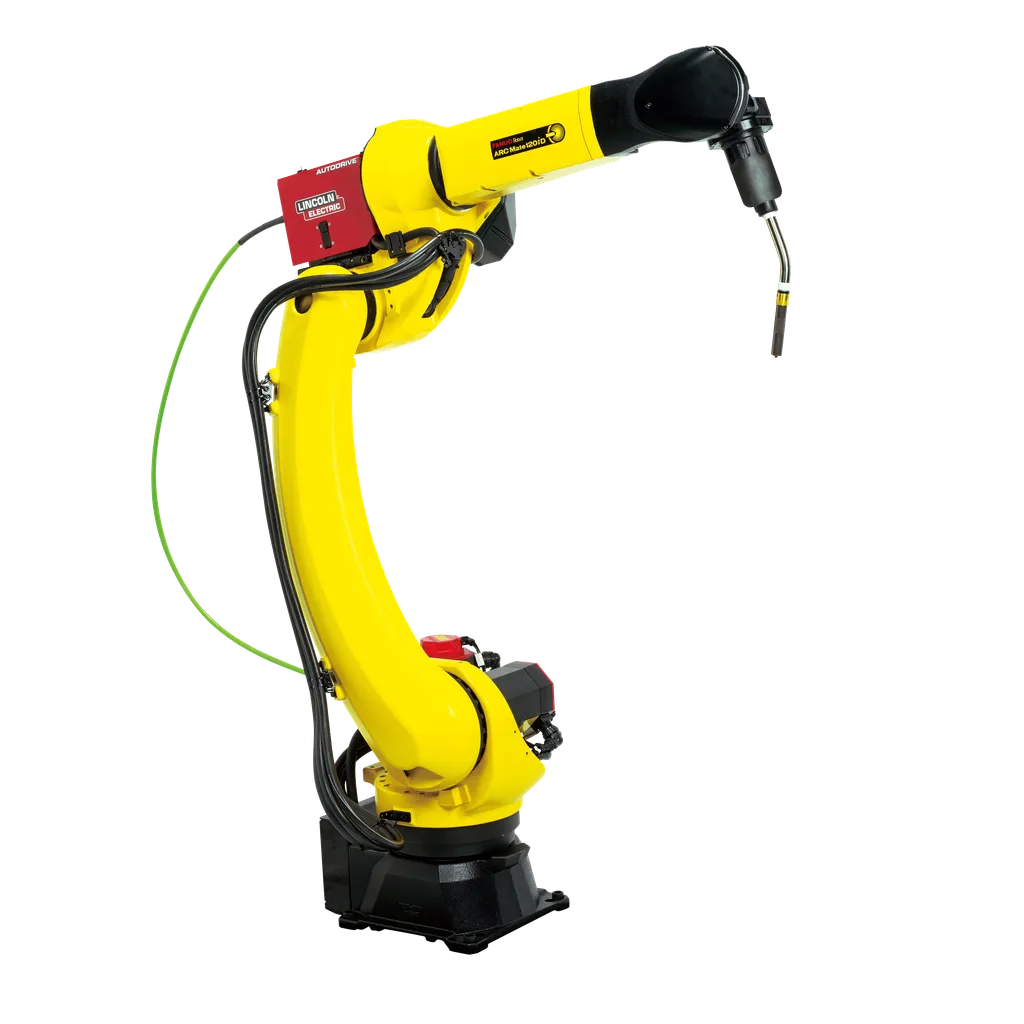
Two brands out of twenty build seven of the eight robot architectures we track. FANUC and Yaskawa each cover articulated, cobot, delta, painting, palletizer, SCARA and welding, missing only mobile robots. Nobody in our 400-robot database builds all eight. Five brands, all of them cobot-only, build exactly one. That is the real spread of what “full-line robot manufacturer” means in 2026, measured against what these companies actually ship rather than what their marketing implies.
Industrial Robotics Hub’s spec database sorts every one of its 400 robots, across 20 brands, into exactly one of eight robotType architecture categories: articulated, cobot, SCARA, delta, palletizer, welding, painting, and AMR (autonomous mobile robot). Nobody had asked, as its own question, how many of those eight categories each brand actually builds. We ran the query. The answer sorts the field into buyers who can single-source a multi-line plant and buyers who cannot, whatever the brand’s website claims about its “complete portfolio.”
How many robot architectures does each brand actually build?
The full ranking, from broadest catalog to narrowest, based on a live query of every robot record in our database:
| Brand | Types built | Count /8 | Missing |
|---|---|---|---|
| FANUC | articulated, cobot, delta, painting, palletizer, scara, welding | 7/8 | amr |
| Yaskawa | articulated, cobot, delta, painting, palletizer, scara, welding | 7/8 | amr |
| ABB | articulated, cobot, delta, painting, palletizer, scara | 6/8 | welding, amr |
| KUKA | articulated, cobot, delta, scara, welding | 5/8 | painting, palletizer, amr |
| Kawasaki | articulated, cobot, palletizer, welding | 4/8 | scara, delta, painting, amr |
| Staubli | articulated, cobot, delta, scara | 4/8 | palletizer, welding, painting, amr |
| Estun | articulated, palletizer, scara | 3/8 | cobot, delta, welding, painting, amr |
| Mitsubishi | articulated, cobot, scara | 3/8 | delta, palletizer, welding, painting, amr |
| Omron | amr, articulated, scara | 3/8 | cobot, delta, palletizer, welding, painting |
| Siasun | articulated, cobot, scara | 3/8 | delta, palletizer, welding, painting, amr |
| Doosan | cobot, palletizer | 2/8 | articulated, scara, delta, welding, painting, amr |
| Epson | articulated, scara | 2/8 | cobot, delta, palletizer, welding, painting, amr |
| Inovance | articulated, scara | 2/8 | cobot, delta, palletizer, welding, painting, amr |
| JAKA | articulated, cobot | 2/8 | scara, delta, palletizer, welding, painting, amr |
| ROKAE | articulated, cobot | 2/8 | scara, delta, palletizer, welding, painting, amr |
| AUBO | cobot | 1/8 | all except cobot |
| Dobot | cobot | 1/8 | all except cobot |
| Han’s Robot | cobot | 1/8 | all except cobot |
| Techman | cobot | 1/8 | all except cobot |
| Universal Robots | cobot | 1/8 | all except cobot |
Source: our analysis of 400 robots in the Industrial Robotics Hub database, by robotType, one classification per model.
Which two brands cover almost everything?
FANUC and Yaskawa are tied at 7 of 8, and they are tied on the same missing category: neither one has a robot classified as an AMR in our database. Both build a dedicated welding arm, a dedicated painting arm, a delta for high-speed picking, a palletizer, a SCARA, a cobot line and a general-purpose articulated range. That is as close to “one vendor, every cell on the floor” as this catalog gets, and it is worth noting that ABB, the next closest at 6 of 8, is missing welding as a dedicated type, which we’ll get to below.
What FANUC and Yaskawa’s 7/8 does not mean is that they build every robot a plant will ever need. It means their catalog spans the architectures, not that every payload, reach or price point inside each architecture is covered. A buyer standardizing on one of these two brands for a new multi-line plant can realistically expect to find a fenced arm, a cobot, a SCARA and a delta from the same supplier. They cannot expect a mobile robot from either one, at least not yet.
Why does ABB miss on welding, and does that mean ABB can’t weld?
ABB has zero robots classified under our database’s dedicated welding architecture type. That sounds like a hole in the catalog, and by our type classification it is. But it is not a capability gap, and writing it as one would be misleading. Fourteen ABB robots in our database carry a welding application tag, including the IRB 1600, IRB 2600, IRB 4600 and the IRB 6700 series, meaning ABB’s general-purpose articulated arms do plenty of real-world arc welding on production floors today.
The distinction is architecture versus application. FANUC’s Arc Mate series and Yaskawa’s AR-series are kinematically optimized for arc welding specifically, tighter torch-path accuracy, duty cycles built around continuous arc time, cabling routed for a welding package from the factory. That gets them a dedicated welding classification in our taxonomy. ABB’s welding work runs on the same general-purpose articulated arms it sells for material handling and machine tending, tooled up with a welding package rather than purpose-built for one. A buyer comparing “who builds welding robots” needs to check the applications tags on a brand’s general lineup, not just filter by type, or they will wrongly cross ABB off a welding-cell shortlist. We saw the identical tag-versus-spec trap in food-grade sourcing; see the washdown gap in IP ratings for the same pattern in a different category.
Which architecture has almost no competition?
Two categories in our database are effectively single-vendor. AMR is the more striking one: exactly 7 robots across the entire 400-robot catalog are classified amr, and every single one is Omron (HD-1500, LD-250, LD-60, LD-90, MD-650, MD-900, OL-450S). Not FANUC. Not Yaskawa. Not ABB, the three most architecturally complete brands in this table. Zero cross-brand overlap on mobile robots outside Omron is a strong signal that fixed-arm robotics and mobile robotics are still separate hardware businesses in this catalog, not two shelves of the same store. A buyer who needs both an arm and a mobile platform in the same facility should plan on two vendors, not one, at least until a generalist brand ships its first AMR.
Painting is thinner still in absolute count but spread differently: just 3 robots total carry the painting type, one each from ABB (IRB 5500 FlexPainter), FANUC (P-40iA) and Yaskawa (MPX3500). It is a real architecture, just a vanishingly small one, and it happens to sit with the same three brands that lead the overall breadth table. If your plant needs a dedicated paint cell, the shortlist writes itself; there is functionally no fourth option in our data.
What does it mean when a brand builds exactly one type?
Five of twenty brands (25%) build exactly one architecture in our database, and all five are cobot-only: AUBO, Dobot, Han’s Robot, Techman and Universal Robots.
robotType values per brand.That single-type tier used to hold six brands, including JAKA, when we last checked pure-play cobot counts in our cobot orders versus catalog share piece. Catalog-discovery runs in late July and early August added JAKA A-series articulated arms, so JAKA now sits at 2 of 8 and has left the single-type tier. The catalog moves; five, not six, is the current count of brands with nowhere to go but cobots.
That is the buying-decision payoff. Pick one of those five brands and you are picking a cobot vendor, full stop. There is no path to a fenced high-speed arm, a SCARA for tight-tolerance assembly, or a palletizer for end-of-line from the same nameplate later. That is not a knock on any of the five; a cobot-only strategy can be the right call for a plant that never needs fenced automation. But it is a real constraint worth pricing in before you standardize, because switching architecture later means switching vendor, not switching model.
For a buyer scoping a multi-line plant today, breadth and payload are two different axes, and they do not move together; see our payload-by-brand breakdown for the companion view. A brand that spans 7 of 8 architectures like FANUC or Yaskawa still needs its payload range checked against your heaviest cell, and a narrow, single-type brand can still be the deepest, best-supported option inside that one category. The type-breadth table tells you which vendors can grow with a plant across categories. It does not tell you, on its own, which one wins any single cell. Run both checks before you write the PO.
Compare these robots