The Median Industrial Arm on Sale Is a 10-Year-Old Design
Only 71 of 355 robots in our database publish a launch year. Among those that do, the median articulated arm is a 10-year-old design, and the manufacturer's parts clock does not start until the model is discontinued.
If you are being quoted an industrial robot arm today, the design is probably about a decade old, and the datasheet will not tell you that. Of the 355 robots in the Industrial Robotics Hub database, only 71 (20.0%) carry a launch year at all. Among those 71, the median design is 8 years old, 25 of them (35.2%) are 10 years or older, and the median articulated arm specifically is a 10-year-old design. That matters because the manufacturer’s spare-parts commitment does not start when you buy the robot. It starts when the model is discontinued, and nobody tells you how close that is.
How many robots publish a launch year?
Model age is one of the few buyer-relevant facts that almost no manufacturer puts on a datasheet. Our releaseYear field is populated from manufacturer material, and it is empty for 284 of 355 robots because there was nothing to populate it from.
Disclosure is also heavily concentrated. Four brands account for 58 of the 71 launch years in the database (81.7% of all disclosure):
| Brand | Robots publishing a launch year | Share of that brand’s lineup |
|---|---|---|
| ABB | 25 of 28 | 89% |
| FANUC | 17 of 25 | 68% |
| Universal Robots | 9 of 9 | 100% |
| KUKA | 7 of 22 | 32% |
| Everyone else (16 brands) | 13 of 271 | 5% |
The sharpest line in the data runs along origin. The eight Chinese brands in our catalog, AUBO, Dobot, Estun, Hans Robot, Inovance, JAKA, ROKAE and Siasun, account for 139 robots, 39.2% of the entire database, and not one of them carries a launch year. Kawasaki (4 of 24) and Yaskawa (3 of 30) are barely better despite decades of Western market presence.
State the caveat plainly: a blank field means we found no stated launch year in the manufacturer’s own material, not that the model has no launch date. Either way the buyer consequence is identical. When you go looking for the design age of the arm you are about to standardise on, four times out of five it is not there.
How old are the designs still on sale?
Among the 71 robots that do publish, here is the age distribution as of 2026:
Nine designs on sale today are 16 years old or older. These are the ten oldest:
| Robot | Type | Payload | Launched | Design age |
|---|---|---|---|---|
| ABB IRB 7600-500/2.55 | Articulated | 500 kg | 2003 | 23 yrs |
| ABB IRB 1410 | Articulated | 5 kg | 2004 | 22 yrs |
| ABB IRB 1600-10/1.45 | Articulated | 10 kg | 2006 | 20 yrs |
| ABB IRB 5500 FlexPainter | Painting | 13 kg | 2008 | 18 yrs |
| FANUC M-710iC/50 | Articulated | 50 kg | 2009 | 17 yrs |
| ABB IRB 2600-20/1.65 | Articulated | 20 kg | 2010 | 16 yrs |
| ABB IRB 360 FlexPicker 8/1130 | Delta | 8 kg | 2010 | 16 yrs |
| ABB IRB 4600-60/2.05 | Articulated | 60 kg | 2010 | 16 yrs |
| FANUC M-3iA/6S | Delta | 6 kg | 2010 | 16 yrs |
| ABB IRB 1520ID | Articulated | 4 kg | 2011 | 15 yrs |
The list skews to ABB and FANUC for a mechanical reason, not a quality one: they are the two brands that actually publish launch years at scale, so they are the only ones whose old designs are visible in this data at all. Brands that disclose nothing could be selling designs just as old and we would not know.
Arms are twice the age of cobots
Splitting the 71 by robot type produces the cleanest finding in the dataset:
| Type | Robots publishing a year | Median design age |
|---|---|---|
| Articulated | 29 | 10 years |
| Cobot | 28 | 5 years |
| SCARA | 6 | 7.5 years |
A 10-year gap between the two large samples is not a rounding artifact. It reflects that the collaborative segment barely existed before the mid-2010s, so nearly everything in it is a young design, while the industrial arm catalog is built on platforms that have been iterated rather than replaced. If you are buying a six-axis arm, assume you are buying a mature platform. If you are buying a cobot, assume you are buying a design that is still on its first or second generation, with the software churn that implies.
The three type rows above are the only ones with a large enough sample to quote. Delta (n=3, median 16 years) and palletizer (n=2, median 12.5 years) are in the data but too thin to generalise from, so they are reported here and not built on.
The parts clock starts at discontinuation, not at purchase
Design age would be trivia if support were open-ended. It is not, and the way the support window is counted is the part buyers get wrong.
Kawasaki Robotics publishes a retired-models list and states the commitment directly: “Replacement parts for the affected models shall be supplied for up to 10 years after the date of discontinuation.” The same page hedges it twice, noting that a material manufacturer discontinuing a component could leave Kawasaki unable to supply parts anyway, and that lead times lengthen the further you get from the discontinuation date.
Yamaha Motor goes further and publishes an actual per-model table with a sale-discontinued date and a service-period end date beside it. The gap between the two columns typically runs 7 years: its ERCD controller shows a December 2027 discontinuation against a December 2034 service period. Yamaha carries the same caveat, that difficulty obtaining parts “might make it impossible for us to repair or replace malfunctioning items even if the service period has not yet ended.”
FANUC America advertises “Replacement parts for the life of your FANUC robots” with 24-hour delivery, but names no duration and defines no end point.
So the published range across manufacturers that say anything is roughly 7 to 10 years past discontinuation, with the largest robot brands not quantifying it at all. Both numbers are counted from a date the buyer does not know at the time of purchase.
Underneath the parts policy sits a physical clock. Southwest Research Institute puts controller support at approximately 10 years, after which upgrades become necessary, and notes that past roughly the same mark motors and gearboxes “may not be supported due to obsolescence” while robot cables have a recommended lifespan and should be replaced. Their long-running depaint system has stayed in service since 1991 only because it took two controller upgrades along the way, roughly one per decade.
The arithmetic buyers should run
Take a 2013-vintage design bought new in 2026, which is a completely ordinary purchase given that 25 of our 71 dated robots are already 10 or older. Assume a 12-year service life, so you need parts through 2038.
You do not know the discontinuation date, which is exactly the problem. If the model is retired in 2029 and the brand honours a Kawasaki-style 10-year window, parts run to 2039 and you are fine with a year to spare. If it is retired in 2027 on a Yamaha-style 7-year window, parts run to 2034 and you are four years short, which means a controller retrofit or a mid-life replacement you did not budget for. The same purchase is comfortable or expensive depending entirely on a date the vendor knows and the quote does not mention.
This is the same failure mode that shows up in 7-year total cost of ownership modelling and in what to stock as spare parts: the number that wrecks the business case is never the number on the datasheet. It is also why controller platform fragmentation matters more than buyers expect, since a controller generation going end-of-life can strand an otherwise healthy arm.
Old designs are not bad designs
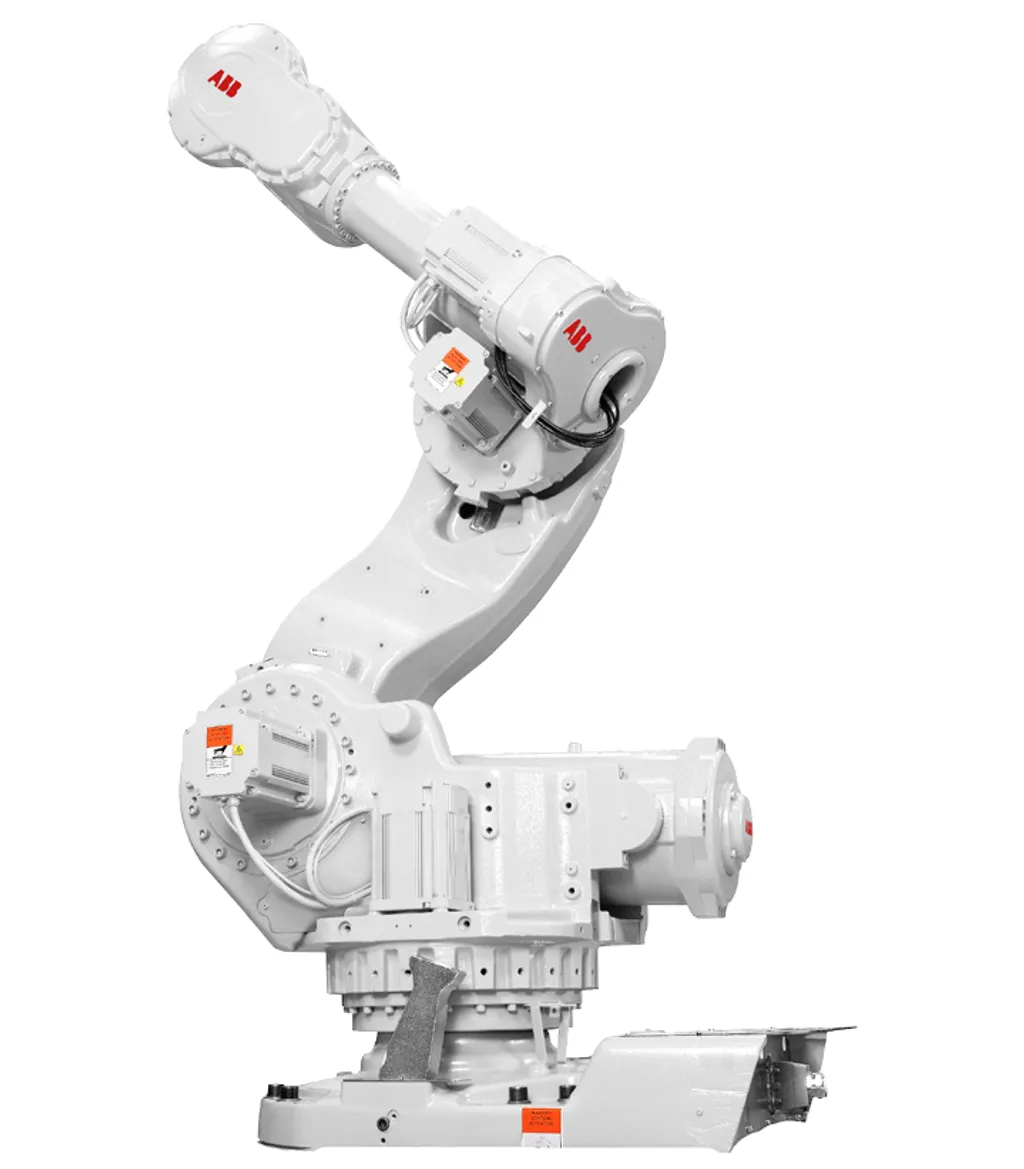
There is an obvious wrong conclusion here, so let me kill it. An arm that has been in continuous production for 20 years is not a liability, it is evidence. ABB has kept the IRB 7600 on the price list since 2003 because it works, its failure modes are documented, integrators everywhere are trained on it, the used market is deep, and third-party parts exist precisely because the installed base is enormous. Buying it is in several respects lower risk than buying a two-year-old design whose first field revision has not happened yet. The used robot market exists on the back of exactly this longevity, and the same logic that makes a mature platform a good used buy makes it a good new buy.
The risk is the specific combination: an old design, plus no disclosed production or discontinuation plan, plus a long intended service life, plus a single-source controller. Age alone tells you the platform is proven. Age plus silence tells you nothing about how long you can keep it running.
What to ask before you sign
Four questions, all answerable by the vendor, none of them on any datasheet we have seen:
- When was this model first released, and what generation is the controller? If the answer takes a week to come back, that is itself information about how well the model is tracked internally.
- How many more years do you expect to produce it? You will get a soft answer. A soft answer that says “at least five years” is still worth having in writing.
- How many years of spare parts after discontinuation, in writing? This is the number with real money attached. Kawasaki and Yamaha publish theirs, so asking a competitor to match a published commitment is a reasonable ask rather than an unusual one.
- What is the migration path when the controller goes end-of-life? Whether the successor controller mounts the same arm decides if your next refresh is a board swap or a whole new cell.
Ask them at quote stage, not at year eight. The window you are actually buying started counting before the robot reached your dock.
Frequently asked questions
How old is the average industrial robot design still being sold? +
Among the 71 robots in our 355-robot database that publish a launch year, the median design is 8 years old and 25 of them (35%) are designs 10 years or older that are still actively sold. Split by type, the median articulated arm is a 10-year-old design while the median cobot is only 5 years old, because the collaborative segment as a whole is younger. The oldest design still on sale in our data is ABB's IRB 7600, first released in 2003.
How long do robot manufacturers supply spare parts after a model is discontinued? +
It varies by manufacturer and it is rarely quantified. Kawasaki Robotics states replacement parts are supplied for up to 10 years after the discontinuation date. Yamaha publishes a per-model table with a service period that typically runs 7 years past the sale-discontinued date. FANUC America advertises parts for the life of the robot without naming a duration. All of the manufacturers that do publish a window also caveat it, because a component supplier discontinuing a part can end support early regardless of the stated period.
Does the parts support period start when I buy the robot? +
No, and this is the trap. The published windows start at the model's discontinuation date, not at your purchase date. If you buy a design that is discontinued three years later and the manufacturer offers 10 years of parts after discontinuation, your practical support horizon is 13 years from purchase. Buy the same model near the end of its production run and that horizon shrinks toward 10.
Is buying an older robot design a bad idea? +
Not by itself. A design that has been in production for 15 or 20 years is mature: the failure modes are known, integrators are trained on it, the used market is deep, and third-party parts exist. The risk is not the age, it is the combination of an old design, no disclosed discontinuation plan, and a long intended service life. Ask the vendor how many more years the model will be produced and how many years of parts follow, and get both in the quote.
Compare these robots