Robot Spec Sheets: Only 51 of 400 Clear 70% Complete
We scored all 400 robots in our database on 35 buyer-relevant spec fields. The median robot publishes 54%. Just 51 clear 70%; 30 sit at a third or less.
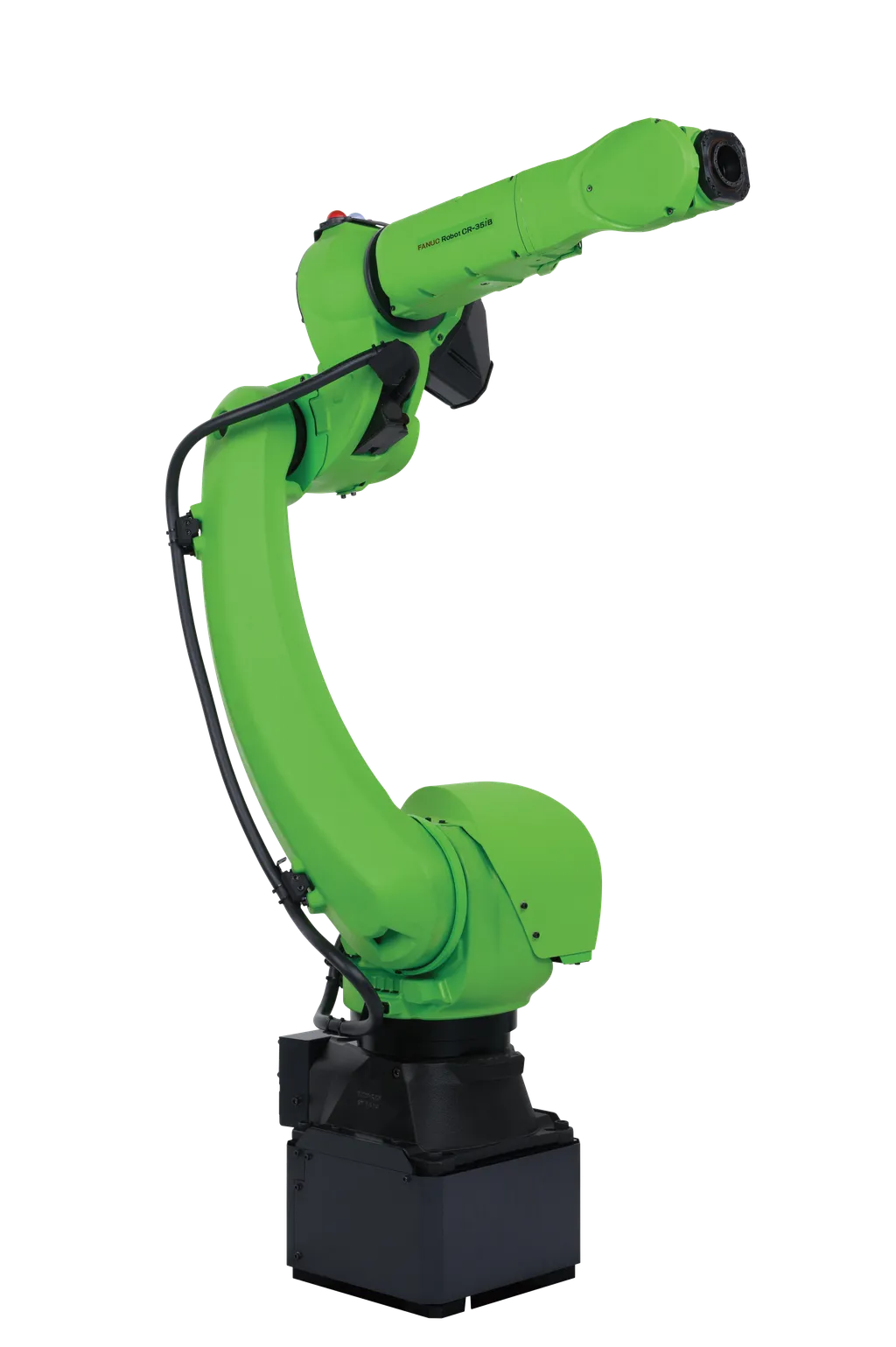
We tracked 35 buyer-relevant spec fields, the ones that actually decide whether a robot fits your cell, across every one of the 400 robots in our database and scored each record on how many of them the manufacturer actually publishes. The median robot comes in at 54%. Only 51 of 400 (12.8%) clear 70% complete. Thirty (7.5%) sit at a third or less. A spec sheet is not a fixed document. It is whatever the manufacturer decided was worth typing up, and for most robots on the market, that is barely half the picture.
This is not a knock on any one brand’s engineering. It is a measure of disclosure: given the fields we track sitewide (payload, reach, repeatability, IP rating, controller platform, ROS support, power draw, wrist torque, release year, and 26 others), how much of that record does a buyer actually get before calling sales? We ran the query across the whole catalog rather than trust any one product page’s impression of “the spec sheet.”
What counts as a “complete” spec sheet here?
We picked 35 fields that a buyer realistically checks before shortlisting a robot: the five universal performance numbers (payload, reach, repeatability, axes, weight), mounting and programming methods, IP ratings for arm and wrist, operating temperature and humidity range, cleanroom class, controller platform, programming languages, teach pendant, ROS support, offline programming and simulation software, fieldbus and tool-flange standard, integrated vision, power supply and consumption, safety ratings and collaborative-safety mechanism, cobot-certified payload, price note, wrist torque and inertia, top speed (both angular and TCP), product line, release year, and country of origin. See our field-by-field glossary if any of those need defining, and our comparison checklist for the order to actually check them in.
A robot’s completeness score is simply how many of the 35 it has a real, non-empty value for, divided by 35. Identity fields (brand, model, slug, status), internal bookkeeping (dataSource, verified, updatedAt) and media (photos, gallery, documents) are excluded. Those are near-100% for every record in the catalog and would flatten the whole comparison; we scored what a buyer reads, not what our own database happens to store about itself.
How complete is the median robot’s spec sheet?
| Metric | Value |
|---|---|
| Fields tracked | 35 |
| Median completeness (400 robots) | 54.3% |
| Database-wide average | 54.9% |
| Robots clearing 70%+ | 51 (12.8%) |
| Robots at 35% or below | 30 (7.5%) |
| Most complete single record | 85.7% (30/35 fields) |
| Least complete single record | 14.3% (5/35 fields) |
Source: our analysis of 400 robots in the Industrial Robotics Hub database, scored against 35 tracked buyer-relevant fields per model.
Half the catalog does not clear the halfway mark by much. A 54% spec sheet means roughly 16 of the 35 fields a buyer would want are simply absent, not “contact us for details,” just gone from the page entirely.
Which fields does almost every manufacturer publish, and which do almost none?
The gap is not random. It splits cleanly along one line: the numbers marketing wants on the front page are nearly universal, and the numbers that predict real deployment friction are the ones you have to dig for.
Payload, reach, repeatability, axis count and mounting orientation sit above 93%. Those are the numbers on the brochure cover. Controller platform drops to 66%, ROS support to 49%, power consumption to 31%. Release year, the single field that tells a buyer how old a design is before they commit to a decade of spare-parts availability, sits at 18%, a gap we already quantified on its own in our model-age piece. Simulation software support, the thing that actually determines how fast an integrator can commission the cell, is published for 11.5% of the catalog. Note that “price note” at 71% is a coverage number, not a pricing one: as our pricing-opacity piece already showed, nearly all of that 71% is the literal string “Price on application.” The field is populated. The number is not.
Which single robot has the most complete public record?
Six robots tie for the most documented record in the database at 85.7% (30 of 35 fields): five FANUC cobots, the CR-35iB, CRX-10iA, CRX-10iA/L, CRX-20iA/L and CRX-25iA, plus one KUKA arm, the LBR iiwa 14 R820. All six are mature, long-shipping collaborative platforms from brands that treat the cobot line as a flagship, not a catalog afterthought, and it shows in how much of the record is filled in.
At the other end, the single least-documented robot in the entire catalog is the Kawasaki RL030N at 14.3% (5 of 35 fields). That is not a data-entry failure on our part. Kawasaki’s own product page for the RL030N, an 8-axis “Physical AI” platform unveiled at Automate 2026, states plainly that it “has no standard public spec sheet yet.” It is a real, shipping-to-a-launch-partner robot with a status of “announced,” not “production,” and its own manufacturer has not finished writing the datasheet. The next tier down, at 28.6% (10 of 35 fields), is a mixed group: one ABB arm (IRB 2600ID-15/1.85), five Omron AMRs, and two Yaskawa articulated models, none of which carry the RL030N’s excuse.
Which brand publishes the most complete records, on average?
| Brand | Avg. completeness | Models scored |
|---|---|---|
| Universal Robots | 81.6% | 9 |
| Techman | 65.5% | 15 |
| Mitsubishi | 63.6% | 11 |
| KUKA | 61.8% | 29 |
| Dobot | 60.5% | 11 |
| AUBO | 60.2% | 12 |
| FANUC | 60.2% | 31 |
| Doosan | 59.5% | 12 |
| ABB | 59.1% | 40 |
| Staubli | 58.2% | 14 |
| JAKA | 56.2% | 18 |
| Yaskawa | 55.9% | 38 |
| Han’s Robot | 51.8% | 8 |
| Kawasaki | 51.8% | 24 |
| Inovance | 50.6% | 21 |
| Epson | 46.8% | 21 |
| Omron | 46.4% | 17 |
| Estun | 45.3% | 29 |
| ROKAE | 43.3% | 21 |
| Siasun | 40.0% | 19 |
Source: our analysis of 400 robots in the Industrial Robotics Hub database, mean per-model completeness score by brand, all 20 brands with 8+ models scored.
Universal Robots leads by a wide margin, 81.6% average across its 9-model catalog, more than double Siasun’s 40.0% across 19 models. That gap tracks roughly with catalog size and market maturity: UR is a narrow, single-architecture cobot lineup that has published detailed specs for a decade, while several of the lowest-scoring brands (Siasun, ROKAE, Estun, Omron) are larger, newer-to-English-language-documentation catalogs where our own catalog-discovery work has repeatedly had to piece specs together from scattered PDFs rather than one clean product page. That is a real disclosure gap for a buyer today even when the underlying explanation is documentation maturity rather than concealment.
Does robot type predict how well-documented a model is?
| Type | Avg. completeness | Models scored |
|---|---|---|
| Cobot | 61.2% | 126 |
| Palletizer | 56.6% | 11 |
| Articulated | 53.7% | 176 |
| Delta | 52.6% | 10 |
| Welding | 50.2% | 9 |
| SCARA | 49.0% | 58 |
| Painting | 43.8% | 3 |
| AMR | 32.7% | 7 |
Source: our analysis of 400 robots in the Industrial Robotics Hub database, mean completeness score by robotType. Painting (n=3) and AMR (n=7) are small samples; read those two rows as directional, not definitive.
Cobots are the best-documented category by a real margin over the two largest classes, articulated (53.7%, n=176) and SCARA (49.0%, n=58). That fits: cobots are sold partly on ease of evaluation, safety mechanism disclosure is often regulatory (see our PFL-versus-SSM piece), and the segment’s buyers skew toward smaller integrators who need the spec sheet to do the pre-sales work a dedicated applications engineer would otherwise do. AMRs sit lowest at 32.7%, though with only 7 robots in the whole database, all from Omron, that is one brand’s documentation habits standing in for an entire architecture, not yet a real industry pattern.
What should a buyer actually do with this?
Treat “no field” and “bad number” as two different risks, and price them differently. A published 0.02mm repeatability you can act on immediately. A blank power-consumption field means you find out your facility’s 3-phase supply is wrong after the robot ships, not before. The fields sitting under 20% coverage in this database (release year, cleanroom class, integrated vision, collaborative-safety mechanism detail, tool-flange standard, simulation software) are exactly the fields that determine total cost of ownership and integration timeline rather than headline performance, and they are the ones most worth a direct question to the sales engineer before you sign, not after. A 54% spec sheet is not disqualifying. Treated as a checklist of what to ask for by name, it is the most useful thing on the page.
Compare these robots