How to Read an Industrial Robot Datasheet: A Field-by-Field Glossary
Ten terms decide whether a robot fits your cell: payload, reach, repeatability, speed, degrees of freedom, wrist load, IP rating, safety level, duty cycle, and cycle time. Here is what each one actually means, and which of our own data deep-dives already answers the follow-up question.
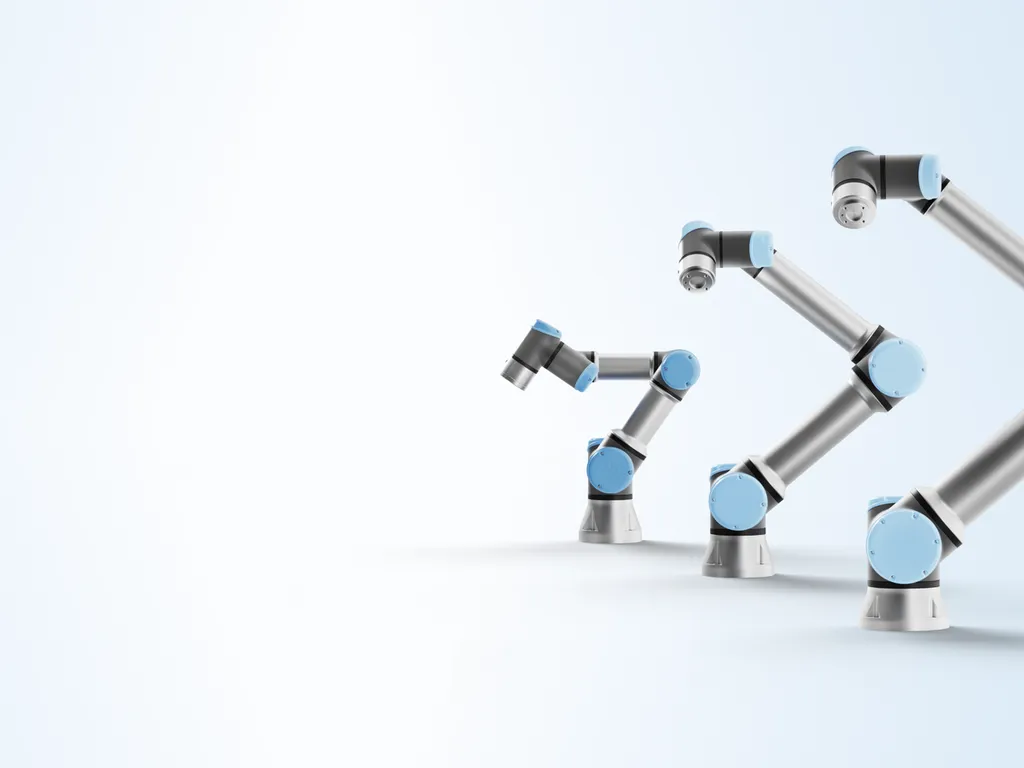
A robot datasheet packs a dozen numbers onto one page and assumes you already know what each one is measuring. Payload and reach get read correctly almost every time. Repeatability, duty cycle, and IP rating get skimmed, misread, or ignored, and those are usually the ones that determine whether a robot survives its actual application. This is a field-by-field glossary of the ten specs that matter most, in the order a buyer should check them, each one linked to a deep dive where we already worked the number against our own catalog.
Payload
What it measures: the maximum mass the robot can carry at the wrist, usually rated at a specific point in the work envelope rather than everywhere the arm can reach.
The catch: rated payload is a best case. Extend the same load toward full reach and the effective capacity can drop sharply, because leverage on the wrist and base joints scales with distance from the base. What your robot’s payload rating doesn’t tell you walks through how much that drop can be and why wrist inertia, not raw mass, is usually the spec that actually limits a fast pick-and-place cycle.
Check it against: reach, at the same time, not in isolation. Payload vs reach: 258 robots, one efficient frontier plots the two together and shows how differently a palletizer, a cobot, and a heavy articulated arm trade one for the other.
Reach
What it measures: the maximum distance from the robot’s base to its tool center point, fully extended.
The catch: reach is a radius, not a usable volume. Axis limits, dead zones near the base column, and blind arcs behind some heavy arms all carve real space out of that theoretical sphere. A stated reach tells you the outer boundary, not the shape of what is actually reachable inside it.
Check it against: payload, because the two together define the actual work envelope a cell design needs, and mounting orientation, since a ceiling- or wall-mounted arm can reclaim floor space a reach number alone doesn’t capture.
Repeatability (and how it differs from accuracy)
What it measures: how consistently the robot’s tool point returns to the exact same taught position, run after run, expressed in millimeters, smaller is better.
The catch: repeatability is not accuracy. Accuracy measures how close the robot gets to a mathematically commanded coordinate it was never physically taught, and depends heavily on calibration. Datasheets publish repeatability almost universally and accuracy almost never, because accuracy numbers are typically worse and harder to guarantee.
Check it against: robot type before brand. Robot repeatability by type: SCARA hits 0.01 mm found SCARA arms median roughly five times tighter than cobots, and a 27x spread inside the articulated-arm category alone, so “repeatability by brand” is the wrong first cut.
TCP speed
What it measures: the maximum linear speed of the tool center point, usually in millimeters per second, distinct from individual joint (axis) speed.
The catch: it is one of the least-published specs on a datasheet, and a high number on its own says nothing about how fast a robot actually completes a cycle, since accel/decel, path shape, and dwell time all eat into it.
Check it against: robot speed by type: SCARA runs 3x faster than cobots, which found only 40% of robots in our database publish a TCP speed figure at all, and cycle time (below), which is the number that actually predicts throughput.
Degrees of freedom (axis count)
What it measures: the number of independently moving joints, which sets how many ways the robot can orient its tool in space. Six axes are the minimum required to place a tool at any position and any angle in 3D.
The catch: more axes is not automatically better. A seventh axis buys elbow flexibility around obstacles, a real advantage in a cramped cell, but most applications never need it.
Check it against: how many axes does a robot have? Why 79% have 6 and only 5 have a 7th, which breaks down what each axis count is actually for, from 4-axis SCARA and delta arms up to the rare redundant 7-axis cobot.
Wrist torque and wrist inertia
What it measures: the rotational load and rotational mass the wrist joint can carry, separate from the straight-line payload rating. This is what actually limits how a heavy or asymmetric end-of-arm tool can be swung and stopped.
The catch: wrist torque is one of the least-published fields on a datasheet, and it does not scale predictably with payload. Wrist torque: a 67.5x spread across 89 robots we track found the ratio between the two spans from 0.26 to 17.29 Nm per kg of rated payload, and that cobots, the category most likely to carry an unbalanced gripper, report it least of any robot type.
IP rating
What it measures: Ingress Protection against dust and water, defined by IEC 60529, expressed as two digits (for example IP65) plus sometimes a K suffix for high-pressure or high-temperature washdown resistance.
The catch: IP rating says nothing else about the robot. A low IP rating on a dry-cell arm is not a weakness, it is a correctly specified robot for an environment that never needed dust or water protection in the first place, and paying for more protection than the application needs is a real cost with no benefit.
Check it against: robot IP ratings: only 21% survive a washdown for how the ratings break down by robot type, and our own IP-to-NEMA conversion piece if your specs are written in NEMA rather than IP terms, since the two systems test different things and do not convert cleanly.
Safety rating: Performance Level and SIL
What it measures: how reliably a specific safety function performs under fault conditions. Performance Level (PL, from ISO 13849-1, rated a through e) and Safety Integrity Level (SIL, from IEC 62061, rated 1 through 3) are two different standards’ ways of certifying the same kind of claim.
The catch: a Performance Level certifies one safety function, such as speed and separation monitoring or an emergency stop circuit, not the robot as a whole, and it is not a quality grade. PLd, PLe and SIL 2 by robot brand found ABB certifies YuMi’s own speed-supervision function to Performance Level b specifically because the cobot’s motors are under 80 W and need less risk reduction, while KUKA states PL d Cat 3 and SIL 2 across conventional arms up to 1,000 kg. Reading PL as a league table gets the causation backwards.
Duty cycle
What it measures: the proportion of time, or the pattern of on/off operation, a robot is rated to run continuously without exceeding its thermal or mechanical limits.
The catch: most industrial robots are rated for continuous duty and datasheets rarely spell out an explicit duty-cycle percentage the way a motor or a welding power source does, so the practical duty-cycle question usually shows up as a thermal or maintenance-interval note buried in the manual rather than a headline spec.
Check it against: cycle time and throughput math (below), which is where duty-cycle assumptions actually get applied in a real production estimate.
Cycle time and throughput
What it measures: how long one complete work cycle takes, and by extension, how many parts per hour the cell can produce.
The catch: top axis speed is not throughput. Robot cycle time and throughput: the parts-per-hour math the datasheet skips breaks a real cycle into decision time, motion time, and idle time, and shows how an 88% OEE assumption can turn a 6-second target cycle into a 5.3-second requirement before the robot moves at all. Only a small fraction of robots publish a real cycle-time figure; the rest requires this kind of worked estimate.
Putting it together
None of these ten specs answers a buying question by itself. Payload only means something next to reach. IP rating only means something next to the cell’s actual environment. A safety rating only means something next to the specific function it certifies. Once you know what each field is actually measuring, the next step is putting several of them side by side for two or three real candidates, in a fixed order rather than skimming a PDF top to bottom — you can run that comparison on any robots in our database using the side-by-side compare tool.
Frequently asked questions
What is the difference between repeatability and accuracy on a robot datasheet? +
Repeatability measures how consistently a robot returns to the same taught point, run after run. Accuracy measures how close the robot gets to a mathematically commanded coordinate it was never taught by hand. Almost every industrial robot datasheet publishes repeatability. Very few publish accuracy, because it depends on calibration and is usually far worse than the repeatability number sitting next to it.
Why do two robots with the same payload rating handle differently at full reach? +
Payload is typically rated at a specific point in the work envelope, not everywhere the arm can reach. Extend the same load toward the edge of reach and the effective capacity can drop 20 to 40 percent, because the leverage on the wrist and base joints increases with distance. The datasheet's headline payload number is a best case, not a guarantee at every pose.
Does a higher IP rating always mean a more capable robot? +
No. IP rating measures ingress protection against dust and water, nothing else. A robot rated IP20 for a dry electronics-assembly cell is not worse than an IP67 washdown robot, it is built for a different environment. Buying more IP protection than a cell needs usually just adds cost and, on some models, reduces reach or speed.
What does a Performance Level like PLd or PLe actually certify? +
A Performance Level (PL, from ISO 13849-1) or a Safety Integrity Level (SIL, from IEC 62061) certifies a specific safety function, such as speed supervision or an emergency stop circuit, not the robot as a whole. A robot can carry PL b on one function and be perfectly appropriate for its application, while a heavier arm needs PL d or PL e on a different function because the risk it guards against is more severe. Higher is not automatically better; it depends on what risk the function is reducing.
Compare these robots