How to Choose a Welding Robot in 2026: Arc, Structural and Cobot Welding Compared
67 welding-tagged robots in our database -- only 25% carry IP67 or better. How to choose by weld process, reach, and IP rating, not by brand.
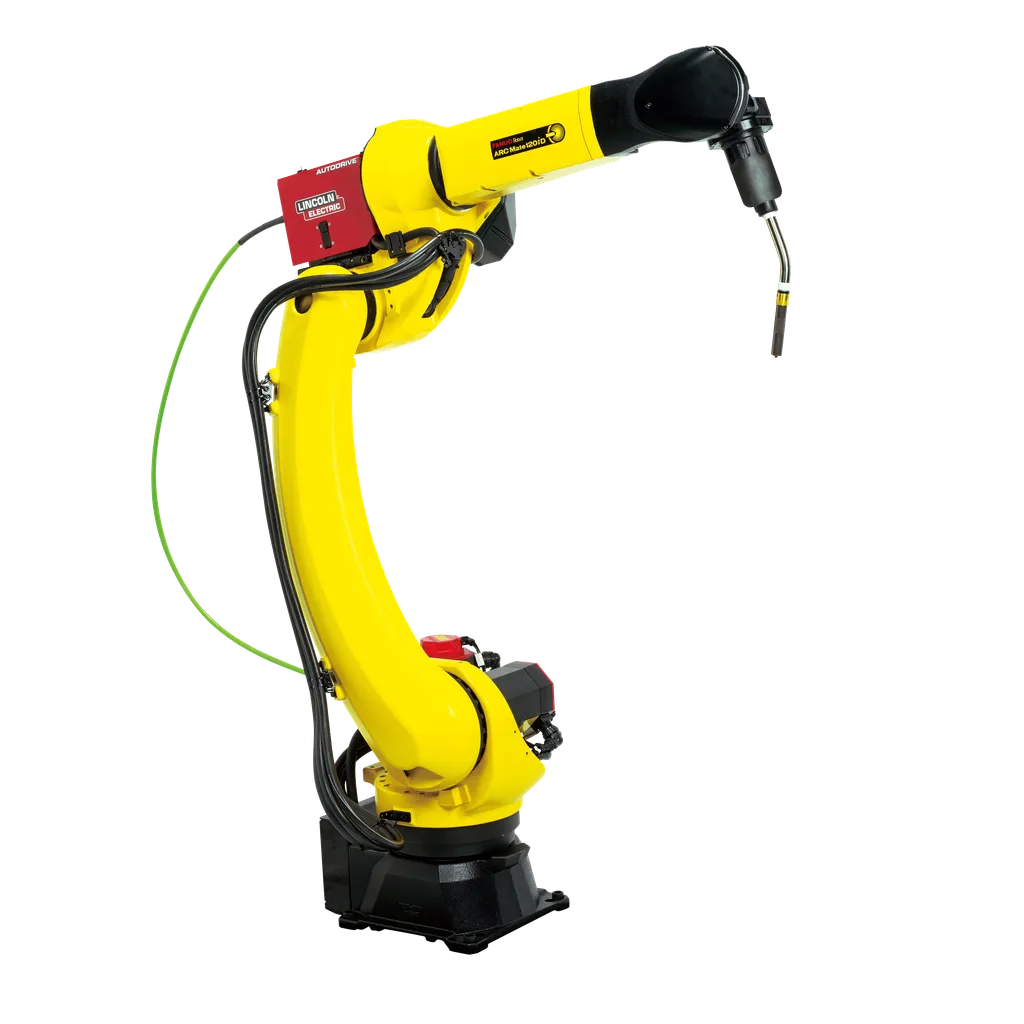
The right welding robot depends on the weld process before it depends on the brand. A purpose-built arc welding arm, a heavy structural arm, and a collaborative welding cell are three different machines with different IP requirements, reach envelopes, and repeatability targets. Of the 67 robots tagged for welding in the Industrial Robotics Hub database, only 4 are typed as dedicated welding robots. The other 63 are general-purpose articulated or collaborative arms that happen to be deployed in weld cells. Knowing which category fits your process eliminates most of the shortlist before you call a single distributor.
Three weld categories, three different spec priorities
Arc and MIG welding (automotive, general fabrication). The robot must track a seam at 300 to 800 mm/min with a repeatability of ±0.05 mm or tighter to stay within joint tolerance. Reach matters — a fabrication cell with a rotating positioner can use a 1,500 to 2,000 mm arm; a structural or shipyard cell can need 2,700 mm or more. IP rating matters because arc spatter and anti-spatter spray both corrode unprotected actuators in the first year.
Spot welding and heavy structural work. These cells use arms in the 80 to 400 kg payload class, because the spot gun, clamp, and electrode dressing tooling alone can exceed 50 kg. Reach runs to 2,500 to 3,700 mm. Repeatability requirements are looser than arc (±0.08 to ±0.15 mm is usually acceptable). Most heavy structural robots carry IP67 as standard because the environment is harsh at this scale.
Collaborative welding. A cobot welding cell shrinks the fencing footprint and lets a human tack-weld nearby while the robot runs a bead. It only works for light-gauge material (thin sheet, aluminium, stainless) where amperages are low enough to keep the heat and electromagnetic environment within ISO/TS 15066 shared-space limits. The limiting spec is usually reach: most cobots cap out at 1,700 to 2,100 mm, and the lighter frames mean payload above 20 kg for the torch and fixturing is unusual.
Dedicated arc welding robots: the short list
Only 4 robots in our database carry the dedicated welding type flag. They have narrow wrists, hollow-arm cable routing, and torch-cable management designed specifically for continuous arc or MIG work:
| Robot | Payload | Reach | Repeatability | IP (arm) |
|---|---|---|---|---|
| FANUC ARC Mate 120iD | 20 kg | 1,831 mm | ±0.03 mm | IP67 |
| Yaskawa AR2010 | 12 kg | 2,010 mm | ±0.03 mm | IP54 |
| Yaskawa AR1440 | 12 kg | 1,440 mm | ±0.02 mm | IP54 |
| Yaskawa AR900 | 7 kg | 927 mm | ±0.01 mm | IP54 |
The FANUC ARC Mate 120iD is the only one in this group rated IP67. It survives anti-spatter spray and heavier coolant exposure without degrading the wrist joints. It is based on the M-20iD slim-arm design with internal cable routing through the wrist, which removes the torch hose from the working envelope and reduces snag risk on complex seam geometries.
The Yaskawa AR900 carries the tightest repeatability of any welding robot in our database at ±0.01 mm. That matters for thin-gauge lap joints and aluminium seams where a 0.05 mm deviation causes a visible surface defect. The AR900’s 927 mm reach limits it to compact cells; the AR2010’s 2,010 mm reach covers the same payload class when the positioner places the joint at distance.
None of these are cobots. All require guarding. If your cell has humans moving in and out, see the cobot welding section below.
Weld-ready articulated robots for structural and heavy fabrication
The majority of welding cells use standard 6-axis articulated arms rather than dedicated welding types. They are more flexible (swap to a gripper for assembly if demand shifts), often cheaper at comparable reach, and their payload ceiling handles heavy spot guns.
Here are standouts from our articulated robot database ranked by reach — the spec that most often limits structural weld cell coverage:
| Robot | Payload | Reach | Repeatability | IP |
|---|---|---|---|---|
| ABB IRB 6700-150/3.20 | 150 kg | 3,200 mm | ±0.05 mm | IP67 |
| KUKA KR 20 R3100 IONTEC | 20 kg | 3,101 mm | ±0.04 mm | IP65 |
| Estun ER100B-3000 | 100 kg | 3,000 mm | ±0.06 mm | IP54 |
| Yaskawa GP180 | 180 kg | 2,702 mm | ±0.05 mm | IP67 |
| KUKA KR 120 R2700-2 | 120 kg | 2,701 mm | ±0.06 mm | IP65 |
| Estun ER30B-2700-LI | 30 kg | 2,700 mm | ±0.05 mm | IP54 |
The KUKA KR 20 R3100 IONTEC is worth a closer look: 3,101 mm reach at only 20 kg payload. That combination suits cells with rotating positioners where the torch load is low but the joint is far away. It is an unusually long-arm, light-payload configuration for a welding cell and covers structural fabrication jobs that would otherwise need a much heavier arm.
The ABB IRB 6700 and Yaskawa GP180 are the workhorses for heavy spot work on structural frames and automotive bodies, both IP67. Estun’s ER series are Chinese-built alternatives that run 10 to 20% cheaper at comparable reach, rated IP54 (sufficient for dry-spatter environments with regular maintenance).
Cobot welding: IP67 matters more than the marketing suggests
22 collaborative robots in our database are tagged for welding. The ones worth considering for production arc work narrow quickly when you filter by IP rating: only 8 of the 22 are IP67 or better.
IP rating in a cobot weld cell matters for a reason beyond long-term corrosion. The more common short-term failure mode is that arc spatter bridges a connector on an IP54 joint, triggers a safety stop mid-bead, and forces a line restart plus a weld repair. In a shared-space cell where the human and robot are both productive, a mid-bead stop is expensive. The 30-second restart plus weld rework time adds up faster than the IP67 price premium.
The 8 IP67+ cobot options from our cobot database:
| Cobot | Payload | Reach | Repeatability | IP |
|---|---|---|---|---|
| JAKA Pro 12 | 12 kg | 1,327 mm | ±0.02 mm | IP68 |
| JAKA Pro 16 | 16 kg | 1,713 mm | ±0.02 mm | IP68 |
| AUBO iS35 | 35 kg | 2,100 mm | ±0.05 mm | IP67 |
| AUBO iS20L | 20 kg | 2,000 mm | ±0.03 mm | IP67 |
| Rokae xMate CR35 | 35 kg | 2,246 mm | ±0.05 mm | IP67 |
| Rokae xMate CR18 | 18 kg | 1,062 mm | ±0.03 mm | IP67 |
| AUBO iS10 | 10 kg | 1,300 mm | ±0.03 mm | IP67 |
| Rokae xMate CR45 | 45 kg | 1,947 mm | ±0.05 mm | IP67 |
The JAKA Pro series at IP68 is the highest-rated cobot for welding environments in our database. IP68 adds continuous submersion protection beyond the spray immunity of IP67 — it is overcautious for most weld cells but gives margin in environments where coolant runs freely alongside the weld station.
The AUBO iS20L at 2,000 mm reach is the longest-reach IP67+ cobot on this list. The Rokae xMate CR35 and CR45 are the only IP67+ cobots that push past 2,000 mm reach while staying above 35 kg payload — useful if your fixturing and torch setup is heavy.
Universal Robots UR20 and UR30 both appear in the welding tag but carry IP65 — adequate for light mist, not for heavy arc spatter. UR’s strength in collaborative welding is ecosystem: UR+ lists dozens of certified welding packages from Fronius, Lincoln Electric, and Miller that cut integration time significantly. If IP65 is sufficient for your process and integration speed matters more than ingress rating, the UR platform is worth the trade-off.
The IP gap: 75% of welding robots are not fully spatter-sealed
Most welding robot shortlists do not lead with IP rating. They lead with brand, price, or payload. That is the wrong order.
The numbers are stark: 37% of the welding-tagged robots in our database top out at IP54. That is adequate for dry spatter in a well-maintained cell with regular wipe-downs, but it is not adequate for anti-spatter spray (which is a liquid), coolant mist from adjacent CNC work, or outdoor structural welding environments. IP54 cells require a maintenance discipline that many shops do not sustain past year one.
The counter-argument to always buying IP67 is cost. A dedicated IP67 welding arm costs 15 to 25% more than an equivalent IP54 general-purpose arm at the same payload and reach. For a single-shift shop that runs 8 hours and cleans the cell at end of shift, IP54 may be fine for years. For a double-shift automated line running with no human intervention, IP67 pays back in avoided downtime within the first two years.
Repeatability: how tight do you actually need?
Arc welding tolerances vary by material and joint type. A typical MIG fillet weld on 3 mm mild steel tolerates ±0.3 mm seam deviation before quality is affected. A precision TIG weld on thin-gauge stainless can require ±0.05 mm. The tightest repeatability robot in our welding database is the Yaskawa AR900 at ±0.01 mm — that is necessary for very few production processes, but it sets the ceiling if precision is the constraint.
For most fabrication, any robot at ±0.05 mm or better is accurate enough that the joint preparation and fixturing become the tighter constraint. Buying a ±0.01 mm arm to weld joints that are only held to ±0.3 mm does not improve weld quality. Get the fixturing right first.
Where to start your shortlist
- Identify your weld process. Arc or MIG → prioritise reach (1,400 to 2,700 mm for most applications) and IP (67+ for production). Spot → go straight to payload (80 kg minimum for most spot guns). Collaborative → IP67+ cobot, reach 1,300 to 2,100 mm, and verify ISO/TS 15066 clearance.
- Set your reach requirement from the largest part envelope plus the positioner configuration. Add 200 mm margin.
- Set your IP floor based on your environment. Anti-spatter spray in regular use = IP67. Dry spatter only, cleaned daily = IP54 may be acceptable.
- Filter for repeatability last. For most arc welding, ±0.05 mm is more than adequate. Only tighten this if your joint prep consistently holds ±0.05 mm itself.
The full list of 67 weld-tagged robots with every spec is at the welding applications page. The compare tool lets you put any two or three side by side in a single table.
Data: Industrial Robotics Hub database, 67 robots tagged for welding across 18 brands. Specs sourced from manufacturer datasheets. Last verified June 2026.
Frequently asked questions
What IP rating does a welding robot need? +
IP67 minimum for production arc welding with regular anti-spatter spray. Only 19 of the 67 welding-tagged robots in our database carry IP67 or better; the rest require protected cells or regular manual cleaning.
Which welding robot has the best repeatability? +
The Yaskawa AR900 leads at ±0.01 mm -- the tightest repeatability in the dedicated welding category of our database. Among cobots, JAKA Pro 12 and Pro 16 reach ±0.02 mm at IP68.
Can a collaborative robot do arc welding? +
Yes, but only 8 of the 22 cobot-format welding robots in our database carry IP67 or better. Cobot welding suits flexible low-volume cells; high-duty production welding still favours fenced articulated arms.
What repeatability does MIG or TIG welding require? +
±0.05 mm is adequate for most structural MIG and TIG welding. Orbital TIG on thin-wall pipe or precision laser welding needs ±0.03 mm or tighter.
Compare these robots