AutoStore Signs Global Supply Framework With Amazon
AutoStore signed a global strategic supply agreement with Amazon on Aug. 13 — a non-binding framework with no purchase volumes or timeline disclosed.
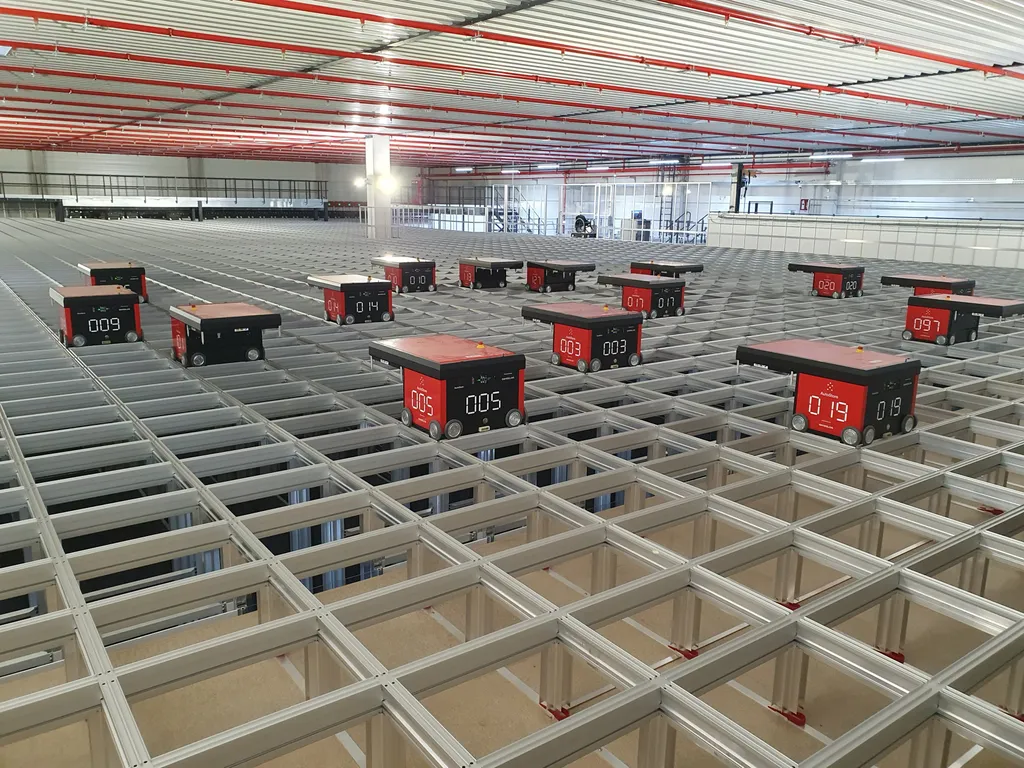
AutoStore Holdings Ltd. signed a “global strategic supply agreement” with Amazon.com Services LLC on August 13, 2026 — but the company’s own press release is explicit that this is a procurement framework, not an order. The agreement “defines the terms for further procurement of AutoStore systems by Amazon” while stating plainly it “does not contain any purchasing commitments at this time.” No unit volumes, no deployment sites, and no installation timeline were disclosed by either side. That distinction matters more than the headline: the real news is that the world’s largest fulfillment operator has now put a formal global supply contract in place with a third-party warehouse-automation vendor, not that a specific Amazon warehouse is getting AutoStore robots next quarter.
AutoStore is a Norwegian warehouse-automation company (Oslo Børs: AUTO) that builds Cube Storage, an automated storage and retrieval system (AS/RS) in which small robots travel across the top of a dense aluminum grid, dropping into cells to retrieve inventory storage bins and deliver them to workstations for picking or replenishment. It’s a structurally different category from an autonomous mobile robot: an AMR — like the Omron LD-150/LD-300 pair launched earlier this year — drives across open floor space and navigates dynamically around people and obstacles, while AutoStore’s robots operate on a dedicated, fixed overhead grid with no open-floor navigation involved at all. The company, increasingly marketing the combination of hardware, software and AI layers as “Intelligent Fulfillment,” says it now has approximately 2,000 systems installed across 68 countries — a scale that makes it one of the most widely deployed AS/RS platforms globally, alongside its cube-storage-format grid robots handling only the storage-and-retrieval half of a warehouse; downstream tasks like case picking or outbound palletizing are typically handled by separate equipment integrated around the grid.
Why a framework deal with Amazon specifically matters
Amazon runs the largest fulfillment and logistics network in the world, and its own robotics arm — built around Amazon Robotics, the unit formed from the 2012 acquisition of Kiva Systems — already deploys tens of thousands of mobile shelf-carrying robots across its fulfillment centers. Amazon also uses third-party automation extensively alongside that in-house fleet. A standing global procurement framework with AutoStore gives Amazon a pre-negotiated commercial and technical path to add AutoStore capacity at any facility, in any country, without renegotiating terms for each individual site — the kind of structure large industrial buyers put in place specifically so that a future purchase order can move fast once a decision is made.
For AutoStore, the agreement functions as a credibility signal independent of any dollar figure: being named as a formal global supplier to Amazon is a stronger market validation than most individual customer wins the company could announce, precisely because Amazon’s own scale means any eventual order could be large. It also invites a reasonable, if unconfirmed, competitive read — that Amazon is deliberately diversifying its automation supply chain rather than depending solely on in-house Kiva-derived technology, the same logic that leads large manufacturers to qualify a second supplier for critical components even when their primary source is performing well. None of that is stated by either company; it’s the structural implication of a framework agreement existing at all.
AutoStore disclosed the Amazon agreement the same day it released Q2 2026 results, and the numbers explain some of the market’s enthusiasm even though the two announcements are unrelated. Revenue hit a record $192.1 million, up 43.4% year-over-year and up roughly 16% from Q1 2026’s $165.8 million. Order intake reached $217.6 million (up 44.7% year-over-year), pushing the order backlog to $596 million. Gross margin held at 72.2%, and adjusted EBITDA margin was 44.9% — down 2.7 percentage points year-over-year as the company increased investment spend even as absolute profitability grew. CEO Mats Hovland Vikse raised full-year 2026 revenue guidance to roughly $700 million, and AutoStore’s board authorized a share buy-back program of up to $75 million, running through the end of 2026. Both the Amazon agreement and the Q2 report were classified by AutoStore as inside information under the EU Market Abuse Regulation, which is a routine disclosure requirement for Oslo Børs-listed companies reporting material news, not itself an indicator of the Amazon deal’s size.
What to watch
Sources
- AutoStore Holdings Ltd – Strategic supply agreement with Amazon — AutoStore Holdings Ltd (Investor Relations), Aug 13, 2026
- AutoStore signs global supply agreement with Amazon — Robotics & Automation News, Aug 14, 2026
- AutoStore: Q2 2026 financial results — AutoStore Holdings Ltd (Investor Relations), Aug 13, 2026
- AutoStore Holdings Ltd: Launch of Share buy-back program of up to USD 75 million — AutoStore Holdings Ltd (Investor Relations), Aug 13, 2026
Frequently asked questions
Does this agreement commit Amazon to buy AutoStore systems? +
No. AutoStore's own press release states plainly that while the agreement 'defines the terms for further procurement of AutoStore systems by Amazon,' it 'does not contain any purchasing commitments at this time.' No order volumes, deployment locations, or installation timeline were disclosed by either company.
What is AutoStore's Cube Storage system, and how is it different from an AMR? +
Cube Storage is an automated storage and retrieval system (AS/RS): small robots travel on top of a fixed aluminum grid, dropping down to retrieve bins stacked below and delivering them to fixed picking workstations. That's a structurally different category from an autonomous mobile robot (AMR), which drives across an open warehouse floor navigating around people and obstacles rather than running on a dedicated overhead grid.
What did AutoStore report for Q2 2026, and is it connected to the Amazon deal? +
AutoStore reported the two on the same day, August 13, but they are separate announcements. Q2 2026 revenue was a record $192.1 million (up 43.4% year-over-year), order intake was $217.6 million (up 44.7%), and the order backlog reached $596 million. The company also raised full-year 2026 revenue guidance to roughly $700 million and authorized a share buy-back of up to $75 million. None of those figures are tied to Amazon procurement — the earnings release does not mention the Amazon agreement's dollar value because no dollar value was disclosed.
Why would Amazon sign this instead of just building more robots in-house? +
Amazon already runs a large internal robotics operation (Amazon Robotics, built on the 2012 Kiva Systems acquisition) alongside third-party automation across its fulfillment network. A standing procurement framework with an established AS/RS vendor gives Amazon a pre-negotiated path to add capacity from a proven outside supplier without renegotiating terms deal-by-deal — a supply-chain diversification move, not necessarily a signal that in-house robotics is being scaled back.
More news