Corvus Robotics Names New CEO, Raises $20M, Shows Real Data
Corvus Robotics' co-founder Mohammed Kabir becomes CEO and the warehouse-drone startup raises $20M, but the more telling number is 300+ drones now flying 1M-plus locations a month.
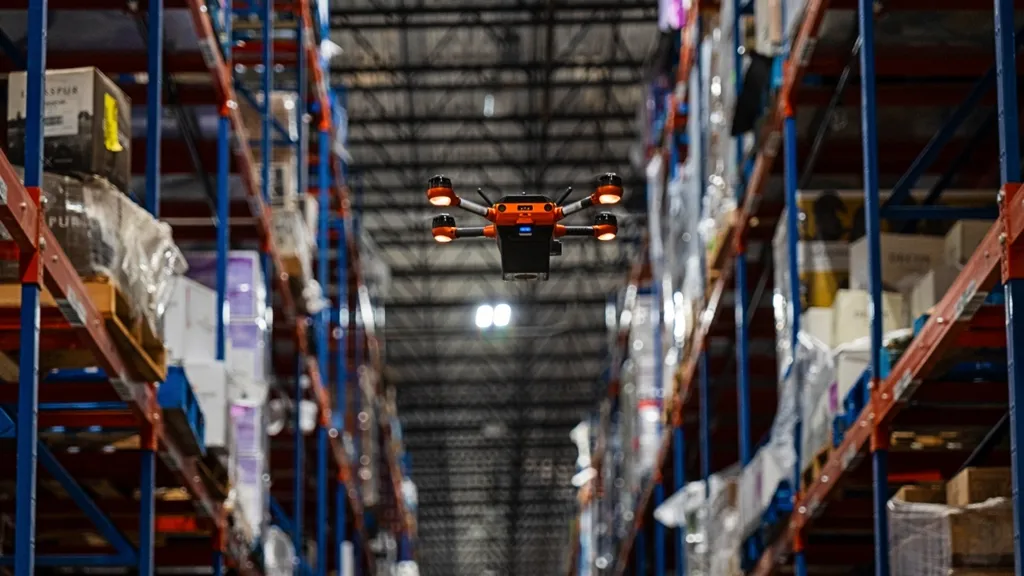
Corvus Robotics, the MIT-spinout maker of autonomous inventory-counting drones, named co-founder and chief technology officer Mohammed Kabir as chief executive officer on August 25, succeeding co-founder Jackie Wu, who is stepping back for health reasons and staying on the company’s board. Alongside the leadership change, the Mountain View, California company announced $20 million in new funding led by Catalyst Investors, bringing its total raised to $38 million. The bigger story sits underneath both announcements: Corvus now has more than 300 devices flying in warehouses and freezers across 26 U.S. states, Canada, and Mexico, doing material-handling inventory work, and named customers are reporting real, if company-supplied, numbers on what that data is doing for them.
What changed
Kabir has been Corvus’s technical lead since the company’s founding in 2017, when he and Wu built the first prototype in Kabir’s MIT dorm room. In the company’s own statement, Wu said the transition is about her health, not the business: “Corvus has been the work of my career, and I am stepping back from the CEO role for health reasons alone. Kabir and I have been building this together since 2017… He has architected every part of the technology our customers run today, and has been deeply involved in the running of the business. There is no one better prepared to lead what comes next.” Wu remains on the board.
The $20 million round is led by Catalyst Investors, a New York growth-equity firm whose partner Sidney Kullar joins the Corvus board. Existing backers S2G Investments, Spero Ventures, and F7 Ventures returned, and Cibus Capital joined as new. That brings Corvus’s total funding to $38 million since 2017, modest by the standards of the current warehouse-robotics and physical-AI funding wave, but framed by the company around deployed scale rather than valuation.
Kabir’s own framing, in the press release, leans on that data point directly: “Corvus Robotics was founded on the conviction that the physical world generates enormous amounts of data and almost none of it gets captured or acted on. Our fleet currently analyzes over a million locations every month, giving our customers an unprecedented view into what actually happens inside their facilities.” Kullar’s investment thesis echoes the same idea: “Corvus Robotics is capturing a layer of data that has never existed, real-time ground-truth visibility into what is actually happening inside a warehouse. Kabir and the team have built a platform that works in a punishing physical environment, and that data is becoming the foundation for a much bigger shift in how warehouses are run.”
What Corvus actually sells
The core product is Corvus One, a quadcopter drone that flies autonomously inside active warehouse aisles to count and verify pallet-level inventory. Corvus’s pitch is that it needs no localization infrastructure, no beacons, stickers, or floor markers, to navigate, which lets it operate in a live, already-built facility rather than requiring a retrofit first. The company says Corvus One works from ambient temperatures down to -20°F, and it shipped a dedicated cold-chain variant, Corvus One for Cold Chain, in February 2026, which it describes as the first autonomous inventory robot engineered for continuous ambient-to-deep-freeze operation.
In April 2026, Corvus added a second product line: Trident, an AI copilot that mounts directly to forklifts and reach trucks to capture pallet-movement data during an operator’s normal shift, rather than flying independently. Both feed data into AIMS, Corvus’s software platform for turning drone and forklift scans into inventory records a warehouse-management system can use.
Corvus also manufactures its full stack domestically, sensors, compute, and the AI models running on them, which it positions as a supply-chain differentiator against hardware-dependent competitors sourcing components abroad.
The deployment numbers
Three named customers illustrate what that fleet is doing, per Corvus’s own reporting:
- Southern Glazer’s Wine & Spirits expanded to nine distribution centers running 40-plus drones, and Corvus says the fleet has identified over 35,000 verified inventory discrepancies. An earlier Corvus release, from March 24, put the same nine-facility deployment at roughly 5,000 flights, useful context for how the program scaled, not a figure treated here as current.
- Dermalogica increased inventory-imaging frequency 600% at its global headquarters, per Corvus’s March 3 release, moving to 52 annual warehouse scans and reallocating roughly 120 labor hours a month previously spent on manual counting.
- GNC increased counting frequency roughly fourfold, to monthly, and redirected about 35% of its inventory-control labor to other work.
MSI Surfaces is also a named customer, without a specific performance figure disclosed.
Why it matters now
Warehouse operators have heard pitches for autonomous inventory counting for years without much public data on what happens after the pilot, much as ground-based warehouse AMRs such as Brightpick’s pharmacy-network expansion have had to prove out labor-reduction claims deployment by deployment. What separates this announcement from a routine funding-round writeup is that Corvus names specific customers, facility counts, and before/after figures rather than aggregate claims. Whether 35,000 flagged discrepancies at Southern Glazer’s or a 600% imaging-frequency jump at Dermalogica moves the needle on shrinkage or labor cost depends on facts Corvus has not disclosed, dollar values, error rates, comparison against manual-count accuracy, but the scale suggests this segment of warehouse robotics has moved past the demo stage for at least some buyers.
The leadership transition is low-drama by industry standards: an internal, board-endorsed succession from a founder who built the technology, not an outside hire or a fight over direction. That continuity, paired with fresh capital and a growing customer base, positions Corvus to keep scaling the same product line rather than pivot.
Sources
- Corvus Robotics Names Co-Founder Mohammed Kabir Chief Executive Officer — Corvus Robotics, Aug 25, 2026
- Corvus Robotics Names Co-Founder Mohammed Kabir Chief Executive Officer — GlobeNewswire, Aug 25, 2026
Frequently asked questions
What does a Corvus One drone actually do inside a warehouse? +
It flies autonomously through active warehouse aisles, including refrigerated and freezer zones down to -20°F, and scans pallet locations to count and verify inventory. Corvus says it needs no localization infrastructure, no stickers, beacons, or floor markers, to navigate, which is what lets it fly in a live facility without a survey or retrofit first.
Who is Mohammed Kabir, and why is Jackie Wu stepping down? +
Kabir is a Corvus co-founder who has served as chief technology officer since building the first prototype in his MIT dorm room in 2017. He becomes CEO, succeeding co-founder Jackie Wu, who is stepping back for health reasons and remains on the company's board of directors, according to Corvus's own announcement.
How big is Corvus's deployment today, and are the customer results independently verified? +
Corvus says it has more than 300 devices deployed across 26 U.S. states, Canada, and Mexico. The customer-specific figures in this story, Southern Glazer's 35,000-plus discrepancies, Dermalogica's 600% imaging-frequency increase, GNC's roughly 4x counting-frequency jump, all come from Corvus's own press materials and customer statements, not an independent audit or third-party benchmark.
What is Corvus Trident, and how is it different from Corvus One? +
Corvus One is the inventory-counting drone. Trident, launched in April 2026, is a different form factor: an AI copilot that mounts to forklifts and reach trucks to capture pallet-movement data during normal warehouse operations, rather than flying on its own. Both feed data into AIMS, Corvus's software platform.
More news