NEURA Robotics Buys Adlatus, Its Fifth Deal in 16 Months
NEURA Mobile Robots is acquiring 100% of German cleaning-robot maker Adlatus Robotics, folding a 20-year sweeping-robot business into NEURA's Neuraverse platform in its fifth acquisition since May 2025.
NEURA Robotics is buying Adlatus Robotics, a 20-plus-year German maker of autonomous cleaning robots, in a deal announced August 24, 2026, that the company frames as adding a “new brain” to an established fleet rather than a new product line. It’s a small, price-undisclosed acquisition on its own — but per independent reporting from PitchBook News, it’s also NEURA’s fifth acquisition in 16 months, and the clearest sign yet of what the company plans to do with the roughly $1.4 billion Series C it closed in June.
The deal
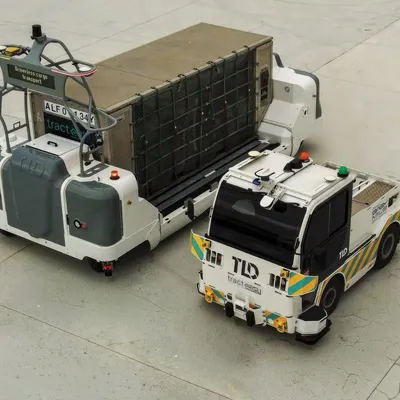
NEURA Mobile Robots GmbH — the Hamburg-headquartered subsidiary that runs NEURA’s mobile transport robotics under the “ek robotics” brand, itself the former Ek Robotics business NEURA bought in October 2025 — is acquiring 100% of the shares of Adlatus Robotics GmbH of Ulm, Germany. Adlatus builds autonomous cleaning and sweeping robots for industrial, logistics, healthcare, and commercial/public-space customers, with “hundreds of systems” already deployed and its own navigation software. Neither side disclosed a purchase price (NEURA Robotics, Aug. 24, 2026). The two weren’t strangers: NEURA’s release notes a strategic partnership with Adlatus dating to September 2025, first shown publicly together at the CMS trade fair in Berlin — this converts that partnership into full ownership.
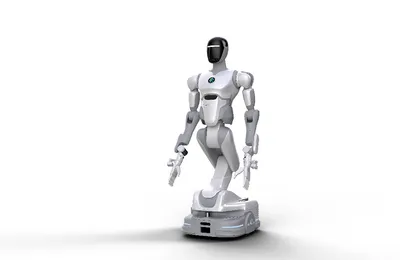
NEURA’s stated plan is to equip the Adlatus fleet with additional sensors and AI, then connect the machines to its “Neuraverse” platform — the software layer NEURA has built across its other robot lines (the 4NE1 humanoid, the MAiRA and LARA arms). The goal is a cleaning robot that eventually recognizes surfaces and dirt types, interprets its surroundings, and chooses a strategy, rather than following a fixed route. NEURA also says the Neuraverse will remain open, so other cleaning- or mobile-robot makers could eventually connect their own machines to it — a stated intention, not a demonstrated one: no third-party manufacturer is named as integrated.
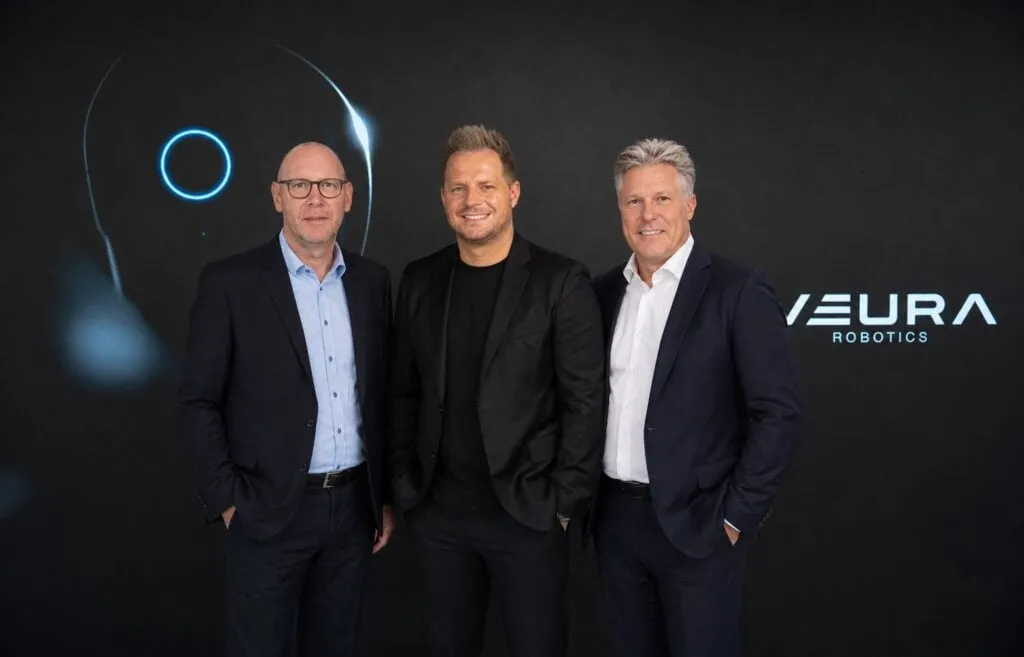
Founder and CEO David Reger put the logic directly: “We’re not buying ADLATUS just to add another cleaning robot to our portfolio. We want to give machines like this a new brain. Cleaning is a massive global labor market and, at the same time, a perfect example of what Physical AI can transform. When a robot doesn’t just navigate its environment but understands what it sees, senses, and needs to do, an entirely new generation of machines emerges. That’s exactly what we’re building the Neuraverse for” (NEURA Robotics, corroborated verbatim by EU-Startups). Separately: “Physical AI will only truly scale if it becomes an ecosystem.”
The fifth deal in 16 months
NEURA’s release frames Adlatus as one acquisition. Independent reporting from PitchBook News, via Yahoo Finance, frames it as NEURA’s fifth acquisition in 16 months. The trail:
- May 2025 — BAH Industrial Solutions (control-system construction, quality inspection)
- October 2025 — Ek Robotics (mobile transport robotics, now the “ek robotics” brand)
- October 2025 — the development division of Huber Automotive
- Effective October 1, 2026 — ACTIVE Shuttle, Bosch Rexroth’s driverless transport/AGV business, bringing its ACTIVE Fleet Manager and ROKIT navigation software along
- August 24, 2026 — Adlatus Robotics
Against that trail, Adlatus looks less like a standalone purchase and more like the newest vertical bolted onto a software platform NEURA is assembling piece by piece, all nominally headed toward the same Neuraverse backbone (PitchBook News via Yahoo Finance, Aug. 24, 2026).
What’s funding the buying spree
NEURA raised a Series C of up to €1.2 billion (about $1.4 billion) in June 2026 — the largest round it says any full-stack robotics company has raised, backed by Tether, Qualcomm Technologies, Amazon, NVIDIA, Bosch, Schaeffler, and the European Investment Bank, among others. NEURA states its order book already exceeds €864.8 million (about $1 billion) and says the capital is earmarked for scaling toward “several million robots in production by 2030,” plus expanding its “NEURA Gym” training-facility network, including one opened with RWTH Aachen University this desk covered in July. Both figures are NEURA’s own unaudited claims.
The deal lands inside a broader capital surge into what investors call “physical AI.” PitchBook’s analyst note, cited by Yahoo Finance, puts physical-AI-focused startup funding at over $8 billion globally in H1 2026 alone — more than double all of 2025’s annual total, with warehouse automation cited as a key driver alongside rising interest in consumer humanoids, drones, and driverless systems.
Why this matters beyond one small deal
Adlatus, on its own, is not a dramatic acquisition — a decades-old sweeping-robot maker with an undisclosed price tag, folded into a mobile-robotics subsidiary most readers outside Germany have never heard of. What makes it worth tracking is the pattern around it. NEURA has now acquired a controls integrator, a mobile-transport company, an automotive engineering division, a Bosch Rexroth AGV business, and an autonomous-cleaning company inside 16 months, all while running a Series C large enough to keep doing exactly that. Each deal alone reads as a bolt-on; together, they read as a company buying its way to platform coverage across as many “boring” industrial-robot categories as it can, then unifying them under one AI software layer instead of building each vertical from scratch.
Whether that works depends on execution details NEURA hasn’t published: no integration timeline for Adlatus units to gain sensors and Neuraverse connectivity, no named third-party manufacturer on the “open” platform, and no independent audit of the order-book or 2030 figures underwriting the plan. Cleaning robots are a genuinely large, labor-intensive market, and Reger’s framing of it as “a perfect example of what Physical AI can transform” is a real thesis — but a thesis and hundreds of already-shipped units are two different things, and NEURA’s release describes intent, not a finished product. This deal sits alongside a broader run of physical-AI capital-markets stories this desk has tracked, including Unitree’s Star Market IPO filing and AI2 Robotics’ $735 million wheeled-humanoid raise — the same venture surge PitchBook’s $8 billion H1 figure describes.
Sources
- NEURA Acquires ADLATUS Robotics, Bringing Physical AI to Professional Cleaning — NEURA Robotics (official), Aug 24, 2026
- Fresh from €1.2 billion raise, NEURA Robotics acquires Adlatus Robotics to give cleaning robots a 'new brain' — EU-Startups, Aug 24, 2026
- Neura Robotics Acquires Adlatus to Build Out Physical AI — PitchBook News (via Yahoo Finance), Aug 24, 2026
Frequently asked questions
What exactly did NEURA acquire, and from whom? +
NEURA Mobile Robots GmbH — NEURA Robotics' Hamburg-based mobile-robotics subsidiary that also owns the ek robotics AMR brand — is acquiring 100% of the shares of Adlatus Robotics GmbH of Ulm, Germany, a 20-plus-year maker of autonomous cleaning and sweeping robots for industrial, logistics, healthcare, and commercial/public-space customers. Neither company disclosed a purchase price.
Is this really NEURA's fifth acquisition in 16 months? +
Yes, per independent reporting from PitchBook News (via Yahoo Finance), not NEURA's own release: BAH Industrial Solutions (May 2025), Ek Robotics (October 2025), the development division of Huber Automotive (October 2025), Bosch Rexroth's ACTIVE Shuttle business (announced early August 2026, effective October 1, 2026), and now Adlatus (August 24, 2026).
What does NEURA actually plan to change about Adlatus's robots? +
NEURA says it will add sensors and Physical AI capabilities and connect the fleet to its Neuraverse platform, so machines that currently follow fixed cleaning routes can eventually recognize surfaces and dirt types, interpret their surroundings, and choose cleaning strategies on their own. NEURA has not published a timeline for when any of this ships to actual deployed units.
Is the Neuraverse actually open to other manufacturers' robots, or is this just NEURA's own ecosystem? +
NEURA states the Neuraverse will remain open, and that manufacturers of other cleaning and mobile robots will eventually be able to connect their own machines to it. As of this acquisition, that claim has not been demonstrated with a named third-party manufacturer actually plugged in — it is a stated intention, not a shipped capability.
More news