NEURA Robotics Opens 3,000m² Physical AI Gym With RWTH Aachen
NEURA Robotics and RWTH Aachen University are building a 3,000-square-meter Physical AI training facility on Aachen's Hightech Campus Melaten, one of ten NEURA Gyms the German robotics firm says it has under development worldwide.
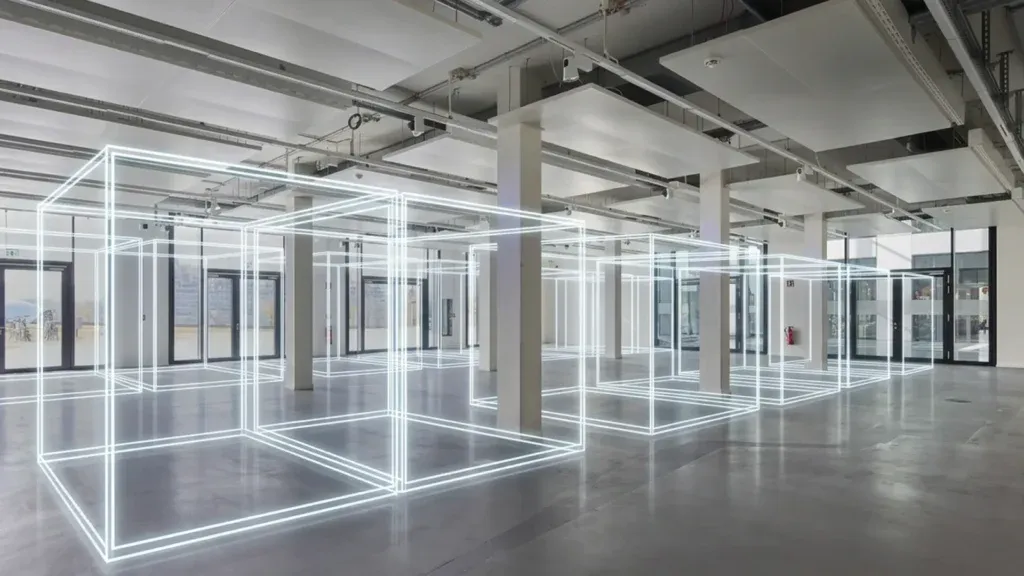
NEURA Robotics, the German full-stack robotics maker, and RWTH Aachen University are building a 3,000-square-meter “Physical AI” training facility on Aachen’s Hightech Campus Melaten. NEURA calls it NEURA Gym RWTH Aachen, and the company says it is one of ten such facilities currently under development worldwide, with five due to be operational across Europe, the United States, and China by the end of 2026. The stated goal is narrow and specific: generate and validate real-world robot interaction data, which NEURA’s CEO calls the actual bottleneck in physical AI, not model intelligence.
What is actually being built
Per NEURA’s own July 22, 2026 announcement, the Aachen facility will be “industry-open and purpose-built for research, AI-based training, and the industrial deployment of next-generation Physical AI models in intelligent and humanoid robotics.” Around 20 RWTH institutes will be integrated into the space, including the university’s Institute of Mechanism Theory, Machine Dynamics and Robotics, led by Prof. Dr. Burkhard Corves, and its Chair for Imaging and Computer Vision, led by Prof. Dr. Volkmar Schulz. NEURA frames the arrangement as giving both large enterprises and mid-sized manufacturers access to shared infrastructure where they can validate robotics for their own production workflows, specifically naming manufacturing, automotive, the circular economy, and medical technology as target verticals, before committing to a deployment.
CEO David Reger’s quote sets the company’s framing directly: “The biggest bottleneck in Physical AI is no longer intelligence, it’s experience.” That is a claim about data scarcity, not compute or model architecture, and it matches a broader pattern of physical-AI infrastructure announcements in 2026 arguing that the constraint on capable robots is the volume of real-world interaction data available to train on, not the underlying foundation models.
RWTH Aachen is the first of what NEURA describes as “Two German Flagships, One Global Network.” The second is a 2,300 sqm TUM RoboGym at Munich Airport, planned to open in Q4 2026 in partnership with the Technical University of Munich. Beyond those two named sites, NEURA’s announcement states ten Gyms are under development and five will be operational by year-end, without naming the other locations.
The money behind the rollout
NEURA ties the global Gym network to its Series C financing, described in the announcement as “up to $1.4 billion,” which the company calls the largest Series C ever raised by a full-stack robotics company. NEURA, headquartered in Metzingen, Germany, builds its own robot hardware across several product lines, including the MAiRA and LARA cobot arms and the 4NE1 humanoid platform, alongside the software and sensor stack (NEURA OmniSensor, NEURA SenseKit) it says feeds its “Neuraverse” AI ecosystem. NEURA does not currently appear in Industrial Robotics Hub’s robot database; it is a private company that has not published the kind of standardized public datasheets IRH tracks for catalog arms.
Why this fits a broader 2026 pattern
NEURA’s framing, that data scarcity rather than model capability is the binding constraint on physical AI, mirrors what other robotics and AI companies have been arguing in 2026’s build-out of “robot training” infrastructure. It sits alongside Universal Robots and Scale AI’s leader-follower imitation-learning system, covered by this desk in July, which was built on the same premise of using real robot demonstration data rather than pure simulation to train manipulation policies. It also echoes the compute-and-data buildout behind Japan’s Noetra consortium and the NVIDIA Cosmos physical-AI stack, which multiple Japanese robot makers committed to in July. The pattern across all three: robotics companies are increasingly investing in physical infrastructure, whether GPU compute, university partnerships, or dedicated training gyms, specifically to solve a data problem, not a modeling problem.
What distinguishes NEURA’s approach is the university-embedded structure. Rather than building an internal data-collection operation, NEURA is opening its Gyms to both academic institutes and industry customers simultaneously, effectively outsourcing part of its data-generation and validation pipeline to a research ecosystem it does not fully control, in exchange for access to that ecosystem’s talent and equipment.
Sources
- New NEURA Gym with RWTH Aachen: NEURA Robotics Expands its Global Training Network for Physical AI — NEURA Robotics (official), Jul 22, 2026
- New NEURA gym with RWTH Aachen: NEURA Robotics expands its global training network for Physical AI — Las Vegas Sun (syndicated wire), Jul 22, 2026
Frequently asked questions
What is a 'NEURA Gym'? +
NEURA Robotics' term for a purpose-built physical facility where companies and researchers train and validate Physical AI models on real robot hardware, addressing what NEURA calls the biggest bottleneck in the field: a scarcity of real-world robot interaction data, as opposed to simulation data. NEURA Gym RWTH Aachen is the company's second announced flagship location, alongside a 2,300 sqm TUM RoboGym planned at Munich Airport for Q4 2026.
Why partner with RWTH Aachen specifically? +
RWTH Aachen is one of Germany's leading technical universities for mechanical engineering and robotics research. Per NEURA's announcement, around 20 RWTH institutes, including its Institute of Mechanism Theory, Machine Dynamics and Robotics and its Chair for Imaging and Computer Vision, will be integrated into the Hightech Campus Melaten facility, giving NEURA access to deep academic robotics expertise it does not have to build in-house.
How many NEURA Gyms exist or are planned, and is that number independently confirmed? +
NEURA states ten NEURA Gyms are currently under development globally, with five operational across Europe, the United States, and China by the end of 2026. This is a company-reported figure from NEURA's own announcement; Industrial Robotics Hub found no independent, site-by-site verification of gym locations or operational status beyond the two named flagships (RWTH Aachen and TUM Munich).
What does NEURA's funding have to do with this expansion? +
NEURA says the global Gym rollout is backed by its Series C financing of up to $1.4 billion, which the company describes as the largest ever raised by a full-stack robotics company. That figure is company-stated in the same announcement and has not been independently broken down here by investor, tranche, or closing date.
More news