Doosan Robotics Posts 290% Q2 Revenue Growth, Loss Narrows
Doosan Robotics grew Q2 2026 revenue 290% YoY to ₩17.7B on its ONExia buyout and 127% US growth, but the cobot maker still posted a ₩14.4B operating loss.
Doosan Robotics’ Q2 2026 revenue jumped 290% year-over-year to ₩17.674 billion (about $12.7 million), driven almost entirely by its 2025 acquisition of Pennsylvania-based automation integrator ONExia and a 127% surge in US subsidiary revenue. The South Korean collaborative-robot maker is still not profitable — it posted a consolidated operating loss of ₩14.417 billion for the quarter — but that loss narrowed 7.9% from a year earlier, and the company says it expects full-year 2026 sales to rise 50%. The results, released July 24 and independently confirmed here against Seoul Economic Daily’s reporting, a Quartr earnings-call summary carried on TradingView, and a separate Korean-language filing summary from Businesspost, show a company whose growth story and its unprofitability are coming from the same source: an aggressive, expensive push into the US end-of-line (EOL) automation market.
The numbers, unrounded
Doosan Robotics (KOSPI: 454910), which went public in October 2023 in what was South Korea’s largest IPO that year, reported Q2 revenue of ₩17.674 billion, up 290.0% from roughly ₩4.5 billion a year earlier. Operating loss was ₩14.417 billion, down 7.9% from the prior-year quarter’s loss, and net loss attributable to the company was ₩12.792 billion, down 22.8% year-over-year — meaning the bottom-line loss narrowed faster than the operating loss did. On a first-half basis, North America now accounts for 53% of total company revenue, and Doosan Robotics America’s own revenue grew 127% year-over-year in the quarter.
The company’s own explanation for why an operating loss persists despite nearly quadrupling revenue is specific, if not itemized: Seoul Economic Daily reports Doosan attributes the loss to “relocation costs for the U.S. subsidiary’s expansion and increased expenses from hiring artificial intelligence (AI)-related research and development (R&D) personnel.” Doosan has not broken out how much of the ₩14.4 billion loss came from each category, or disclosed a target date for reaching profitability.
What ONExia actually does
The growth driver has a name and a specific business: ONExia is a systems integrator headquartered in Exton, Pennsylvania, that designs, builds, and implements end-of-line automation — the palletizing, box-assembly, and packaging equipment that sits at the tail end of a manufacturing or logistics line — built around collaborative robots. Doosan Robotics’ board approved acquiring an 89.59% stake in the company for approximately $25.9 million (₩35.6 billion) on July 28, 2025, according to The Robot Report’s coverage of the deal at the time. Doosan cited ONExia’s 25 years of accumulated automation data and roughly 30% average annual sales growth as the strategic rationale; CEO Kevin (Minpyo) Kim called it “an important milestone as we take tangible steps to strengthen our global presence, internalize AI technologies, and develop future-ready solutions.”
A year later, the numbers show that bet paying off in top-line terms: Doosan’s EOL-focused business line — the segment ONExia now anchors — grew revenue 130% year-over-year in Q2, according to Businesspost’s Korean-language earnings coverage, a figure independently consistent with the 127% US subsidiary growth Seoul Economic Daily reported separately. Doosan is also scaling capacity to match: a June 3 Seoul Economic Daily report says the company is doubling US production capacity by September 2026, on a site large enough to support a fourfold expansion later, betting on a North American collaborative-robot market Doosan itself has cited as growing at roughly 21% annually, from $600 million to a projected $3.1 billion by 2033.
What’s not disclosed
Order-backlog figures for Doosan Robotics America appear in the company’s periodic disclosures, but they don’t line up cleanly quarter to quarter in public reporting — a $13.5 million (~₩20.4 billion) figure attributed to Q1 2026 and a separate “more than triple the prior year” figure attributed to year-end 2025 both circulate in press coverage, and neither could be confirmed here as the correct Q2 2026 number from a single primary disclosure. Rather than publish a specific Q2 backlog figure pulled from inconsistent secondary reporting, this story omits it. Readers should treat any specific Doosan Robotics America backlog number they see elsewhere for this quarter with caution until the company’s own Q2 filing materials are checked directly.
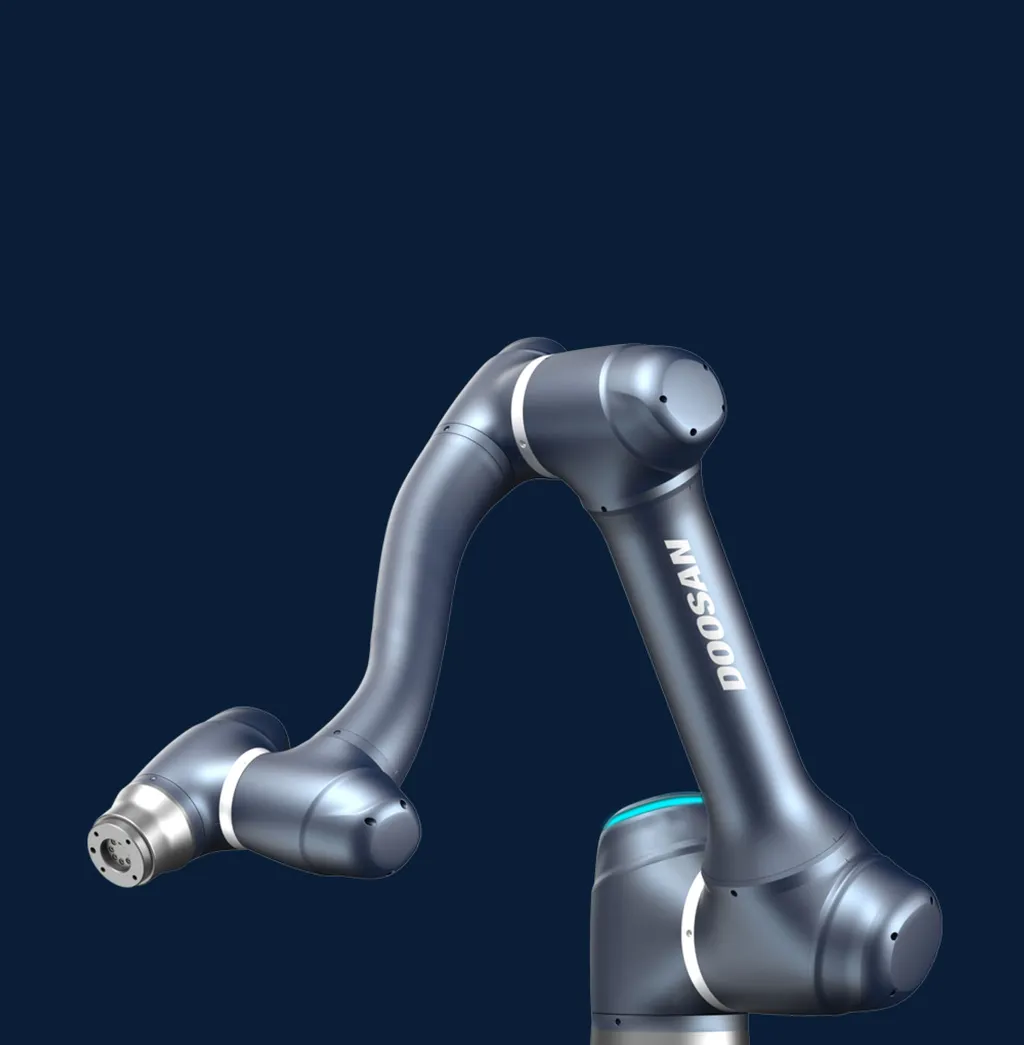
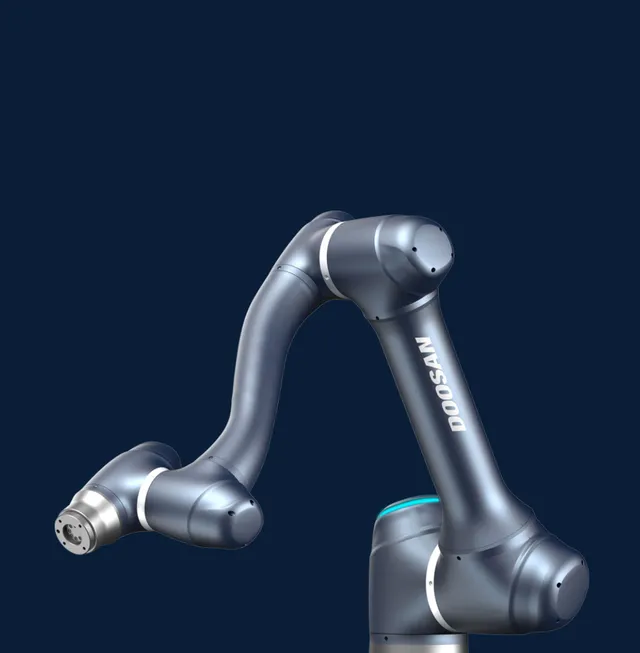
For buyers evaluating Doosan’s collaborative-robot lineup directly — including cobots like the IP65-rated washdown A0912S, part of the same A-series family the company continues to build its US EOL business around — the Q2 results say more about the company’s balance sheet and strategic direction than about product roadmap: nothing in this earnings release changes payload, reach, or safety specifications for any shipping Doosan robot.
Sources
- Doosan Robotics Narrows Q2 Operating Loss to 14.4 Billion Won — Seoul Economic Daily, Jul 24, 2026
- Doosan Robotics: 2Q26 revenue up 290% year-over-year, with North America driving growth and losses narrowing — TradingView (Quartr earnings-call summary), Jul 24, 2026
- 두산로보틱스 2분기 매출 177억 내 290% 증가, 원엑시아 인수 효과 — Businesspost, Jul 24, 2026
- Doosan Robotics acquires a majority stake of U.S.-based ONExia for $25.9M — The Robot Report, Jul 29, 2025
- Doosan Robotics to Double U.S. Production Capacity by September — Seoul Economic Daily, Jun 3, 2026
Robots mentioned
Tap a card to open the full spec sheet.
Frequently asked questions
Is Doosan Robotics actually profitable? +
No. Doosan Robotics posted a consolidated operating loss of ₩14.417 billion in Q2 2026 (April-June), and a net loss of ₩12.792 billion. Both figures narrowed year-over-year — the operating loss by 7.9% and the net loss by 22.8% — but the company has not disclosed a specific quarter or year in which it expects to turn profitable.
What is ONExia, and how much did Doosan pay for it? +
ONExia is a Pennsylvania-based (Exton, PA) systems integrator that designs and builds collaborative-robot end-of-line automation — palletizing, box assembly, and packaging equipment — for manufacturing, logistics, and packaging customers. Doosan Robotics' board approved acquiring an 89.59% stake for roughly $25.9 million (₩35.6 billion) on July 28, 2025. Doosan cited ONExia's 25 years of accumulated automation data and roughly 30% average annual sales growth as the rationale.
Why is Doosan still losing money if revenue nearly quadrupled? +
Doosan Robotics attributes the continued operating loss to two specific cost categories tied to its Q2 results: relocation and expansion costs for its US subsidiary, and increased spending on hiring AI-focused research and development personnel. Neither cost is itemized by dollar amount in the company's public disclosure.
How much of Doosan's growth came from North America? +
A large share. Doosan Robotics America's revenue grew 127% year-over-year in Q2, and North America accounted for 53% of the company's total revenue in the first half of 2026 — meaning more than half of Doosan's global sales are now coming from the US market it entered EOL automation through the ONExia acquisition.
More news