Yaskawa Q1 Profit Falls 19% as Robotics Unit Absorbs ERP, Reform Costs
Yaskawa's Q1 FY2026 revenue rose 10.6% to ¥139B, but profit fell as Robotics profit collapsed 82% on ERP and reform costs; Motion Control profit rose 50%.
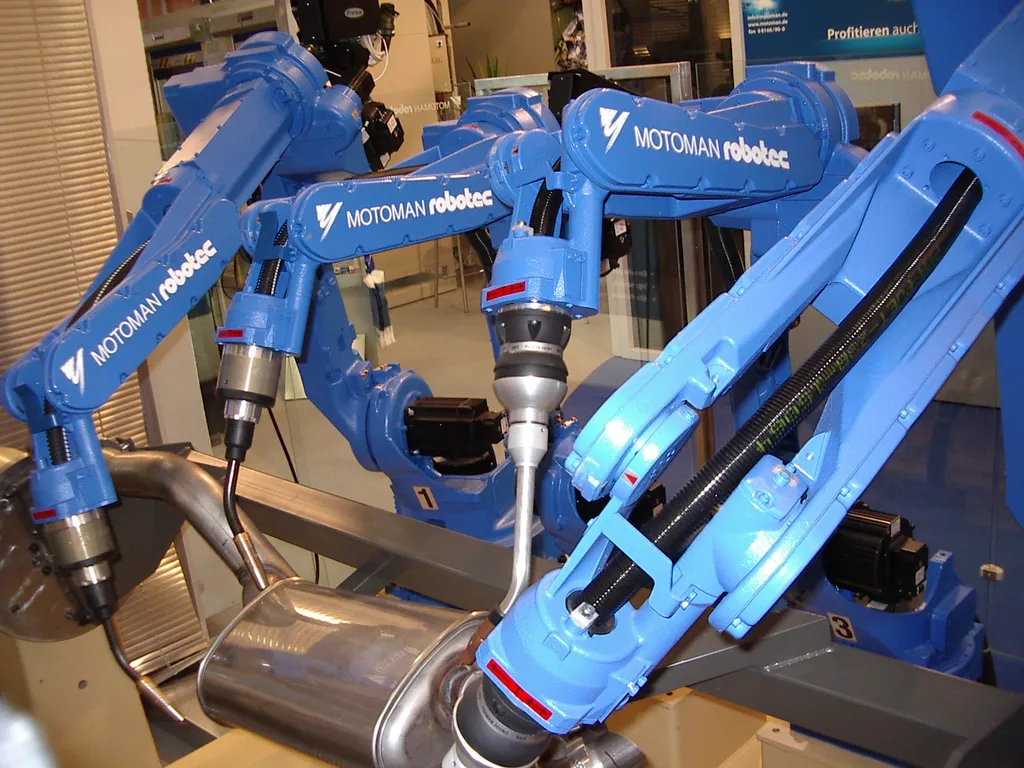
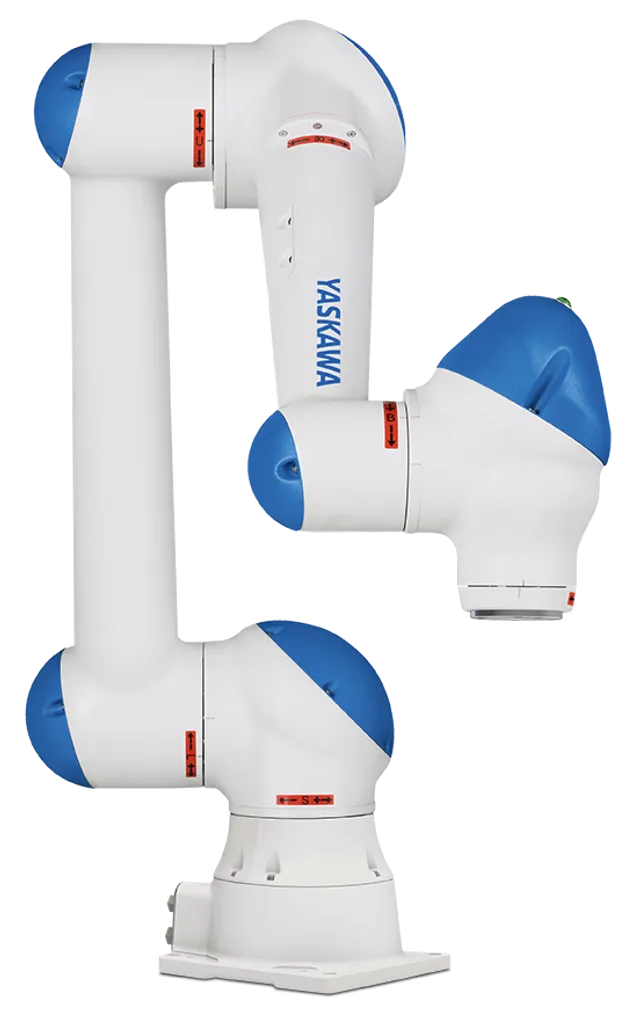
Yaskawa Electric’s revenue grew 10.6% year-over-year to ¥138.98 billion in the quarter ended May 31, 2026 — the first quarter of what the company calls fiscal 2026 — but operating profit fell 19.2% to ¥8.486 billion and profit attributable to owners of parent fell 21.7% to ¥5.445 billion, according to results the company released July 10. The gap between rising revenue and falling profit traces almost entirely to one segment: Robotics, the unit that makes Yaskawa’s Motoman-brand industrial arms and cobots, including the HC10 pictured above, where operating profit collapsed 82.3% to just ¥888 million even as segment revenue held roughly flat. Yaskawa’s much larger Motion Control business moved the opposite direction, with operating profit up 50.1% on strong semiconductor- and data-center-linked demand.
The company-wide numbers
Yaskawa’s fiscal year runs March to February, so what the company calls “the first quarter of fiscal 2026” covers March through May 2026. Revenue for the quarter was ¥138,982 million, up 10.6% from ¥125,642 million a year earlier. Operating profit fell to ¥8,486 million from ¥10,503 million, a 19.2% decline. Profit before tax fell 13.6% to ¥8,506 million, and profit attributable to owners of parent fell 21.7% to ¥5,445 million from ¥6,952 million, with basic earnings per share dropping to ¥21.00 from ¥26.81. Yaskawa’s own qualitative summary is direct about the cause: “production activities were affected by the new ERP system implemented to strengthen our management foundation,” and separately, “operating profit decreased year on year due to the impact of the new ERP system, increased indirect expenses, and the expenses related to business structural reforms in Europe.”
Currency also flattered the yen-denominated revenue figure: the average dollar-yen rate weakened to ¥158.82 from ¥146.15 a year earlier, with the euro moving even further. Yaskawa doesn’t break out how much of its 10.6% revenue growth is currency translation versus real demand, so underlying volume growth is likely smaller than the headline percentage suggests.
Robotics segment margin, by the numbers
Yaskawa’s results break out four segments: Motion Control (AC servo motors, controllers, and drives), Robotics (industrial robots and related products), System Engineering (industrial automation and social-infrastructure systems), and Other (mainly logistics). Robotics segment revenue was ¥56,728 million, up a modest 2.0% year-over-year, while operating profit fell to ¥888 million from roughly ¥5.0 billion — an 82.3% decline that Yaskawa’s own summary attributes to ERP-related production disruption and unspecified European restructuring costs, without itemizing how much of the ¥4.1 billion drop came from each. That leaves Robotics with an operating margin of roughly 1.6% for the quarter, a fraction of what the company’s other two reportable segments posted over the same three months.
Motion Control — the AC servo, controller, and drives business, mechanically distinct from Yaskawa’s robot arms even though both ship under the same corporate roof — told the opposite story: revenue of ¥67,635 million, up 21.5%, and operating profit of ¥7,562 million, up 50.1%, on “expanding demand, particularly in semiconductor- and data center-related applications” including drives for data-center cooling and semiconductor-fab vacuum pumps. System Engineering, Yaskawa’s smallest reportable segment, posted the strongest margin: revenue up 5.9% to ¥9,816 million and operating profit up 86.9% to ¥1,921 million, on higher-margin water and sewerage electrical-instrumentation projects.
Regionally, Yaskawa described semiconductor- and data-center-linked demand as strong across Japan, the US, China, South Korea, and Taiwan, while automotive capital spending stayed cautious in Japan and “sluggish” in Europe, though Europe’s broader manufacturing demand was described as having “bottomed out.” That pattern lines up with the segment split: Motion Control, which sells heavily into semiconductor and data-center capital equipment, caught the same demand pocket that Yaskawa’s robot business — more exposed to automotive and general-industrial capex — did not.
Guidance held steady
Despite the profit miss, Yaskawa made no change to its full-year outlook. The company’s forecast for the fiscal year ending February 28, 2027 remains revenue of ¥580,000 million (up 7.0%) and operating profit of ¥60,000 million (up 26.8%), unchanged from the plan it announced April 10, 2026. Yaskawa’s own language is notably cautious rather than reassuring: the forecast is unchanged “as we continue to carefully assess the stabilization of operations following the new ERP system implemented to strengthen our management foundation” — language that reads as “we haven’t revised yet” rather than “the problem is resolved.” Reaching that full-year operating-profit target of ¥60 billion from a first-quarter pace of ¥8.5 billion implies a significant acceleration is expected in the remaining three quarters, most plausibly concentrated in Robotics once ERP-related disruption eases, though Yaskawa has not said so explicitly.
What it means for buyers watching Yaskawa’s robot business
Yaskawa’s Robotics segment revenue held up — the ¥56.7 billion quarterly figure is barely changed from a year ago, with demand in the Americas and China for automotive and general-industrial customers staying firm even as Japan and Europe stayed soft. That’s a materially different situation from a demand-side slump: this reads as an internal-execution cost (ERP disruption) layered on an already-announced European restructuring, not evidence that Motoman-brand robots are seeing weaker orders — a margin story, not a shipping-capacity or lead-time story, based on what Yaskawa has disclosed. Its physical-AI investment is continuing in parallel: Yaskawa was named among manufacturers committing to NVIDIA’s Cosmos platform in Industrial Robotics Hub’s coverage of the Japan robotics coalition. Readers comparing Yaskawa’s Motoman lineup against competitors can see IRH’s Yaskawa robots buying guide and KUKA vs. Yaskawa comparison.
Sources
- Consolidated Results for the First Quarter of Fiscal Year Ending February 28, 2027 [IFRS] — YASKAWA Electric Corporation, Jul 10, 2026
- IR announcement: Q1 FY2026 consolidated results release schedule — YASKAWA Electric Corporation, Jul 10, 2026
Robots mentioned
Tap a card to open the full spec sheet.
Collaborative
Motoman HC10Frequently asked questions
Did Yaskawa actually lose money in the first quarter of fiscal 2026? +
No. Yaskawa was solidly profitable — operating profit of ¥8.486 billion and profit attributable to owners of parent of ¥5.445 billion. The story is a year-over-year decline, not a loss: revenue rose 10.6% to ¥138.98 billion, but operating profit fell 19.2% and net profit attributable to owners fell 21.7% from the prior-year quarter.
How much did Yaskawa's Robotics segment profit actually fall, and why? +
Robotics segment operating profit fell 82.3% year-over-year, to ¥888 million from roughly ¥5.0 billion, even though Robotics segment revenue was roughly flat (+2.0%). Yaskawa attributes the drop to production disruption from a new ERP system it is implementing to 'strengthen our management foundation,' plus unspecified expenses tied to a business structural reform in Europe. Yaskawa's public disclosure does not itemize how much of the decline came from each cause.
What's driving Motion Control's strong quarter? +
Motion Control — Yaskawa's AC servo, controller, and drives business, distinct from its robot-arm business — posted operating profit up 50.1% on revenue up 21.5%. Yaskawa credits 'expanding demand, particularly in semiconductor- and data center-related applications,' including drives sold for data-center air-conditioning, server cooling, and semiconductor-fab vacuum pumps.
Did Yaskawa report an order-intake figure for the quarter? +
Not in the primary IFRS summary financial statement this story is sourced from — that document reports revenue, profit, and per-segment figures, but no consolidated order-intake total. A widely circulated order-intake figure for the quarter could not be verified against Yaskawa's own primary source document, so it has been left out of this story rather than republished unverified.
Did Yaskawa change its full-year guidance after this quarter? +
No. Yaskawa explicitly kept its fiscal-year forecast unchanged from the plan it announced April 10, 2026: revenue of ¥580 billion (+7.0%) and operating profit of ¥60 billion (+26.8%) for the year ending February 28, 2027. The company said it is still assessing how fully operations have stabilized after the ERP rollout before revising anything.
More news