DEEP Robotics Debuts Full DR02/Lynx/X30 Line at WRC 2026
DEEP Robotics showed its complete humanoid-wheeled-quadruped hardware line and six packaged industry solutions at WRC 2026, alongside a self-reported, unaudited 'No.1' revenue claim.
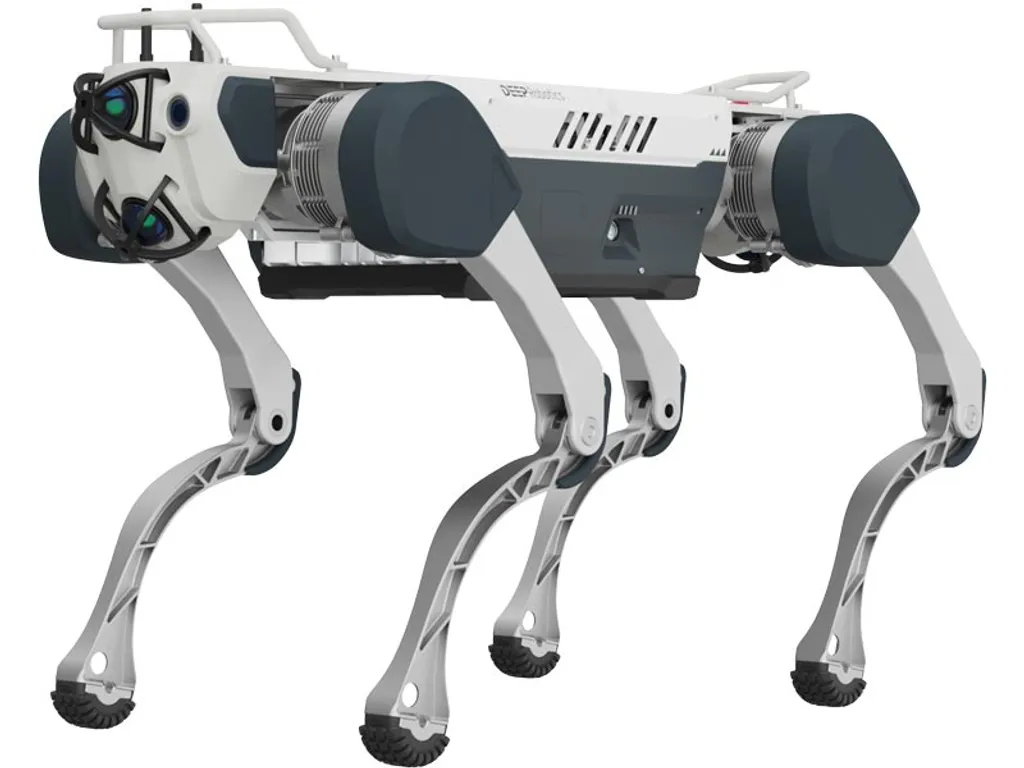
DEEP Robotics, the Hangzhou, Zhejiang-based quadruped and legged-robot maker, used the 11th World Robot Conference (WRC 2026) in Beijing to put its entire hardware line on one stage for the first time: the DR02 humanoid, the Lynx S10 and Lynx M20S wheeled-legged robots, and the X30 quadruped, framed by the company as “One Humanoid, One ‘Cat,’ One ‘Dog.’” Around that hardware, it launched six standardized, “out-of-the-box” industry solutions covering energy and power, emergency firefighting, security patrols, industrial operations and maintenance, public services, and education and research, which the company says are built on more than 1,200 real-world deployments — a company-reported figure with no independent audit behind it [1][2].
A full line, not a single reveal
Where Zoomlion and AVIC used WRC 2026 to unveil single humanoid platforms this week, DEEP Robotics’ debut is a different kind of story: a nine-year-old legged-robotics specialist packaging its whole product family — humanoid, wheeled-legged, and quadruped form factors — into pre-built industry solutions rather than showing one new machine. For a look at the humanoid-only reveals from the same event, see IRH’s coverage of Zoomlion’s Z01 and Z03 wire-harness and mirror-assembly demonstrations.
The specs on each named product, quoted directly from DEEP Robotics’ own release: DR02 is described as “the world’s first all-weather industrial-grade humanoid robot,” carrying IP66 protection and wide-temperature adaptability. Lynx S10 is a lightweight wheeled-legged robot built to “support single-person rapid deployment for rescue reconnaissance” — a wheels-on-legs hybrid design that lets a single operator get a unit into the field quickly for search-and-rescue scouting. Lynx M20S, the heavier sibling in that same wheeled-legged category, carries a 35 kg payload, IP67 rating, and a 9 m/s top speed, positioned for inspection and patrol work [1][2].
X30 is the flagship: a quadruped pitched for extreme-condition work, specifically Gobi-desert energy-infrastructure patrols and nuclear-plant confined-space missions, the kind of environments where wheeled or tracked platforms struggle with terrain and humans face radiation or heat exposure risk [1][2]. DEEP Robotics’ own X30 product page, reviewed separately for background, lists a broader spec set for the same robot: IP67 ingress protection, a -20°C to 55°C operating range, quick-swap battery support, and stated use across power/utilities, rescue, tunnel, mining, and survey-and-mapping work. Those product-page figures come from DEEP Robotics’ own marketing material, not the WRC 2026 release itself, and are marketing specs rather than independently tested ones.
Six packaged solutions, one unaudited number
The six industry solutions unveiled alongside the hardware — energy and power, emergency firefighting, security patrols, industrial operations and maintenance (O&M), public services, and education and research — are what DEEP Robotics is actually selling as the new thing here: pre-integrated combinations of its robots, sensors, and software aimed at specific verticals, sold as ready-to-deploy rather than requiring a systems integrator to build the application from scratch. The company frames all six as resting on “more than 1,200 real-world deployments” [1][2]. That figure appears only in DEEP Robotics’ own release, with no customer list, geographic breakdown, or third-party confirmation attached, and this story treats it accordingly, as a company claim rather than a verified count.
The “No. 1” claim, and what it’s missing
DEEP Robotics’ release states the company is “ranking No.1 globally in quadruped-robot industry-application revenue in 2025,” attributing that position to “nine years of scenario-driven development” [1][2]. No data source, market-research firm, or methodology accompanies the ranking. Quadruped-robot industry-application revenue is also a narrow enough category, and China’s legged-robotics field crowded enough, that a claim like this can be technically defensible under a definition the company itself sets and still not mean what a reader might assume at a glance. This story states the claim as DEEP Robotics’ own, not as a verified market-share fact.
WRC 2026 itself ran August 19-23 in Beijing’s Yizhuang district as the conference’s 11th edition. Independent event coverage from CGTN puts overall participation at more than 300 exhibiting companies, a 69% increase from the prior year, with over 3,000 exhibits on display including more than 300 debut products [3]. That scale context has already been covered in depth in IRH’s prior WRC 2026 pieces this week; the relevant point here is that DEEP Robotics’ full-line, six-solution debut was one specific launch inside that broader event, not a description of the event itself.
For the application categories the Lynx M20S and X30 fall into, see IRH’s inspection application page. DEEP Robotics does not currently have an entry in IRH’s own robot database, so no relatedRobots links apply here.
Sources
- Practice Is the Sole Criterion for Testing Robots: DEEP Robotics' Six Industry Product Lines Make Their First Complete Debut at WRC 2026 — GlobeNewswire (syndicated via Daily Guardian), Aug 24, 2026
- Practice Is the Sole Criterion for Testing Robots: DEEP Robotics' Six Industry Product Lines Make Their First Complete Debut at WRC 2026 — GlobeNewswire (DEEP Robotics' own release), Aug 24, 2026
- X30 quadruped robot product page — DEEP Robotics (official)
- Robots move closer to real-world partners at World Robot Conference — CGTN, Aug 20, 2026
Frequently asked questions
What did DEEP Robotics actually show at WRC 2026? +
Its complete hardware line together for the first time: the DR02 humanoid, the Lynx S10 and Lynx M20S wheeled-legged robots, and the X30 quadruped, framed by the company as 'One Humanoid, One Cat, One Dog.' Alongside the hardware, it debuted six standardized, packaged industry solutions covering energy and power, emergency firefighting, security patrols, industrial operations and maintenance, public services, and education and research.
What are the confirmed specs on the named robots? +
Per DEEP Robotics' own WRC 2026 release: DR02 carries IP66 protection and wide-temperature adaptability, described as the world's first all-weather industrial-grade humanoid. Lynx S10 is a lightweight wheeled-legged robot built for single-person rapid deployment in rescue reconnaissance. Lynx M20S carries a 35 kg payload, IP67 rating, and 9 m/s top speed for inspection and patrol. X30, the flagship quadruped, is positioned for extreme-condition work including Gobi-desert energy-infrastructure patrols and nuclear-plant confined-space missions; DEEP Robotics' own X30 product page separately lists IP67 protection, a -20°C to 55°C operating range, and quick-swap battery support.
Is the '1,200 real-world deployments' figure independently verified? +
No. It is a company-reported figure from DEEP Robotics' own release, describing itself as the foundation for the six new solutions. No independent audit, customer list, or deployment breakdown accompanies it, and none was found in secondary reporting.
Is the claim that DEEP Robotics ranks No. 1 globally in quadruped-robot industry-application revenue verified? +
No. That ranking appears only in DEEP Robotics' own release with no cited data source, methodology, or third-party market-research firm attached. Treat it as an unverified company claim, not a settled industry fact.
More news