FORT Robotics to Go Public via SPAC at $556.6M Valuation
FORT Robotics will list on Nasdaq as FROB via a merger with Newbury Street II Acquisition Corp, valuing the safety-infrastructure maker at $556.6M as it reports 62% revenue growth alongside real margin compression.
FORT Robotics, the Philadelphia company that builds safety infrastructure for autonomous machines rather than the machines themselves, announced on August 18, 2026 that it will go public via a business combination with Newbury Street II Acquisition Corp, a blank-check company. The combined entity will trade on Nasdaq as “FORT Robotics Holdings, Inc.” under ticker FROB, at a pro-forma enterprise value of $556.6 million, once the deal closes — expected Q4 2026.
The timing matters beyond the deal mechanics. FORT sells what it calls the “Trust Layer for Physical AI”: a hardware-plus-software safety platform built to work across robots and autonomous vehicles from different manufacturers, not lock a single vendor’s fleet into one safety system. It’s going public with real, if margin-compressing, growth right as robot safety certification — ISO 10218, IEC 61508 Safety Integrity Levels — becomes a genuine market differentiator rather than a compliance checkbox, a shift this desk has tracked through KUKA’s IEC 62443 cybersecurity certification and, most directly, Agility Robotics’ adoption of NVIDIA’s SIL 3-certified Halos safety compute for Digit v5.
The deal terms
The structure is a standard SPAC merger. FORT’s pre-money equity value is set at $500.0 million; combined with the SPAC’s cash and new investment, pro-forma enterprise value comes to $556.6 million. Gross proceeds are expected around $201 million, with roughly $182 million in net cash landing on FORT’s balance sheet after transaction costs, assuming no shareholder redemptions — a standard SPAC caveat, since redemptions can shrink that number materially before close. FORT’s existing shareholders will retain approximately 67% ownership, closer to a public listing with a capital injection than a change-of-control sale.
Part of that net cash comes from PIPE and non-redemption agreement commitments totaling roughly $31 million, from Tiger Global, Prologis Ventures, and Mark Cuban — Prologis a logical fit given FORT’s warehousing- and logistics-heavy installed base. Post-closing, the board adds Sally Miller (DHL Supply Chain’s global CIO), Jennifer Vescio (a former Uber executive), Vijay Kumar (Dean of Engineering at the University of Pennsylvania), and Karl Iagnemma (CEO of Vecna Robotics) — a mix of logistics-deployment and robotics-research credibility.
What FORT actually sells
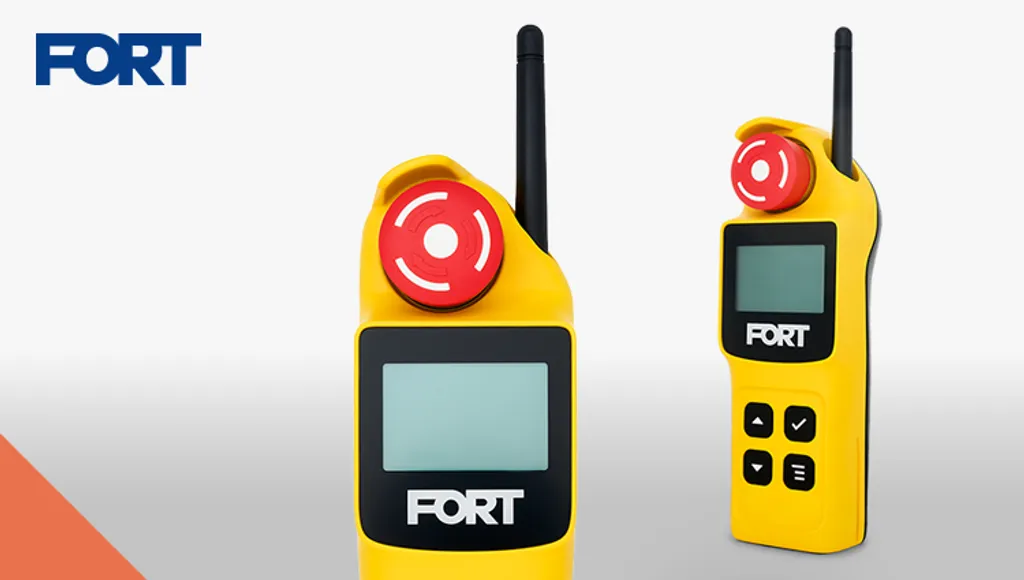
FORT was founded in 2018 by CEO Samuel Reeves, who previously founded Humanistic Robotics, a maker of landmine-clearing robots — a background in high-consequence, safety-critical autonomous systems that maps directly onto FORT’s current business. Its flagship hardware is the Wireless E-Stop, a handheld remote emergency-stop device; the “Pro” variant launched January 2026 is certified to Safety Integrity Level 3 (SIL 3) under IEC 61508, sending a fail-safe stop command over high-integrity Bluetooth up to 200 meters away. A companion Vehicle Safety Controller handles onboard safety logic, and the FORT 2.61 software release added API access and more granular safety behaviors. In May 2026, FORT acquired Mapless AI, adding remote human-in-the-loop control and onboard active-safety capability.
The company holds 25 patents and reports more than 19,500 units deployed across 600+ customers, with no single customer above 9% of 2025 revenue. Named customers include Agility Robotics, Google DeepMind, Cobot, Zoox, RIVR, Carnegie Robotics, Textron, Forterra, Genie, Ocado, Oxa, and DoorDash — spanning humanoid and legged-robot makers, autonomous-vehicle developers, industrial-vehicle makers, and logistics operators. That breadth is the core of FORT’s pitch: a safety layer buyers standardize on regardless of robot brand, not a feature bundled into one manufacturer’s hardware.
Growth with a real cost: margin compression
FORT’s 2025 revenue grew 62% year-over-year, per the company’s own disclosure. High-value accounts — customers spending more than $100,000 annually — grew even faster, up 91%, and the six-figure customer base has grown 3.8x since 2021. Operating expenses grew a comparatively restrained 19%, suggesting some operating leverage as the business scales, and revenue per employee reached $276,000.
That growth came at a real cost, worth stating plainly: gross margin fell to 66% in 2025 from 70% in 2024, a four-point compression in the company’s strongest growth year. Hardware-plus-software safety platforms often see margins dip as unit shipments outrun software-attach rates, or as new lines — the E-Stop Pro, the Mapless AI acquisition — carry lower initial margins before maturing. None of the three sourced reports explain the specific driver, so this reads as a real trade-off of FORT’s growth strategy, not a footnote to skip past.
Why safety infrastructure, and why now
The more durable story here isn’t the SPAC mechanics — it’s timing. FORT’s CTO, Nathan Bivans, sits on the U.S. Technical Advisory Group to ISO TC 200, the committee responsible for robot safety standards including ISO 10218-1:2025, which this desk covered as it moved through adoption — a direct line from FORT’s engineering leadership into the standards process shaping what “safe” means for industrial and mobile robots.
In June 2026, FORT announced a collaboration with NVIDIA, contributing an “outside-in” safety approach as part of NVIDIA’s Halos for Robotics ecosystem — the same program built around NVIDIA’s IGX Thor chip, a certified Functional Safety Island, and IEC 61508 SIL 3 certification this desk covered August 16 around Agility Robotics’ Digit v5, which adopted NVIDIA’s onboard safety compute directly. FORT and Agility are now tied into the same NVIDIA safety ecosystem from opposite ends: FORT as an infrastructure vendor contributing an external, manufacturer-agnostic layer, Agility — a named FORT customer — as a robot maker adopting NVIDIA’s certified onboard compute. Whether those approaches end up complementary or competing for the same design-win is unresolved.
FORT’s other integration work follows the same pattern: a March 2026 partnership built its functional safety into Advantech’s MIC-735 edge AI system, another case of FORT positioning its safety layer as infrastructure that plugs into other companies’ hardware rather than competing with it.
Sources
- FORT Robotics to Go Public via Business Combination with Newbury Street II Acquisition Corp to Advance the Safety of Physical AI — PR Newswire (FORT Robotics), Aug 18, 2026
- FORT Robotics takes safety stack public via SPAC merger — The Robot Report, Aug 18, 2026
- FORT Robotics to go public via business combination with Newbury Street II Acquisition Corp — Robotics and Automation News, Aug 18, 2026
Frequently asked questions
What is FORT Robotics and what does it actually sell? +
FORT Robotics, founded in Philadelphia in 2018, builds manufacturer-agnostic safety infrastructure for autonomous machines — a 'Trust Layer' combining hardware like its SIL 3-rated Wireless E-Stop and Vehicle Safety Controller with a software platform that lets robots from different makers operate safely around people and each other. It does not make robots itself; it sells the safety layer that sits alongside them.
How is FORT Robotics going public, and when does the deal close? +
Via a business combination (SPAC merger) with Newbury Street II Acquisition Corp, announced August 18, 2026. The combined company will trade on Nasdaq under ticker FROB as FORT Robotics Holdings, Inc. The deal is expected to close in the fourth quarter of 2026, subject to shareholder and regulatory approval.
What is FORT Robotics worth in this deal, and how much cash does it raise? +
The transaction values the pro-forma company at a $556.6 million enterprise value on a $500.0 million pre-money equity value. Gross proceeds are expected to be about $201 million, with roughly $182 million in net cash landing on the balance sheet after transaction costs, assuming no shareholder redemptions. FORT's existing shareholders retain about 67% ownership.
Is FORT Robotics profitable, and how fast is it growing? +
FORT reports 2025 revenue growth of 62% year-over-year, but that growth came with a real trade-off: gross margin fell to 66% in 2025 from 70% in 2024. Operating expenses grew a slower 19% over the same period. These are company-reported, unaudited figures disclosed in the merger announcement, not independently audited financials.
More news